
瑞典乳腺癌队列中胰岛素样生长因子结合蛋白7(IGFBP7)循环水平和肿瘤特异性水平的遗传决定因素及临床意义
Genetic determinants and clinical significance of circulating and tumor-specific levels of insulin-like growth factor binding protein 7 (IGFBP7) in a Swedish breast cancer cohort.
作者信息
Godina Christopher, Rosendahl Ann H, Gonçalves de Oliveira Kelin, Khazaei Somayeh, Björner Sofie, Jirström Karin, Isaksson Karolin, Pollak Michael N, Jernström Helena
机构信息
Department of Clinical Sciences Lund, Oncology, Lund University Cancer Center/Kamprad, Lund University and Skåne University Hospital, Barngatan4, SE 221 85 Lund, Sweden.
Department of Clinical Sciences Lund, Oncology and Therapeutic Pathology, Lund University Cancer Center/Kamprad, Lund University, Barngatan 4, SE 221 85 Lund, Sweden.
出版信息
Carcinogenesis. 2025 Apr 3;46(2). doi: 10.1093/carcin/bgaf020.
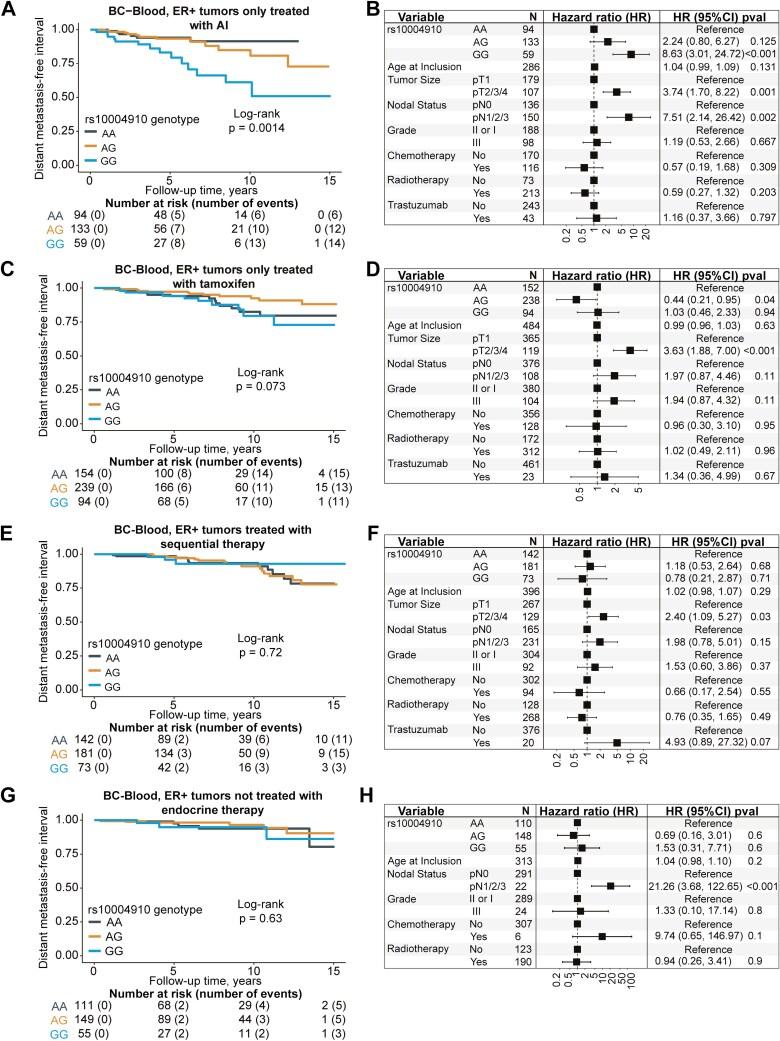
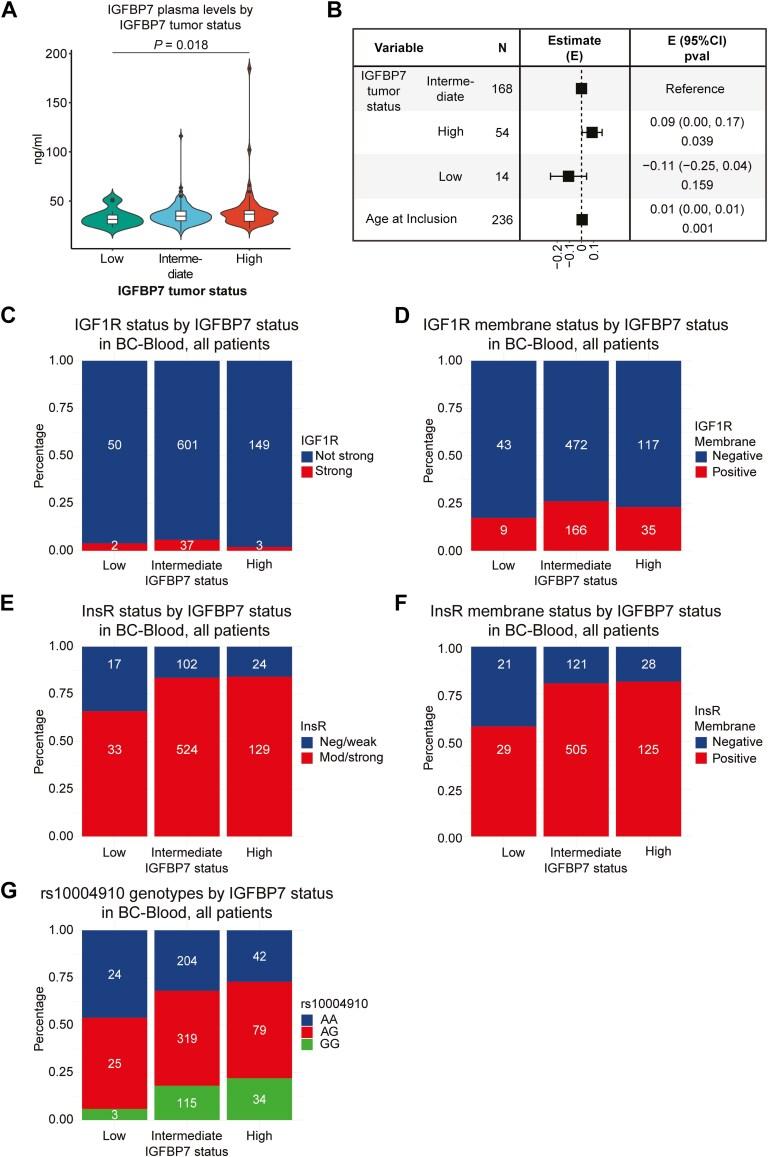
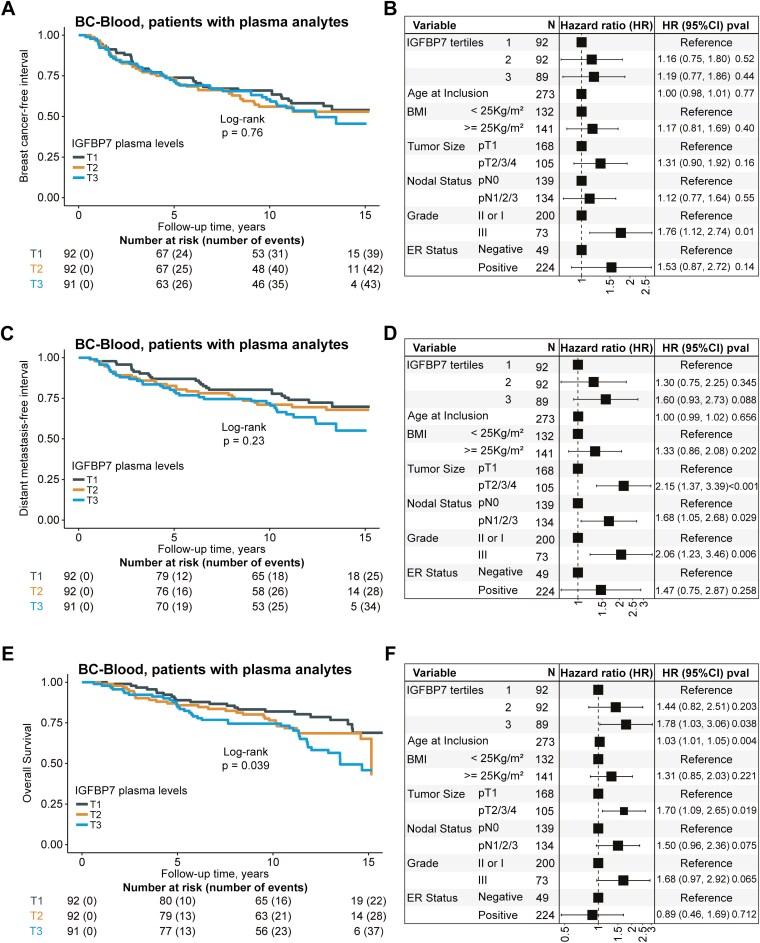
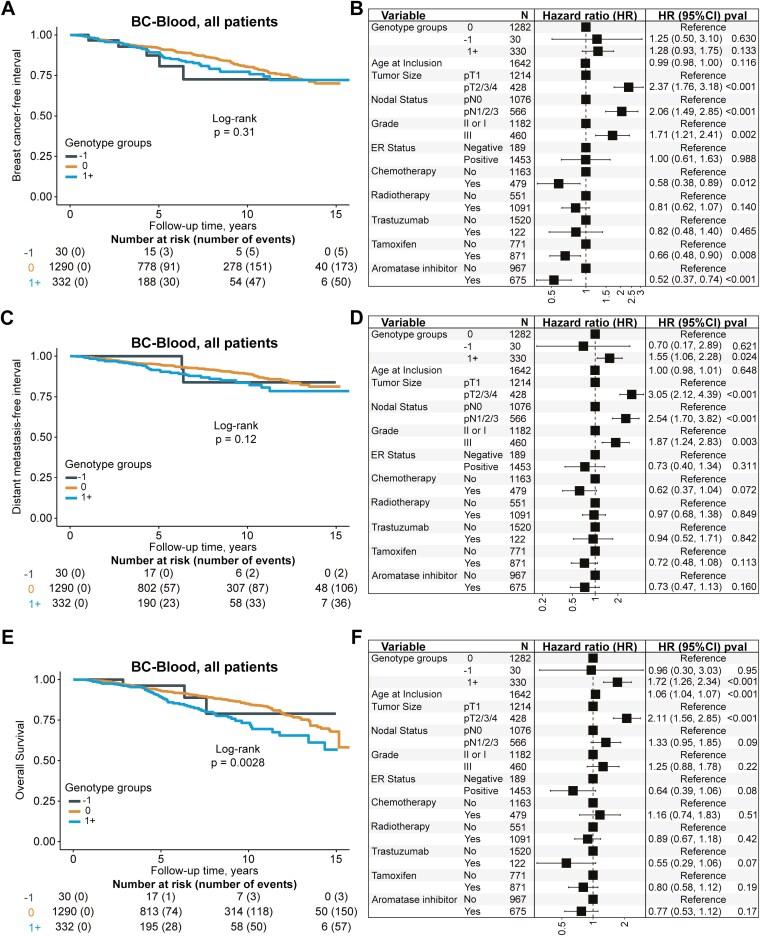
Previous research indicates that insulin-like growth factor binding protein 7 (IGFBP7) protein levels in breast cancer tissue and blood are prognostic. However, genetic determinants of IGFBP7 in breast cancer remain largely unexplored. We examined IGFBP7 in a cohort of 1701 patients with first breast cancer from Sweden, enrolled prior to surgery 2002-16 and followed for up to 15 years. Genotyping was performed on blood samples using OncoArray. Tumor-specific protein levels of IGFBP7, insulin receptor (InsR), and IGF-I receptor (IGFIR) were assessed on tumor tissue microarrays in 964 patients. Furthermore, 275 patients had plasma IGFBP7 levels measured. A genetic proxy marker for circulating IGFBP7 levels was constructed from five candidate single-nucleotide polymorphisms (SNPs) (rs6852762, rs1714014, rs9992658, rs10004910, and rs4865180) based on number of recessive genotypes. Age-adjusted linear regression was used to evaluate SNPs and tumor-specific IGFBP7 levels in relation to circulating IGFBP7 levels. Cox regression adjusted for age, tumor characteristics, and adjuvant treatments was used to assess associations with clinical outcomes. Circulating and tumor-specific IGFBP7 levels were significantly positively correlated. High circulating and genetically predicted IGFBP7 levels were associated with increased risk for distant metastasis and all-cause mortality. A significant interaction between high tumor-specific IGFBP7 levels and membrane-bound InsR resulted in a four-fold increased risk of breast cancer events and distant metastases. Both measured and genetically predicted IGFBP7 levels were independent prognostic biomarkers in breast cancer.
先前的研究表明,乳腺癌组织和血液中胰岛素样生长因子结合蛋白7(IGFBP7)的蛋白水平具有预后价值。然而,乳腺癌中IGFBP7的遗传决定因素在很大程度上仍未得到探索。我们对来自瑞典的1701例首次患乳腺癌的患者进行了研究,这些患者于2002年至2016年手术前入组,并随访了长达15年。使用OncoArray对血样进行基因分型。在964例患者的肿瘤组织微阵列上评估了IGFBP7、胰岛素受体(InsR)和IGF-I受体(IGFIR)的肿瘤特异性蛋白水平。此外,对275例患者的血浆IGFBP7水平进行了测量。基于隐性基因型的数量,从五个候选单核苷酸多态性(SNP)(rs6852762、rs1714014、rs9992658、rs10004910和rs4865180)构建了循环IGFBP7水平的遗传替代标志物。使用年龄调整的线性回归来评估SNP与肿瘤特异性IGFBP7水平与循环IGFBP7水平的关系。使用对年龄、肿瘤特征和辅助治疗进行调整的Cox回归来评估与临床结局的关联。循环和肿瘤特异性IGFBP7水平呈显著正相关。高循环和基因预测的IGFBP7水平与远处转移和全因死亡风险增加相关。高肿瘤特异性IGFBP7水平与膜结合InsR之间的显著相互作用导致乳腺癌事件和远处转移风险增加四倍。测量的和基因预测的IGFBP7水平都是乳腺癌独立的预后生物标志物。


 Zotero 插件