
早衰与代谢性疾病:端粒损耗的影响
Premature aging and metabolic diseases: the impact of telomere attrition.
作者信息
Jinesh Sandhya, Özüpek Burçin, Aditi Prerana
机构信息
CVS Health, Trumbull, CT, United States.
Independent Researcher, Wylie, TX, United States.
出版信息
Front Aging. 2025 Mar 31;6:1541127. doi: 10.3389/fragi.2025.1541127. eCollection 2025.
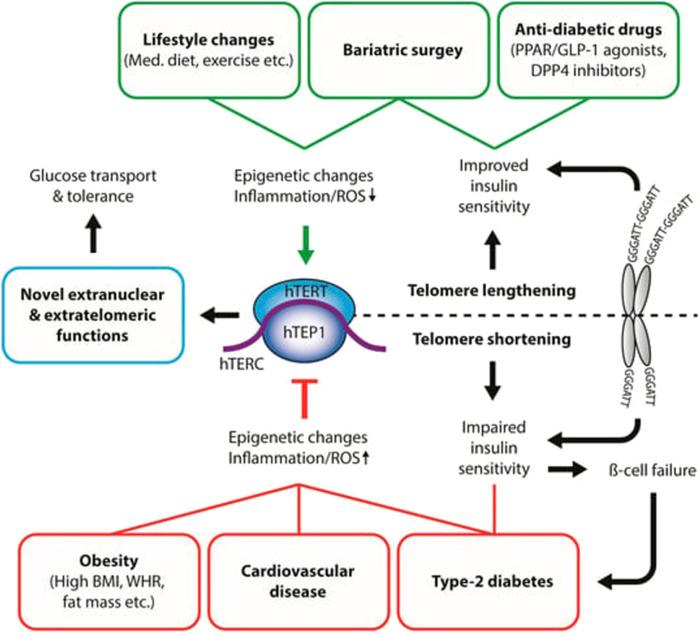
Driven by genetic and environmental factors, aging is a physiological process responsible for age-related degenerative changes in the body, cognitive decline, and impaired overall wellbeing. Notably, premature aging as well as the emergence of progeroid syndromes have posed concerns regarding chronic health conditions and comorbidities in the aging population. Accelerated telomere attrition is also implicated in metabolic dysfunction and the development of metabolic disorders. Impaired metabolic homeostasis arises secondary to age-related increases in the synthesis of free radicals, decreased oxidative capacity, impaired antioxidant defense, and disrupted energy metabolism. In particular, several cellular and molecular mechanisms of aging have been identified to decipher the influence of premature aging on metabolic diseases. These include defective DNA repair, telomere attrition, epigenetic alterations, and dysregulation of nutrient-sensing pathways. The role of telomere attrition premature aging in the pathogenesis of metabolic diseases has been largely attributed to pro-inflammatory states that promote telomere shortening, genetic mutations in the telomerase reverse transcriptase, epigenetic alteration, oxidative stress, and mitochondrial dysfunctions. Nonetheless, the therapeutic interventions focus on restoring the length of telomeres and may include treatment approaches to restore telomerase enzyme activity, promote alternative lengthening of telomeres, counter oxidative stress, and decrease the concentration of pro-inflammatory cytokines. Given the significance and robust potential of delaying telomere attrition in age-related metabolic diseases, this review aimed to explore the molecular and cellular mechanisms of aging underlying premature telomere attrition and metabolic diseases, assimilating evidence from both human and animal studies.
在遗传和环境因素的驱动下,衰老是一种生理过程,它导致身体出现与年龄相关的退行性变化、认知能力下降以及整体幸福感受损。值得注意的是,早衰以及类早衰综合征的出现引发了人们对老年人群慢性健康状况和合并症的关注。端粒加速磨损也与代谢功能障碍和代谢紊乱的发展有关。代谢稳态受损继发于与年龄相关的自由基合成增加、氧化能力下降、抗氧化防御受损以及能量代谢紊乱。特别是,已经确定了几种衰老的细胞和分子机制,以解读早衰对代谢疾病的影响。这些机制包括DNA修复缺陷、端粒磨损、表观遗传改变以及营养感应通路失调。端粒磨损早衰在代谢疾病发病机制中的作用很大程度上归因于促炎状态,这种状态会促进端粒缩短、端粒酶逆转录酶的基因突变、表观遗传改变、氧化应激和线粒体功能障碍。尽管如此,治疗干预措施侧重于恢复端粒长度,可能包括恢复端粒酶活性、促进端粒替代延长、对抗氧化应激以及降低促炎细胞因子浓度的治疗方法。鉴于延缓端粒磨损在年龄相关代谢疾病中的重要性和强大潜力,本综述旨在探讨早衰和代谢疾病背后衰老的分子和细胞机制,综合来自人类和动物研究的证据。



 Zotero 插件