
肠道微生物群:多囊卵巢综合征中一个隐藏的参与者。
Gut microbiota: a hidden player in polycystic ovary syndrome.
作者信息
Senthilkumar Harshini, Arumugam Mohanapriya
机构信息
Department of Biotechnology, School of Biosciences and Technology, Vellore Institute of Technology, Vellore, Tamil Nadu, 632014, India.
出版信息
J Transl Med. 2025 Apr 15;23(1):443. doi: 10.1186/s12967-025-06315-7.
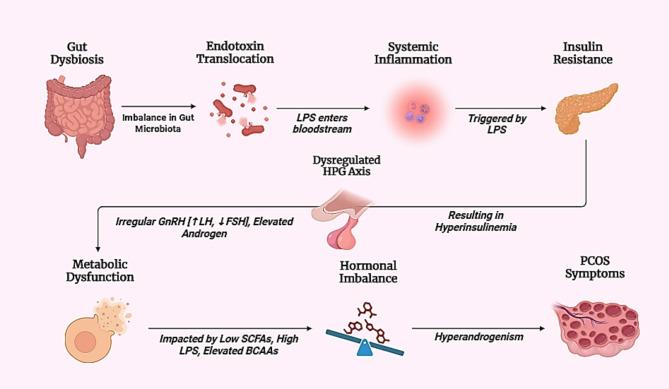
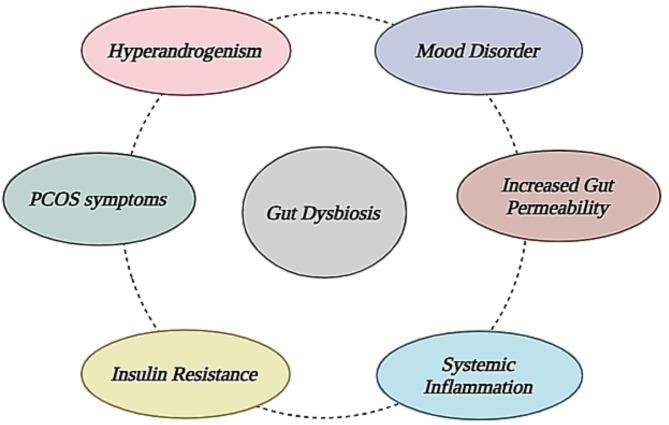
Polycystic ovary syndrome (PCOS) is an endocrine disorder that affects reproductive-aged women worldwide, causing hormonal imbalances and ovarian dysfunction. PCOS affects metabolic health and increases the risk of obesity, insulin resistance, and cardiovascular disease, in addition to infertility. This review delves deeper into the connections of gut microbiota with PCOS pathophysiology, particularly into its impact on hormone metabolism, obesity, inflammation, and insulin resistance by way of short-chain fatty acids, lipopolysaccharides, and gut-brain axis. Studies also show that changes in the metabolic processes and immune responses are seen in changes in the gut microbiota in PCOS subjects, such as changes in the Bacteroidetes and Firmicutes groups. Some bacteria, like Escherichia and Shigella, have been associated with dysbiosis in patients with PCOS, leading to systemic inflammation and changed hormone levels, which further worsen the clinical symptoms. Therapeutic interventions targeting the gut microbiota comprise probiotics, prebiotics, and fecal microbiota transplantation; these have potential to alleviate the symptoms of PCOS. Other precision microbiome-based therapies include postbiotics, and CRISPR-Cas9 genome editing, which are relatively new avenues toward precision treatment. This complex interlink of gut microbiota and PCOS pathophysiology will open the avenues for possible treatments for hormonal imbalances and metabolic problems that characterize these complex disorders. The review here focuses on the requirement of further studies to be able to elucidate the specific pathways relating gut microbiota dysregulation to PCOS and, thus, improve microbiome-based therapies for better clinical outcomes in affected individuals.
多囊卵巢综合征(PCOS)是一种内分泌紊乱疾病,影响着全球育龄妇女,导致激素失衡和卵巢功能障碍。除了不孕症外,PCOS还会影响代谢健康,增加肥胖、胰岛素抵抗和心血管疾病的风险。这篇综述更深入地探讨了肠道微生物群与PCOS病理生理学之间的联系,特别是通过短链脂肪酸、脂多糖和肠-脑轴对激素代谢、肥胖、炎症和胰岛素抵抗的影响。研究还表明,PCOS患者的肠道微生物群变化会导致代谢过程和免疫反应的改变,如拟杆菌门和厚壁菌门菌群的变化。一些细菌,如大肠杆菌和志贺氏菌,与PCOS患者的生态失调有关,导致全身炎症和激素水平变化,进而使临床症状进一步恶化。针对肠道微生物群的治疗干预措施包括益生菌、益生元以及粪便微生物群移植;这些措施有可能缓解PCOS的症状。其他基于精准微生物组的疗法包括后生元以及CRISPR-Cas9基因组编辑,这是精准治疗的相对较新途径。肠道微生物群与PCOS病理生理学之间这种复杂的相互联系将为治疗这些复杂疾病所特有的激素失衡和代谢问题开辟可能的治疗途径。本文的综述重点在于需要进一步开展研究,以阐明肠道微生物群失调与PCOS之间的具体途径,从而改进基于微生物组的疗法,为受影响个体带来更好的临床结果。

 Zotero 插件