
氧化和抗氧化变量在慢性肾脏病和终末期肾病中的临床应用及合理性:文献综述
The Clinical Utility and Plausibility of Oxidative and Antioxidant Variables in Chronic and End-Stage Kidney Disease: A Review of the Literature.
作者信息
Tsinari Ariti, Roumeliotis Stefanos, Neofytou Ioannis E, Varouktsi Garyfallia, Veljkovic Andrej, Stamou Aikaterini, Leivaditis Konstantinos, Liakopoulos Vassilios
机构信息
2nd Department of Nephrology, AHEPA Hospital, Medical School, Aristotle University of Thessaloniki, 54636 Thessaloniki, Greece.
Department of Biochemistry, Faculty of Medicine, University of Niš, 18000 Niš, Serbia.
出版信息
Int J Mol Sci. 2025 Apr 4;26(7):3376. doi: 10.3390/ijms26073376.
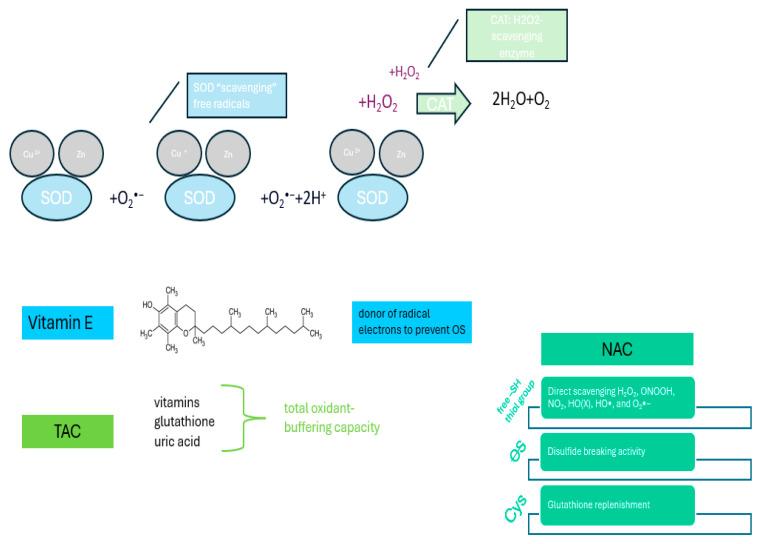
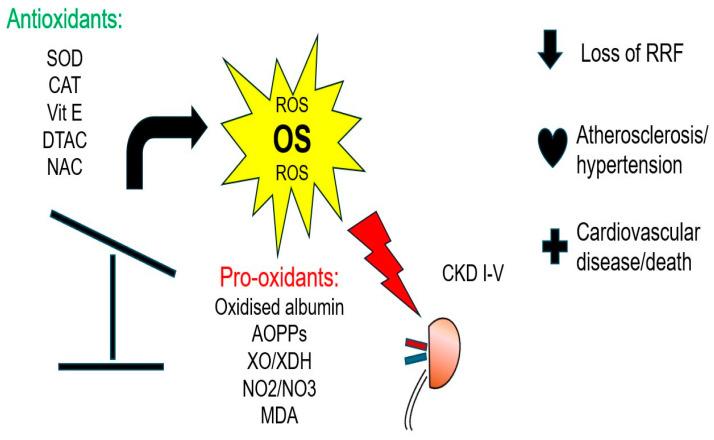
Oxidative stress (OS) is caused by an imbalance between the production of reactive oxygen species (ROS) in cells and tissues and the ability of the biological system to detoxify these products. In chronic kidney disease (CKD), OS contributes to deterioration of kidney function and disease progression. In patients with end-stage kidney disease undergoing hemodialysis or peritoneal dialysis, OS is further increased and associated with adverse clinical outcomes, including deterioration and subsequent loss of residual renal function, atherosclerosis, hypertension, cardiovascular disease and death. However, currently, there is no consensus or guidelines for the diagnosis and treatment of OS in these patients. Herein, we aim to present the existing data regarding biomarkers of OS, pro-oxidants (oxidized albumin, advanced oxidation protein products, xanthine oxidase/dehydrogenase, nitrite/nitrate, malondialdehyde) and antioxidants (superoxide dismutase, catalase, vitamin E, total antioxidant capacity, N-acetylcysteine) that are most clinically relevant and have been more extensively studied in patients with chronic kidney disease, aiming to provide a clearer understanding of this complex area.
氧化应激(OS)是由细胞和组织中活性氧(ROS)的产生与生物系统对这些产物进行解毒的能力之间的失衡所引起的。在慢性肾脏病(CKD)中,氧化应激会导致肾功能恶化和疾病进展。在接受血液透析或腹膜透析的终末期肾病患者中,氧化应激会进一步加剧,并与不良临床结局相关,包括残余肾功能的恶化及随后的丧失、动脉粥样硬化、高血压、心血管疾病和死亡。然而,目前对于这些患者氧化应激的诊断和治疗尚无共识或指南。在此,我们旨在呈现关于氧化应激生物标志物、促氧化剂(氧化型白蛋白、晚期氧化蛋白产物、黄嘌呤氧化酶/脱氢酶、亚硝酸盐/硝酸盐、丙二醛)和抗氧化剂(超氧化物歧化酶、过氧化氢酶、维生素E、总抗氧化能力、N-乙酰半胱氨酸)的现有数据,这些是临床上最相关且在慢性肾脏病患者中得到更广泛研究的,旨在更清晰地理解这一复杂领域。

 Zotero 插件