
金属离子代谢在糖尿病及其相关并发症发病机制中的作用。
The role of metal ion metabolism in the pathogenesis of diabetes and associated complications.
作者信息
Liu Siyuan, Chen Xuzhuo, Qi Xinrui, Bai Jiahao, Tong Bin, Zhang Deju, Yin Xiaoping, Yu Peng
机构信息
Jiujiang Clinical Precision Medicine Research Center, Jiujiang, Jiangxi, China; Department of Endocrinology and Metabolism, the Second Affiliated Hospital, Jiangxi Medical College. Nanchang University, Nanchang, Jiangxi, China; The Second Clinical Medical College of Nanchang University, Nanchang, Jiangxi, China.
Jiujiang Clinical Precision Medicine Research Center, Jiujiang, Jiangxi, China; Department of Endocrinology and Metabolism, the Second Affiliated Hospital, Jiangxi Medical College, Nanchang University, Nanchang, Jiangxi, China.
出版信息
Front Endocrinol (Lausanne). 2025 Apr 3;16:1541809. doi: 10.3389/fendo.2025.1541809. eCollection 2025.
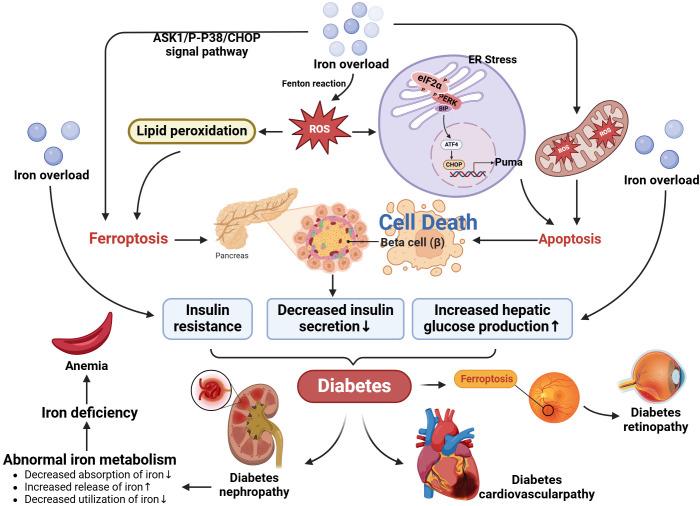
Diabetes is a growing health concern, accompanied by significant complications like cardiovascular disease, kidney disease, and retinopathy. Metal ions, including iron, zinc, and copper, play a crucial role in maintaining human health through their balance within the body. Disruptions in metal ion balance can intensify diabetic conditions. For instance, iron overload induces oxidative stress, which harms islet β cells and impacts vascular complications of diabetes. Abnormal copper levels heighten insulin resistance, and zinc deficiency has a strong connection with type 1 diabetes. Future in - depth exploration of the association between metal metabolism and diabetes holds the potential to uncover novel treatment avenues, enhancing both the quality of life and health prognosis for patients.
糖尿病是一个日益严重的健康问题,伴有心血管疾病、肾病和视网膜病变等重大并发症。包括铁、锌和铜在内的金属离子通过在体内保持平衡,对维持人体健康起着至关重要的作用。金属离子平衡的破坏会加剧糖尿病病情。例如,铁过载会引发氧化应激,损害胰岛β细胞并影响糖尿病的血管并发症。铜水平异常会加剧胰岛素抵抗,而锌缺乏与1型糖尿病有密切关联。未来对金属代谢与糖尿病之间关联的深入探索,有可能发现新的治疗途径,提高患者的生活质量和健康预后。


 Zotero 插件