
严重急性呼吸综合征冠状病毒2(SARS-CoV-2)功能区中G到U替换的富集及其通过并发突变的补偿
Enrichment of G-to-U Substitution in SARS-CoV-2 Functional Regions and Its Compensation via Concurrent Mutations.
作者信息
Sulaiman Xierzhatijiang, Han Yan, Liu Sheng, Li Kailing, Shang Marissa, Yang Lei, White Kenneth, Zang Yong, Shen Jikui, Wan Jun
机构信息
Department of Medical and Molecular Genetics, Indiana University School of Medicine, Indianapolis, Indiana, USA.
Department of Biostatistics & Health Data Science, Indiana University School of Medicine, Indianapolis, Indiana, USA.
出版信息
J Med Virol. 2025 Apr;97(4):e70353. doi: 10.1002/jmv.70353.
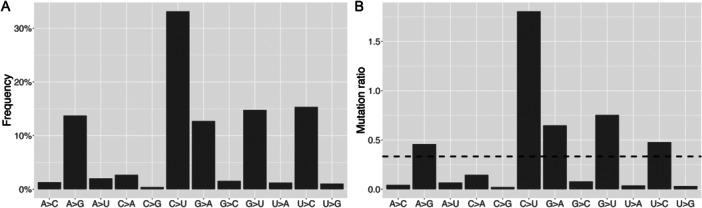
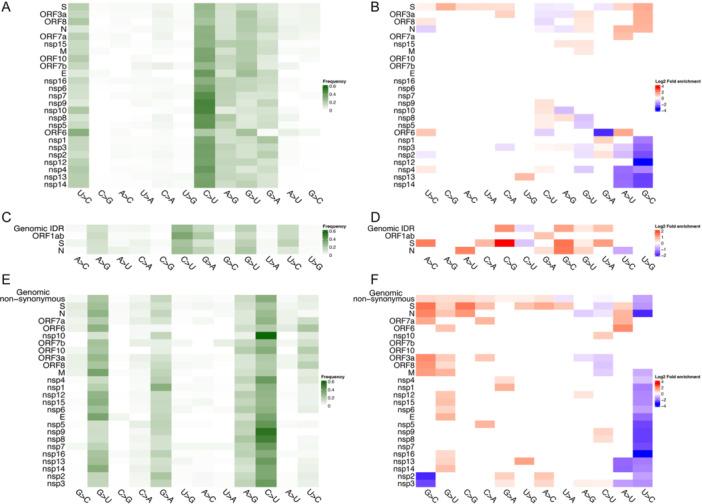
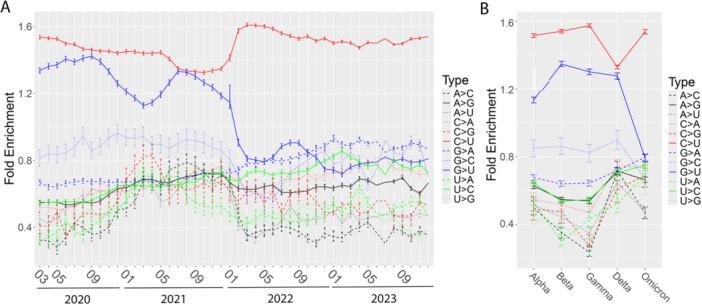
We surveyed single nucleotide variant (SNV) patterns from 5 903 647 complete SARS-CoV-2 genomes. Among 10 012 SNVs, APOBEC-mediated C-to-U (C > U) deamination was the most prevalent, followed by G > U and other RNA editing-related substitutions including (A > G, U > C, G > A). However, C > U mutations were less frequent in functional regions, for example, S protein, intrinsic disordered regions, and nonsynonymous mutations, where G > U were over-represented. Notably, G-loss substitutions rarely appeared together. Instead, G-gain mutations tended to more frequently co-occur with others, with a marked preference in the S protein, suggesting a compensatory mechanism for G loss in G > U mutations. The temporal patterns revealed C > U frequency declined until late 2021 then resurged in early 2022. Conversely, G > U steadily decreased, with a pronounced drop in January 2022, coinciding with reduced COVID-19 severity. Vaccinated individuals exhibited a slightly but significantly higher C > U frequency and a notably lower G > U frequency compared to the unvaccinated group. Additionally, cancer patients had higher G > U frequency than general patients during the same period. Interestingly, none of the C > U SNVs were uniquely identified in 2724 environmental samples. These findings suggest novel functional roles of G > U in COVID-19 symptoms, potentially linked to oxidative stress and reactive oxygen species, while C > U remains the dominant substitution, likely driven by host immune-mediated RNA editing.
我们对5903647个完整的严重急性呼吸综合征冠状病毒2(SARS-CoV-2)基因组的单核苷酸变异(SNV)模式进行了调查。在10012个SNV中,载脂蛋白B mRNA编辑酶催化多肽样3(APOBEC)介导的C到U(C>U)脱氨是最普遍的,其次是G>U以及其他与RNA编辑相关的替换,包括(A>G、U>C、G>A)。然而,C>U突变在功能区域中频率较低,例如刺突(S)蛋白、内在无序区域和非同义突变,而G>U在这些区域中占比过高。值得注意的是,G缺失替换很少同时出现。相反,G获得突变往往更频繁地与其他突变同时发生,在S蛋白中表现出明显的偏好,这表明在G>U突变中存在一种针对G缺失的补偿机制。时间模式显示,C>U频率在2021年末之前下降,然后在2022年初回升。相反,G>U稳步下降,在2022年1月显著下降,这与新冠肺炎严重程度的降低相吻合。与未接种疫苗的组相比,接种疫苗的个体表现出略高但显著更高的C>U频率和明显更低的G>U频率。此外,在同一时期,癌症患者的G>U频率高于普通患者。有趣的是,在2724个环境样本中未唯一鉴定出任何C>U SNV。这些发现表明G>U在新冠肺炎症状中具有新的功能作用,可能与氧化应激和活性氧有关,而C>U仍然是主要的替换,可能由宿主免疫介导的RNA编辑驱动。


 Zotero 插件