
Polθ解旋酶与DNA结合及微同源性介导的末端连接的结构基础
Structural basis for Polθ-helicase DNA binding and microhomology-mediated end-joining.
作者信息
Ito Fumiaki, Li Ziyuan, Minakhin Leonid, Khant Htet A, Pomerantz Richard T, Chen Xiaojiang S
机构信息
Molecular and Computational Biology, Department of Biological Sciences and Chemistry, University of Southern California, Los Angeles, CA, 90089, USA.
Department of Microbiology, Immunology and Molecular Genetics, Los Angeles, CA, USA.
出版信息
Nat Commun. 2025 Apr 19;16(1):3725. doi: 10.1038/s41467-025-58441-x.
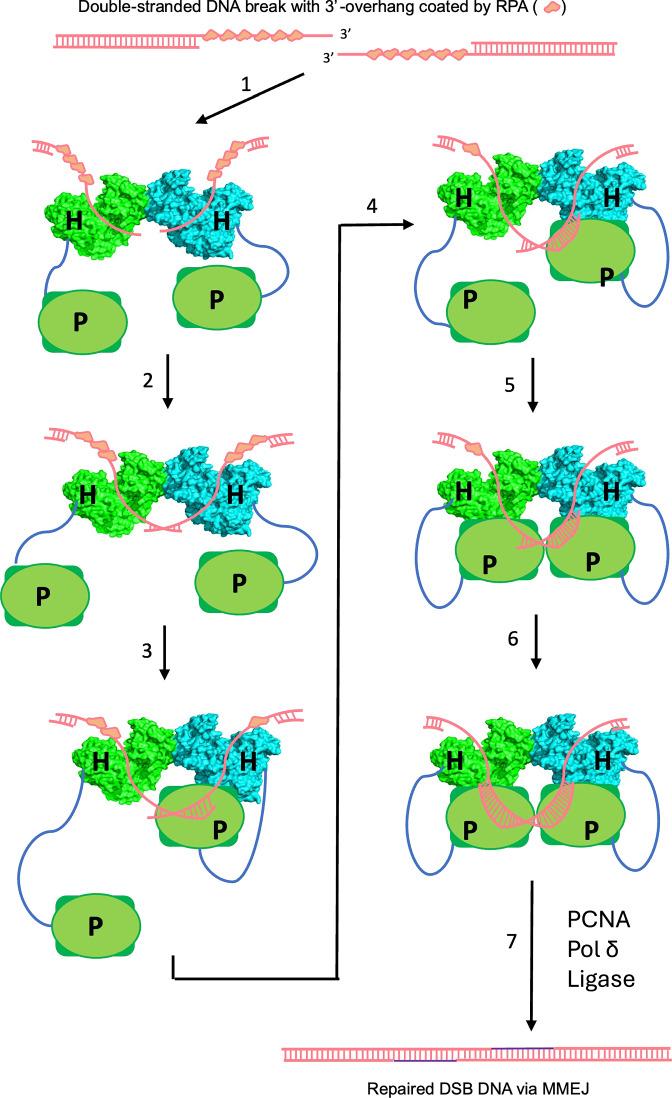
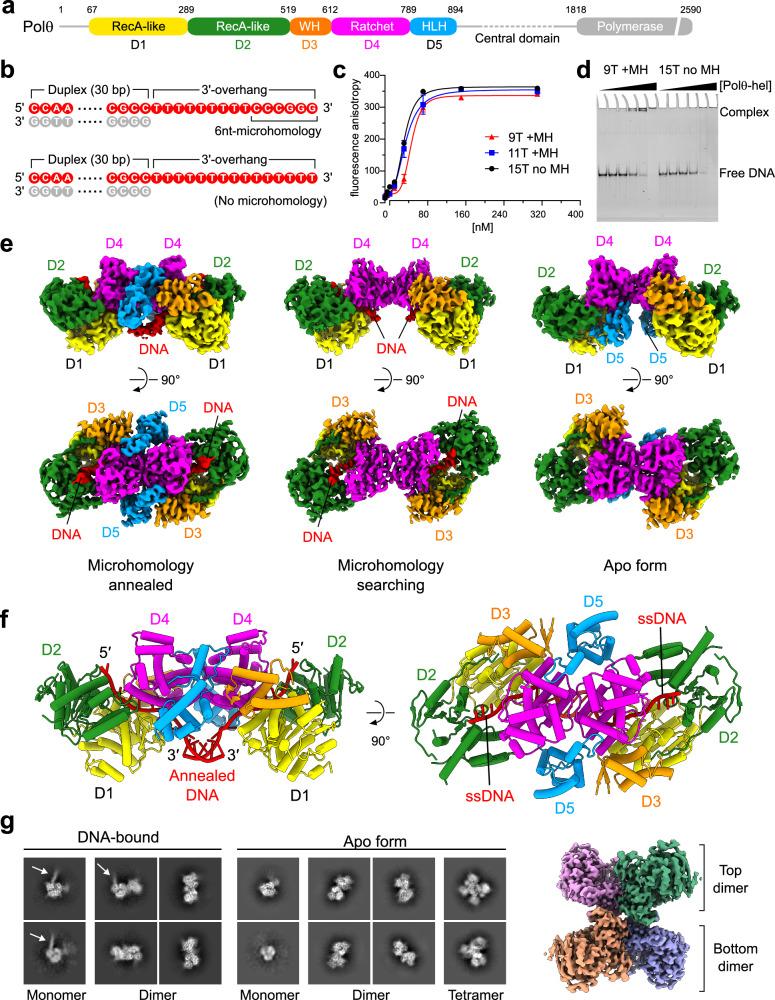
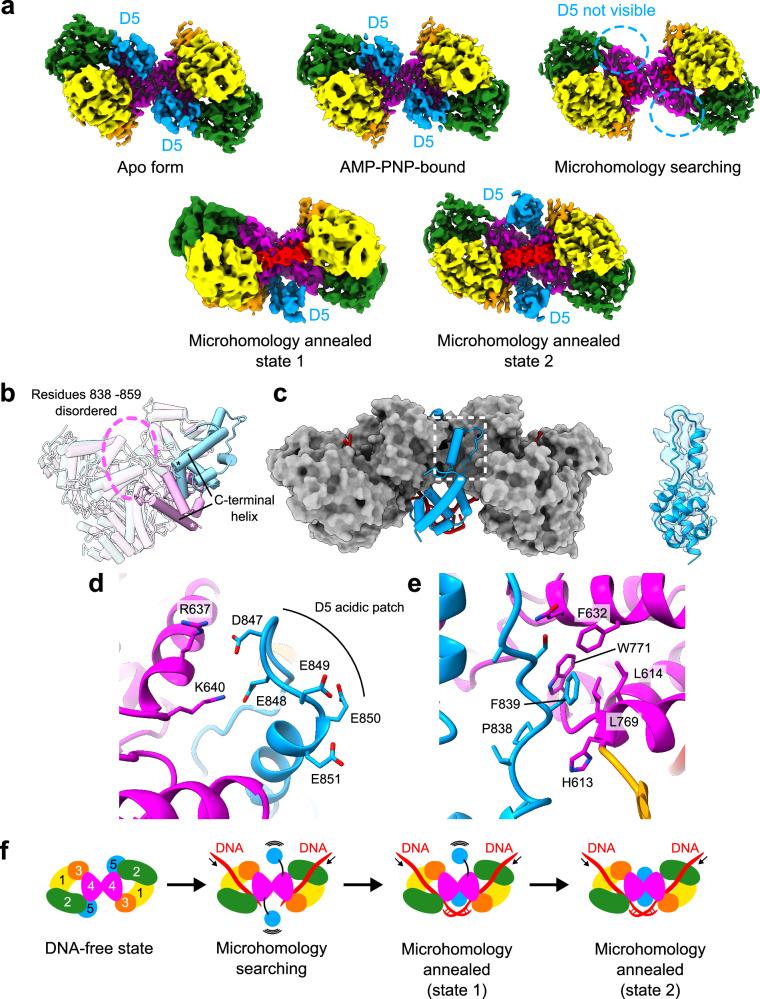
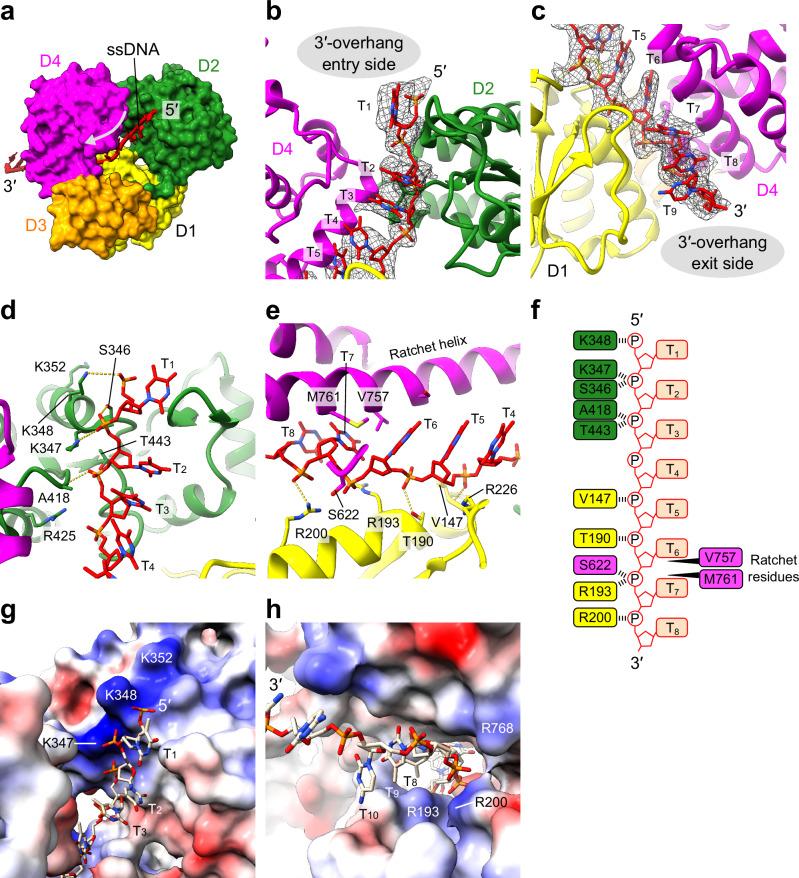
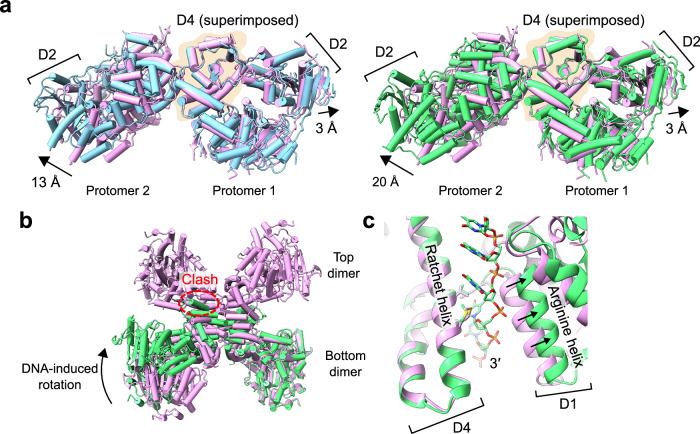
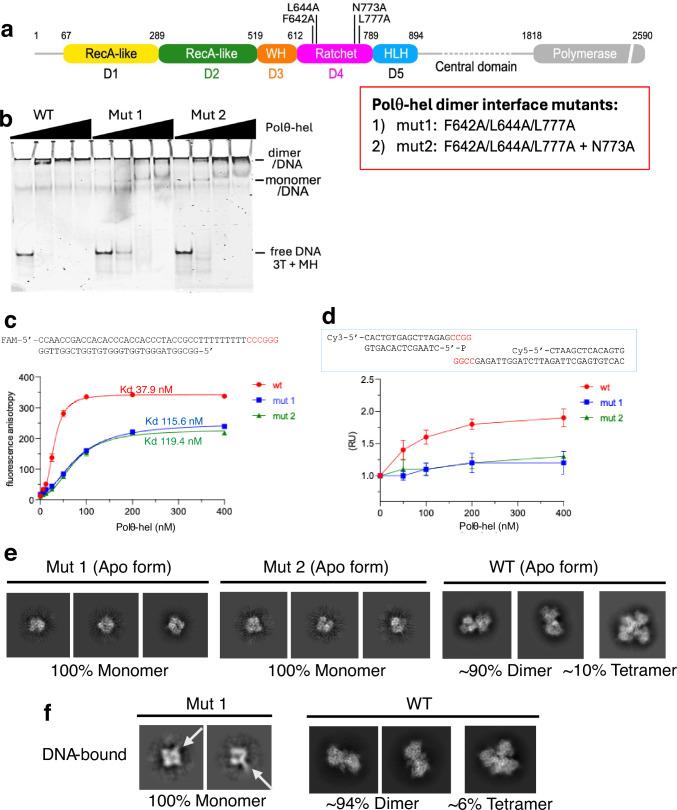
DNA double-strand breaks (DSBs) present a critical threat to genomic integrity, often precipitating genomic instability and oncogenesis. Repair of DSBs predominantly occurs through homologous recombination (HR) and non-homologous end joining (NHEJ). In HR-deficient cells, DNA polymerase theta (Polθ) becomes critical for DSB repair via microhomology-mediated end joining (MMEJ), also termed theta-mediated end joining (TMEJ). Thus, Polθ is synthetically lethal with BRCA1/2 and other HR factors, underscoring its potential as a therapeutic target in HR-deficient cancers. However, the molecular mechanisms governing Polθ-mediated MMEJ remain poorly understood. Here we present a series of cryo-electron microscopy structures of the Polθ helicase domain (Polθ-hel) in complex with DNA containing different 3'-ssDNA overhangs. The structures reveal the sequential conformations adopted by Polθ-hel during the critical phases of DNA binding, microhomology searching, and microhomology annealing. The stepwise conformational changes within the Polθ-hel subdomains and its functional dimeric state are pivotal for aligning the 3'-ssDNA overhangs, facilitating the microhomology search and subsequent annealing necessary for DSB repair via MMEJ. Our findings illustrate the essential molecular switches within Polθ-hel that orchestrate the MMEJ process in DSB repair, laying the groundwork for the development of targeted therapies against the Polθ-hel.
DNA双链断裂(DSB)对基因组完整性构成了严重威胁,常常引发基因组不稳定和肿瘤发生。DSB的修复主要通过同源重组(HR)和非同源末端连接(NHEJ)进行。在HR缺陷细胞中,DNA聚合酶θ(Polθ)对于通过微同源性介导的末端连接(MMEJ,也称为θ介导的末端连接,即TMEJ)进行的DSB修复变得至关重要。因此,Polθ与BRCA1/2及其他HR因子存在合成致死性,这突出了其作为HR缺陷型癌症治疗靶点的潜力。然而,调控Polθ介导的MMEJ的分子机制仍知之甚少。在此,我们展示了一系列与含有不同3'-单链DNA(ssDNA)突出端的DNA形成复合物的Polθ解旋酶结构域(Polθ-hel)的冷冻电子显微镜结构。这些结构揭示了Polθ-hel在DNA结合、微同源性搜索和微同源性退火的关键阶段所采取的连续构象。Polθ-hel亚结构域内逐步的构象变化及其功能性二聚体状态对于排列3'-ssDNA突出端、促进微同源性搜索以及随后通过MMEJ进行DSB修复所需的退火至关重要。我们的研究结果阐明了Polθ-hel内协调DSB修复中MMEJ过程的关键分子开关,为开发针对Polθ-hel的靶向疗法奠定了基础。
 Zotero 插件