
新辅助治疗对乳腺癌分子亚型转化影响的研究
A study on the impact of neoadjuvant therapy on molecular subtype conversion in breast cancer.
作者信息
Zhang Run-Ze, Liu Dong, Ke Yuan, Cai Wen-Qi, Zheng Lin-Hui, Wu Chao-Yan, Yu Hai-Jun
机构信息
Department of Radiation and Medical Oncology, Zhongnan Hospital of Wuhan University, Wuhan, 430071, China.
Department of Integrated Traditional Chinese Medicine and Western Medicine, Zhongnan Hospital of Wuhan University, Wuhan, 430071, China.
出版信息
World J Surg Oncol. 2025 Apr 22;23(1):155. doi: 10.1186/s12957-025-03801-6.
PURPOSE
The aim of this study was to examine molecular subtype conversions in patients who received neoadjuvant therapy.
METHODS AND MATERIALS
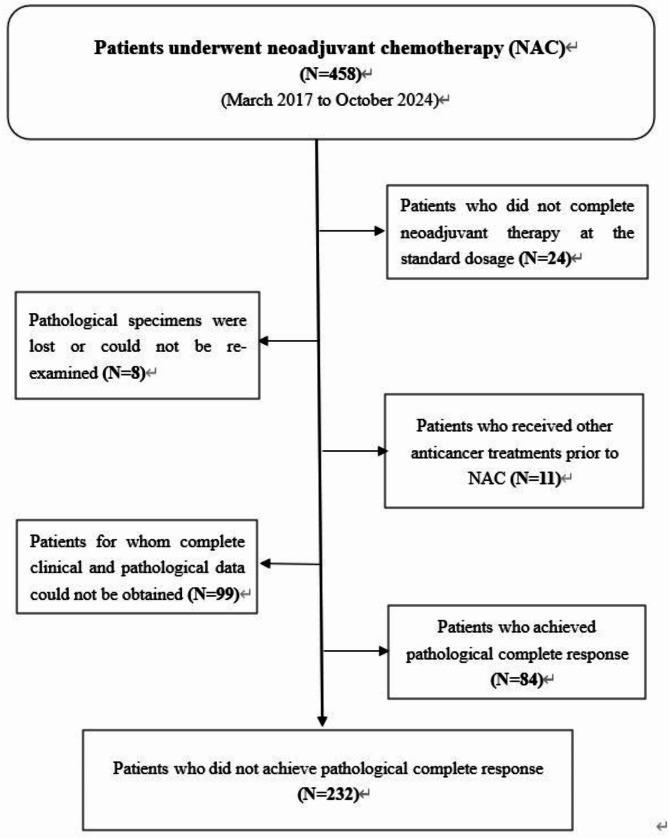
A retrospective analysis was performed on 316 patients who underwent neoadjuvant therapy at Zhongnan Hospital of Wuhan University between March 2017 and October 2024. The study included data from patients with confirmed pathological residual disease at the primary site post-surgery, alongside complete receptor status and detailed information on the neoadjuvant treatment regimen administered before and after therapy. Univariate and multivariate logistic regression analyses were employed to identify factors influencing molecular subtype heterogeneity before and after neoadjuvant therapy.
RESULTS
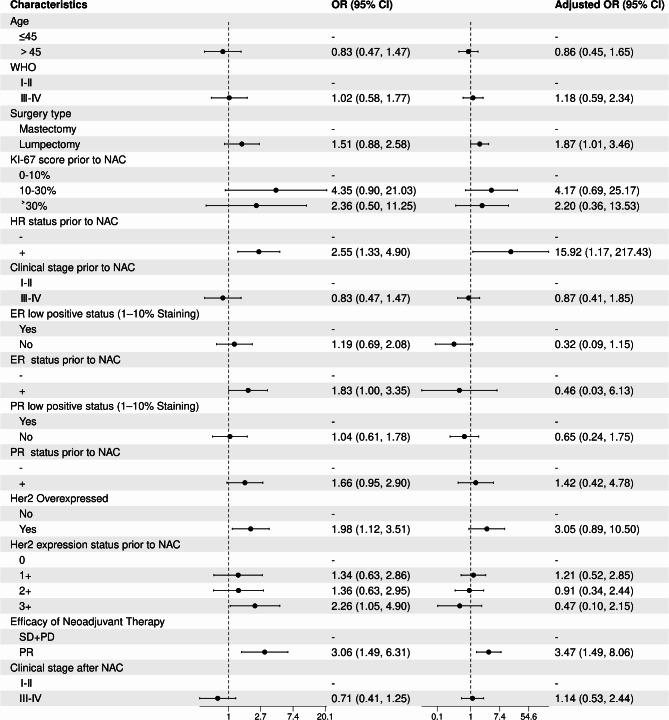
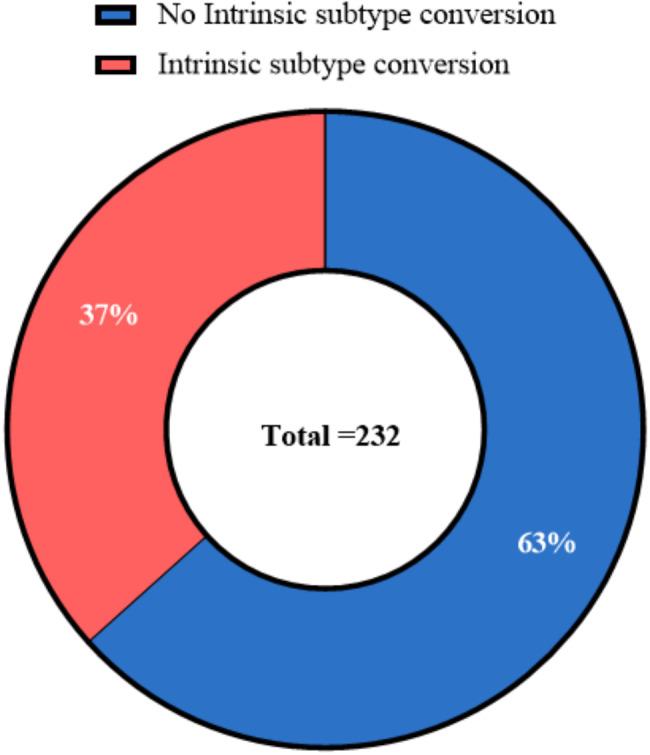
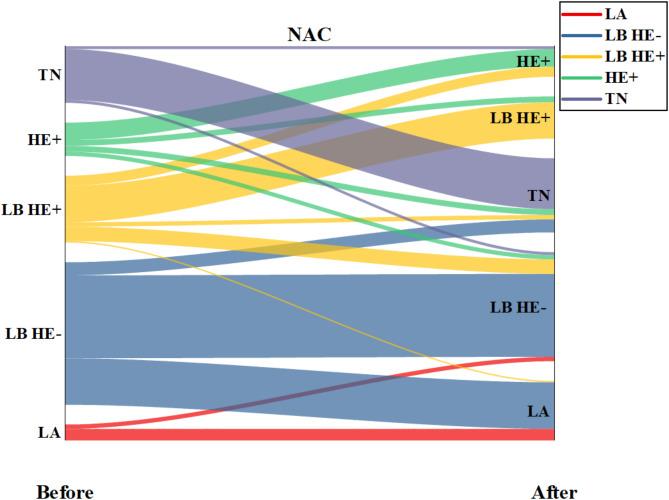
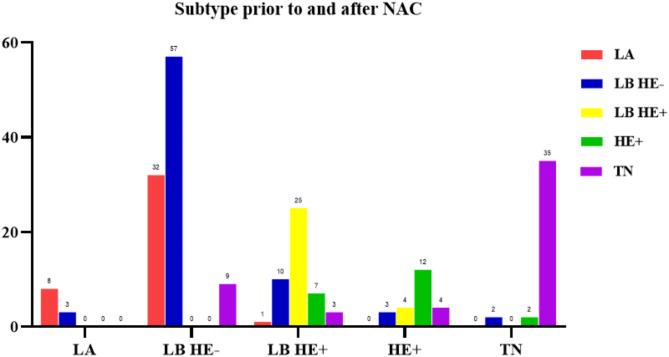
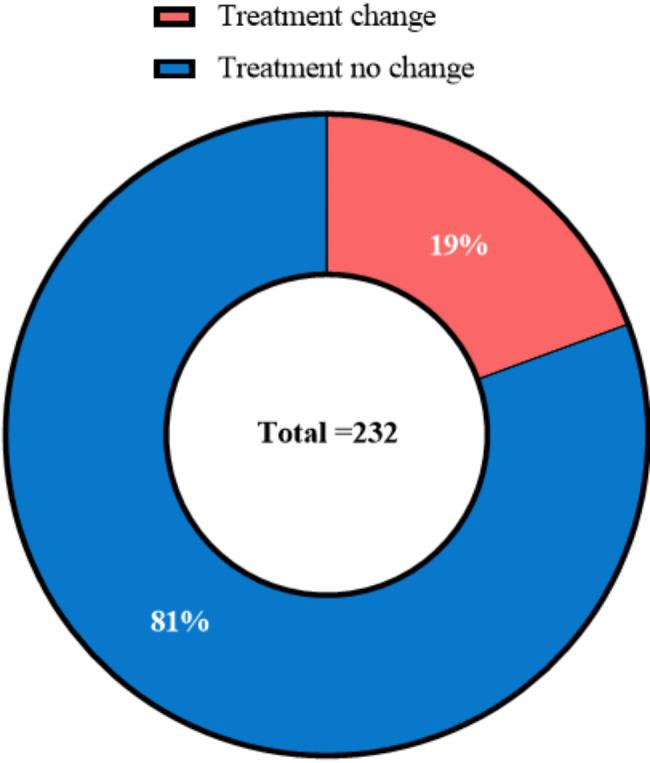
Of the 316 patients who received neoadjuvant therapy and underwent repeated pathological biopsies, 84 (26.6%) achieved a pathological complete response (pCR). Among the remaining 232 patients with confirmed pathological residual disease after surgery, 85 (36.6%) exhibited conversion of molecular subtypes, with 45 cases (19.3%) leading to alterations in the treatment plan. In breast cancer patients undergoing neoadjuvant chemotherapy (NAC), particularly those with HR-positive tumors prior to NAC, those demonstrating favorable treatment responses on imaging, and those undergoing breast-conserving surgery, molecular subtype heterogeneity before and after NAC was more commonly observed.
CONCLUSION
Neoadjuvant therapy can induce molecular subtype heterogeneity in patients with invasive breast cancer. The identification of factors contributing to this heterogeneity may be associated with variations in biological markers of residual disease post-NAC, sampling discrepancies between core needle biopsy (CNB) and surgical specimens, or the selective mutagenic pressure exerted by chemotherapeutic agents.
目的
本研究旨在探讨接受新辅助治疗患者的分子亚型转换情况。
方法和材料
对2017年3月至2024年10月期间在武汉大学中南医院接受新辅助治疗的316例患者进行回顾性分析。该研究纳入了术后原发部位病理残留疾病确诊患者的数据,以及完整的受体状态和新辅助治疗前后所采用详细治疗方案的信息。采用单因素和多因素逻辑回归分析来确定影响新辅助治疗前后分子亚型异质性的因素。
结果
在316例接受新辅助治疗并进行重复病理活检的患者中,84例(26.6%)达到病理完全缓解(pCR)。在其余232例术后病理残留疾病确诊患者中,85例(36.6%)表现出分子亚型转换,其中45例(19.3%)导致治疗方案改变。在接受新辅助化疗(NAC)的乳腺癌患者中,尤其是NAC前HR阳性肿瘤患者、影像学显示治疗反应良好的患者以及接受保乳手术的患者,NAC前后分子亚型异质性更为常见。
结论
新辅助治疗可诱导浸润性乳腺癌患者出现分子亚型异质性。确定导致这种异质性的因素可能与NAC后残留疾病生物学标志物的变化、粗针穿刺活检(CNB)与手术标本之间的采样差异或化疗药物施加的选择性诱变压力有关。
 Zotero 插件