
基于蛋白质组学对成年小鼠器官中核糖体异质性的表征
Proteomics-based characterization of ribosome heterogeneity in adult mouse organs.
作者信息
Brunchault Marie R, Hesse Anne-Marie, Schaeffer Julia, Fröhlich Albrecht, Saintpierre Ana, Decourt Charlotte, Combes Florence, Nawabi Homaira, Couté Yohann, Belin Stephane
机构信息
Univ. Grenoble Alpes, Inserm, U1216, Grenoble Institut Neurosciences, 38000, Grenoble, France.
Univ. Grenoble Alpes, INSERM, CEA, UA13 BGE, CNRS, CEA, FR2048, 38000, Grenoble, France.
出版信息
Cell Mol Life Sci. 2025 Apr 24;82(1):175. doi: 10.1007/s00018-025-05708-7.
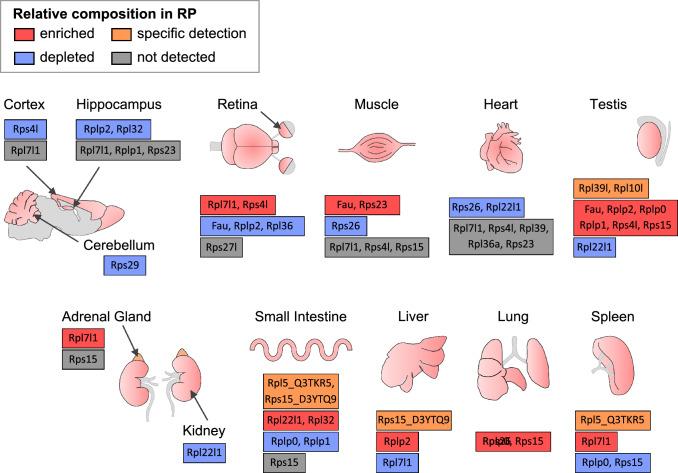
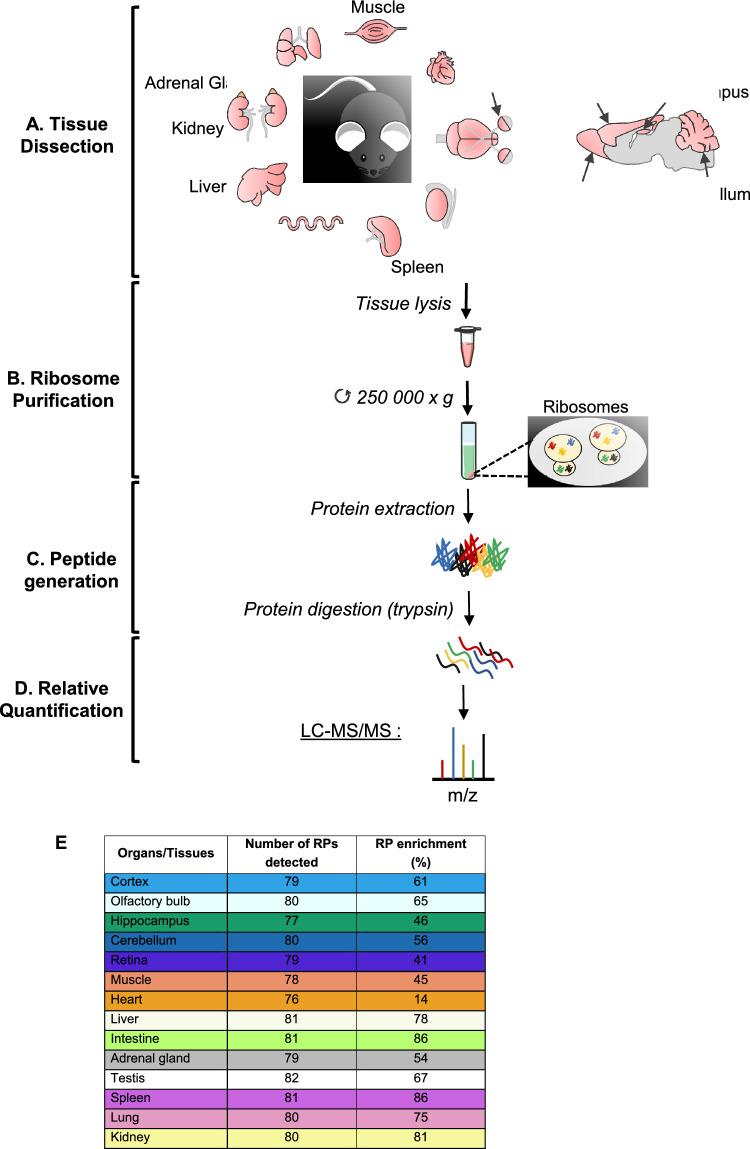
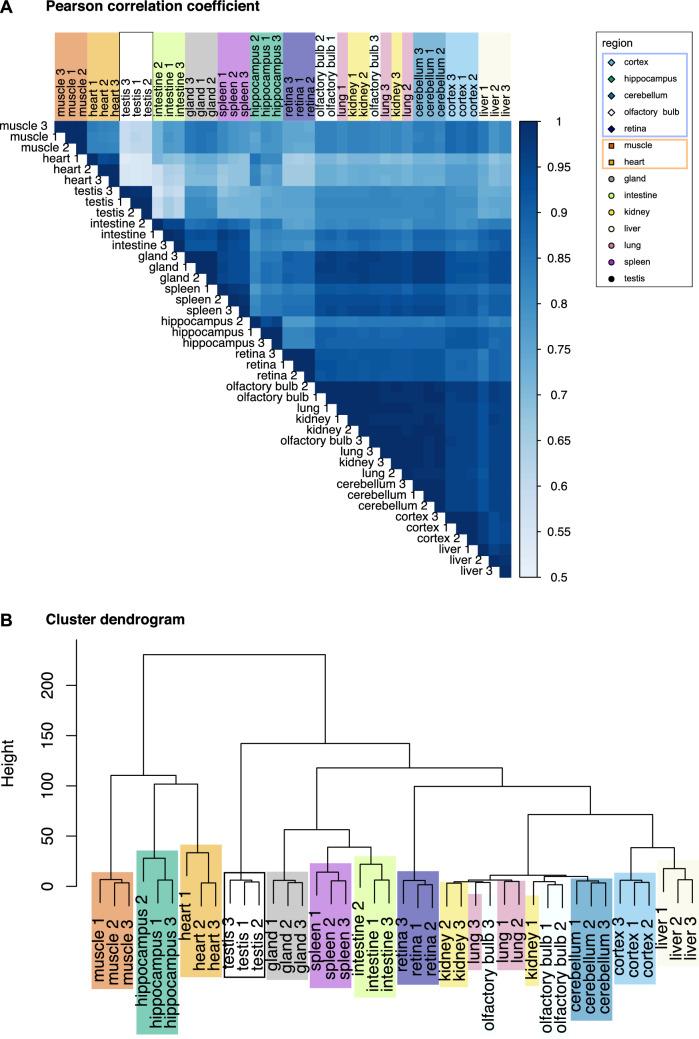
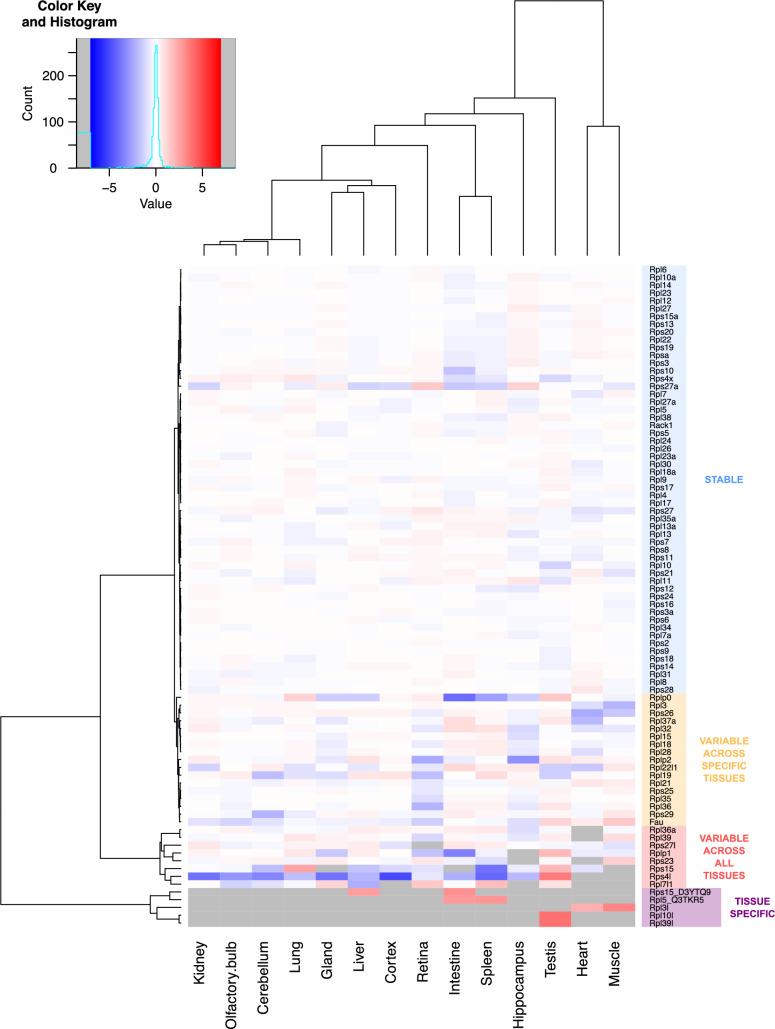
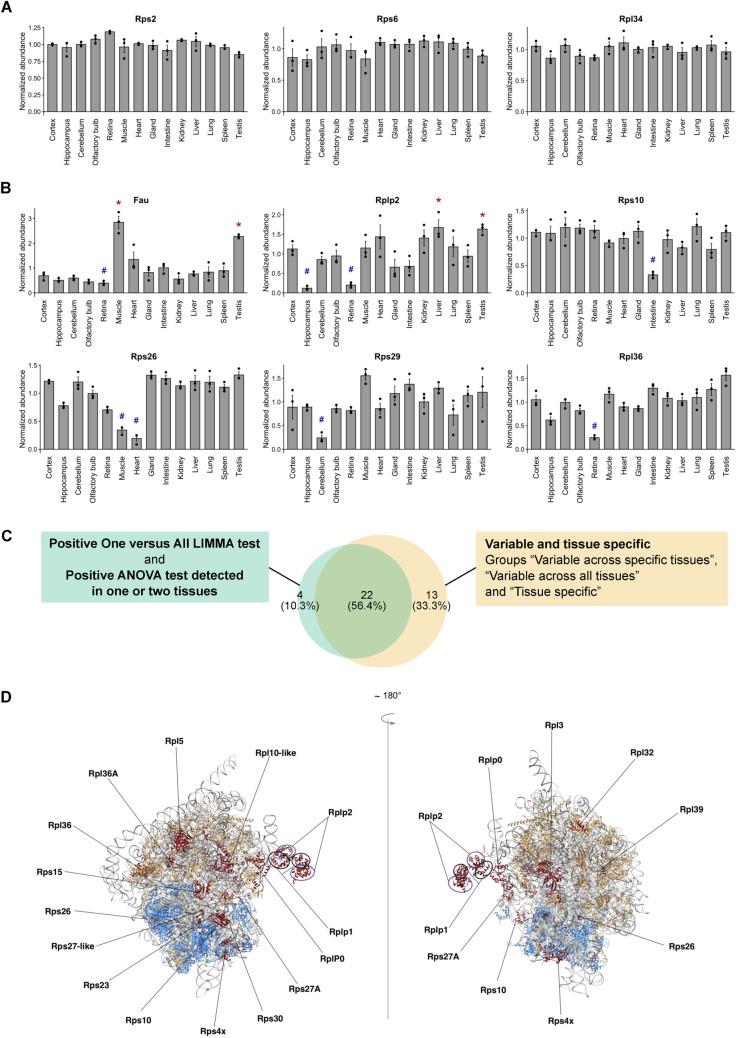
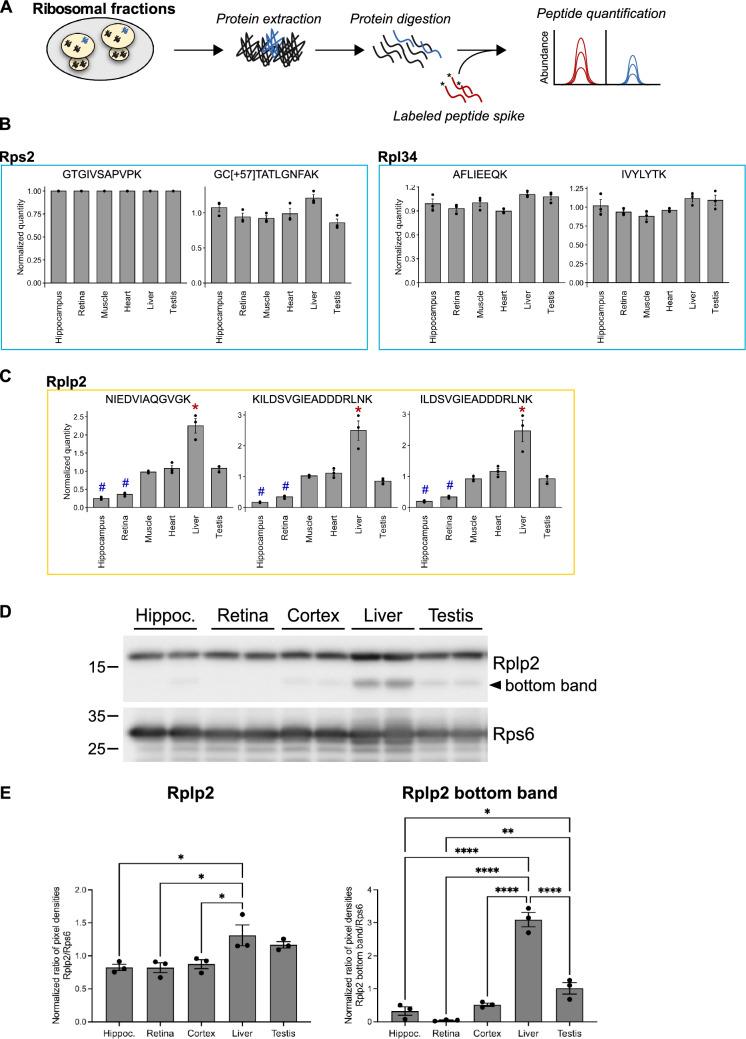
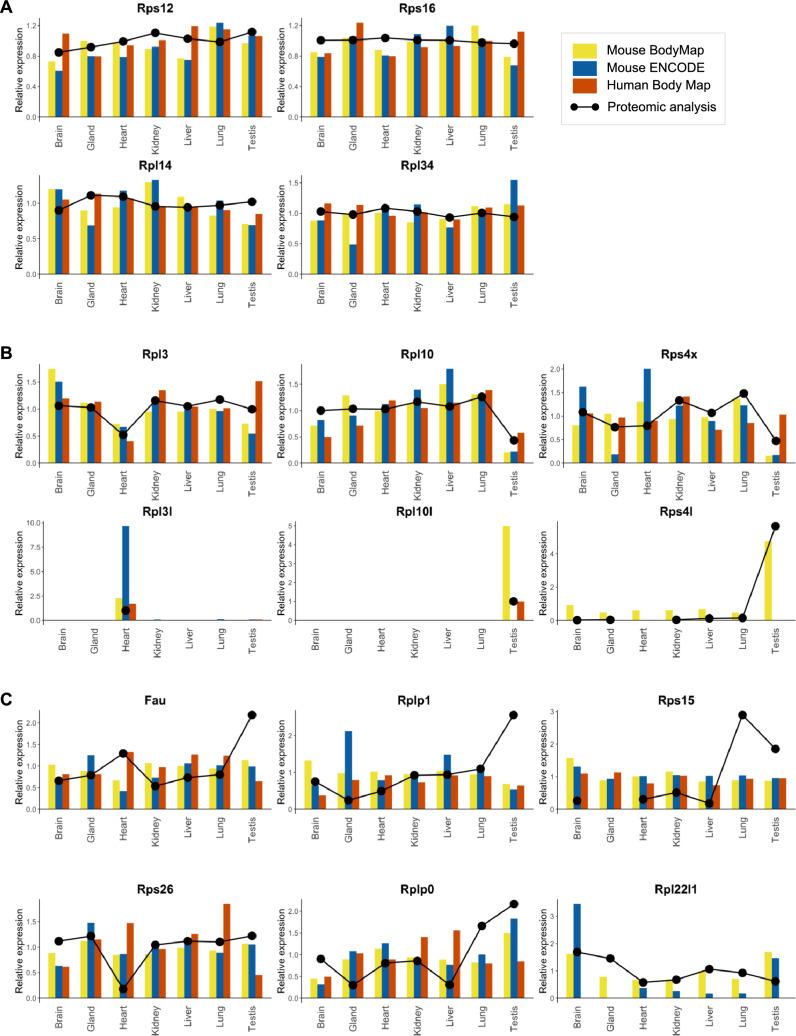
The translation process, leading to protein synthesis from mRNA, has been long thought to be invariable in all cellular organisms. Increasing evidence shows that it is finely regulated by variable features of the translation machinery. Notably, ribosomes, the functional units of protein synthesis, are suggested to display variations in their composition, depending on the developmental stage, cell type or physio-pathological context, thus hinting a new level of actionable regulation of gene expression. Yet, a comprehensive map of the heterogeneity of ribosome composition in ribosomal proteins (RPs) in different organs and tissues is not available. In this work, we explored tissue-specific ribosome heterogeneity using mass spectrometry-based quantitative proteomic characterization of ribosomal fractions purified from 14 adult mouse organs and tissues. We performed crossed clustering and statistical analyses of RP composition to highlight stable, variable and tissue-specific RPs across organs and tissues. Focusing on specific RPs, we validated their varying abundances using a targeted proteomic approach and western blot analyses, providing further insights into the tissue-specific ribosome RP signature. Finally, we investigated the origin of RP variations in ribosome fraction of the different tissues, by comparing RP relative amounts in our ribosomal proteomic dataset with their corresponding transcript abundances in three independent transcriptomic datasets. Interestingly, we found that, in some tissues, the RP abundance in purified ribosomes does not always correlate with the corresponding RP transcript level, arguing for a translational regulation of RP expression, and/or a regulated incorporation of RPs into ribosomes. Altogether, our data support the notion of a tissue-specific RP signature of ribosomes, which opens avenues to study how specific ribosomal composition provides an additional level of regulation to control gene expression in different tissues and organs.
长期以来,人们一直认为从mRNA合成蛋白质的翻译过程在所有细胞生物体中都是不变的。越来越多的证据表明,它受到翻译机制可变特征的精细调控。值得注意的是,蛋白质合成的功能单位核糖体,其组成会根据发育阶段、细胞类型或生理病理背景而显示出差异,这暗示了基因表达可操作调控的一个新层面。然而,目前尚无关于不同器官和组织中核糖体蛋白(RP)核糖体组成异质性的全面图谱。在这项研究中,我们利用基于质谱的定量蛋白质组学方法,对从14种成年小鼠器官和组织中纯化的核糖体组分进行表征,探索了组织特异性核糖体异质性。我们对RP组成进行了交叉聚类和统计分析,以突出不同器官和组织中稳定、可变和组织特异性的RP。聚焦于特定的RP,我们使用靶向蛋白质组学方法和蛋白质免疫印迹分析验证了它们丰度的变化,进一步深入了解了组织特异性核糖体RP特征。最后,我们通过比较核糖体蛋白质组学数据集中RP的相对含量与其在三个独立转录组数据集中相应的转录本丰度,研究了不同组织核糖体组分中RP变化的起源。有趣的是,我们发现,在某些组织中,纯化核糖体中RP的丰度并不总是与相应的RP转录水平相关,这表明存在RP表达的翻译调控,和/或RP向核糖体的调控性掺入。总之,我们的数据支持核糖体具有组织特异性RP特征这一观点,这为研究特定核糖体组成如何提供额外的调控水平以控制不同组织和器官中的基因表达开辟了道路。
 Zotero 插件