
一项CRISPR归巢筛选发现疟原虫卵囊中有一个氯喹抗性转运蛋白样蛋白,该蛋白对疟疾的蚊子传播至关重要。
A CRISPR homing screen finds a chloroquine resistance transporter-like protein of the Plasmodium oocyst essential for mosquito transmission of malaria.
作者信息
Balakrishnan Arjun, Hunziker Mirjam, Tiwary Puja, Pandey Vikash, Drew David, Billker Oliver
机构信息
The Laboratory for Molecular Infection Medicine Sweden, Umeå University, Umeå, Sweden.
Department of Molecular Biology, Umeå University, Umeå, Sweden.
出版信息
Nat Commun. 2025 Apr 24;16(1):3895. doi: 10.1038/s41467-025-59099-1.
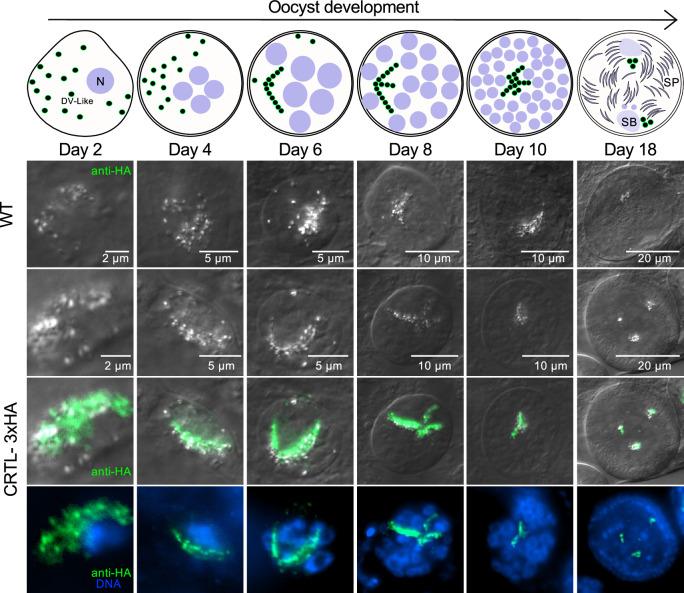
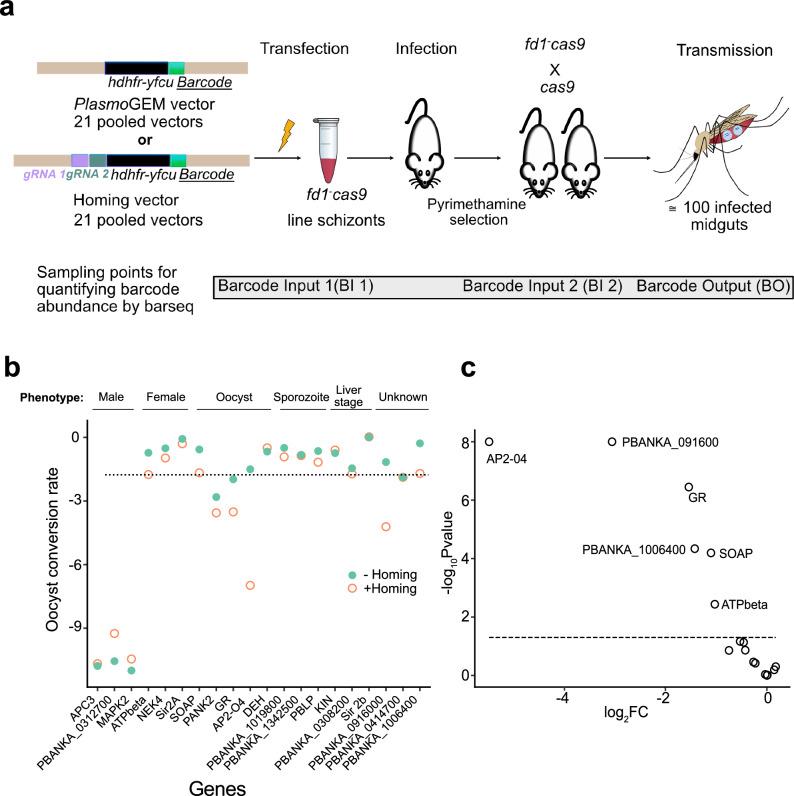
Genetic screens with barcoded PlasmoGEM vectors have identified thousands of Plasmodium berghei gene functions in haploid blood stages, gametocytes and liver stages. However, the formation of diploid cells by fertilisation has hindered similar research on the parasites' mosquito stages. In this study, we develop a scalable genetic system that uses barcoded gene targeting vectors equipped with a CRISPR-mediated homing mechanism to generate homozygous loss-of-function mutants after one parent introduces a modified allele into the zygote. To achieve this, we use vectors additionally expressing a target gene specific gRNA. When integrated into one of the parental alleles it directs Cas9 to the intact allele after fertilisation, leading to its disruption. This homing strategy is 90% effective at generating homozygous gene editing of a fluorescence-tagged reporter locus in the oocyst. A pilot screen identifies PBANKA_0916000 as a chloroquine resistance transporter-like protein (CRTL) essential for oocyst growth and sporogony, pointing to an unexpected importance for malaria transmission of the poorly understood digestive vacuole of the oocyst that contains hemozoin granules. Homing screens provide a method for the systematic discovery of malaria transmission genes whose first essential functions are after fertilisation in the bloodmeal, enabling their potential as targets for transmission-blocking interventions to be assessed.
利用带有条形码的疟原虫基因编辑载体进行的遗传筛选,已经在单倍体血液阶段、配子体和肝脏阶段鉴定出数千种伯氏疟原虫基因的功能。然而,受精形成二倍体细胞阻碍了对该寄生虫蚊子阶段的类似研究。在本研究中,我们开发了一种可扩展的遗传系统,该系统使用配备了CRISPR介导归巢机制的条形码基因靶向载体,在一个亲本将修饰的等位基因引入合子后产生纯合功能丧失突变体。为实现这一点,我们使用额外表达靶基因特异性gRNA的载体。当整合到亲本等位基因之一中时,它在受精后将Cas9引导至完整的等位基因,导致其破坏。这种归巢策略在卵囊中产生荧光标记报告基因座的纯合基因编辑方面有90%的效率。一项初步筛选将PBANKA_0916000鉴定为一种对卵囊生长和孢子生殖至关重要的氯喹抗性转运蛋白样蛋白(CRTL),这表明含有疟色素颗粒的卵囊消化泡对疟疾传播具有意想不到的重要性,而该消化泡此前了解甚少。归巢筛选提供了一种系统发现疟疾传播基因的方法,这些基因的首要基本功能是在血餐受精之后,从而能够评估它们作为传播阻断干预靶点的潜力。
 Zotero 插件