
探索精准医学在神经精神病学中的潜力:基于遗传、环境和生活方式因素的个性化治疗新见解述评
Exploring the Potential of Precision Medicine in Neuropsychiatry: A Commentary on New Insights for Tailored Treatments Based on Genetic, Environmental, and Lifestyle Factors.
作者信息
Milic Jelena, Vucurovic Milica, Jovic Dragana, Stankovic Veroslava, Grego Edita, Jankovic Srdja, Sapic Rosa
机构信息
Institute of Public Health of Serbia "Dr Milan Jovanović Batut", 11000 Belgrade, Serbia.
European Faculty "Kallos", Ratariski Put 8a, 11000 Belgrade, Serbia.
出版信息
Genes (Basel). 2025 Mar 24;16(4):371. doi: 10.3390/genes16040371.
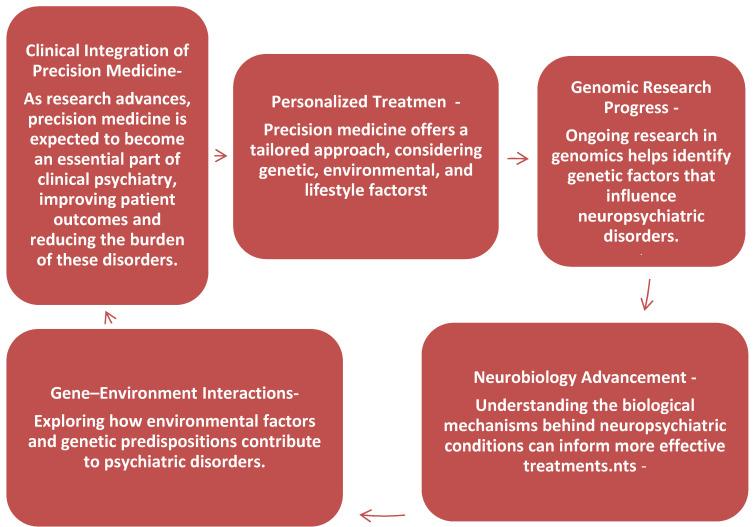
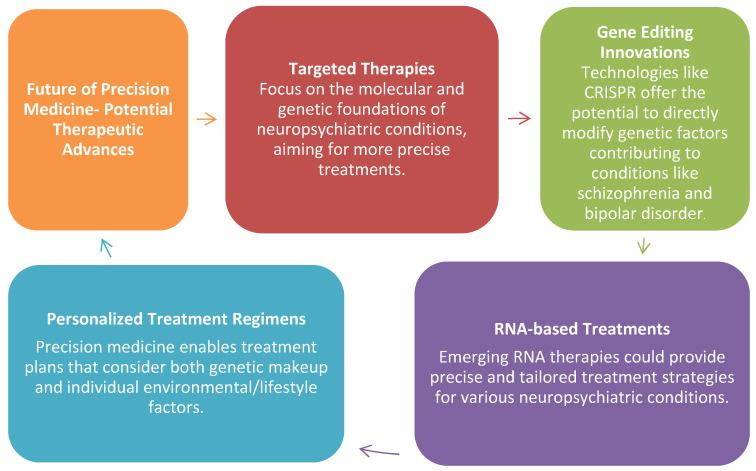
Neuropsychiatric disorders are complex conditions with multifactorial etiologies, in which genetics play a pivotal role. Despite significant advancements in psychiatric research, traditional treatment options remain largely symptomatic, focusing on clinical signs without fully addressing the underlying biological causes. However, recent developments in precision medicine-an approach that tailors treatments based on genetic, environmental, and lifestyle factors-hold great promise for transforming the treatment of these disorders. By identifying specific genetic markers and understanding gene-environment interactions, precision medicine can offer more personalized and effective treatments, leading to better patient outcomes. Our primary aim was to explore how integrating genetic data with environmental factors could enhance the understanding and treatment of neuropsychiatric conditions such as schizophrenia, bipolar disorder, and depression. The secondary aim was to examine the potential of pharmacogenomics and gene therapy in improving therapeutic strategies. The results indicate that while significant progress has been made, challenges remain, including the complexity of genetic interactions and the need for more granular phenotypic data. In conclusion, precision medicine has the potential to revolutionize neuropsychiatric treatment by providing individualized care that considers genetic makeup, environmental influences, and lifestyle factors, paving the way for more effective therapies and improved patient outcomes.
神经精神疾病是病因多因素的复杂病症,其中遗传学起着关键作用。尽管精神病学研究取得了重大进展,但传统治疗方案在很大程度上仍以症状治疗为主,侧重于临床症状,而没有充分解决潜在的生物学病因。然而,精准医学(一种基于遗传、环境和生活方式因素量身定制治疗方法)的最新进展为改变这些疾病的治疗带来了巨大希望。通过识别特定的遗传标记并了解基因与环境的相互作用,精准医学可以提供更个性化、更有效的治疗方法,从而改善患者的治疗效果。我们的主要目的是探索将遗传数据与环境因素相结合如何能够增强对精神分裂症、双相情感障碍和抑郁症等神经精神疾病的理解和治疗。次要目的是研究药物基因组学和基因治疗在改进治疗策略方面的潜力。结果表明,虽然已经取得了重大进展,但挑战依然存在,包括遗传相互作用的复杂性以及对更细化表型数据的需求。总之,精准医学有潜力通过提供考虑遗传构成、环境影响和生活方式因素的个性化护理来彻底改变神经精神疾病的治疗,为更有效的治疗方法和改善患者治疗效果铺平道路。
 Zotero 插件