
一种用于颗粒分选的斜指叉指换能器微流控装置。
A Slanted-Finger Interdigitated Transducer Microfluidic Device for Particles Sorting.
作者信息
Liu Baoguo, Ren Xiang, Xue Tao, Zou Qiang
机构信息
School of Microelectronics, Tianjin University, Tianjin 300072, China.
State Key Laboratory of Advanced Materials for Intelligent Sensing, Tianjin University, Tianjin 300072, China.
出版信息
Micromachines (Basel). 2025 Apr 20;16(4):483. doi: 10.3390/mi16040483.
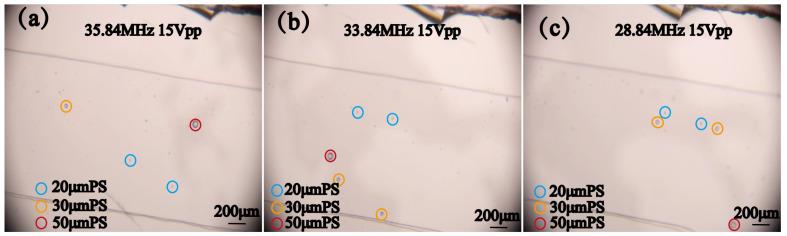
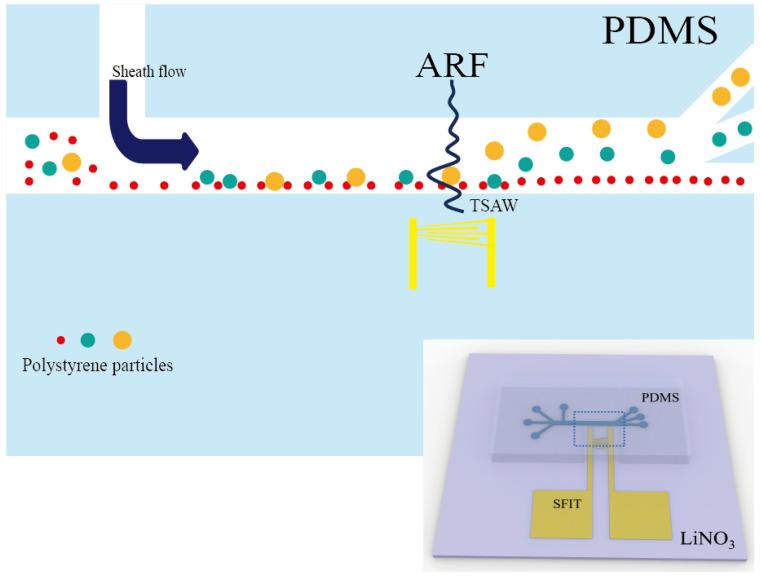
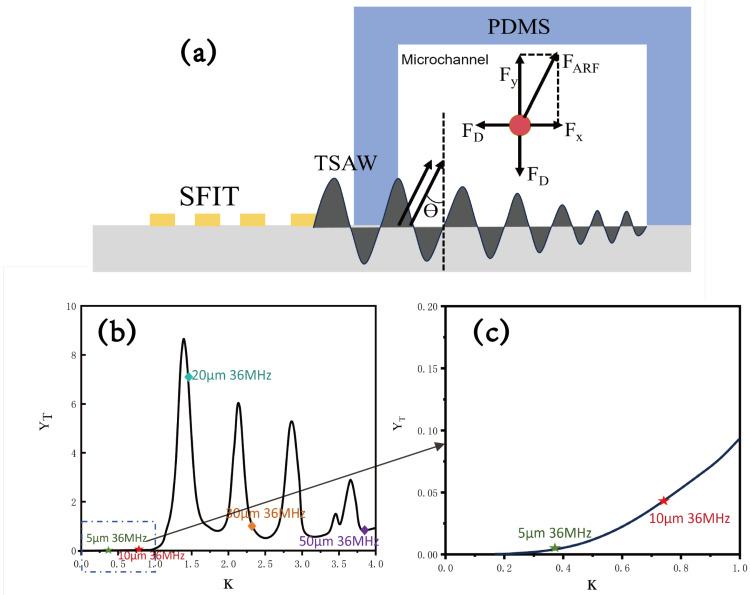
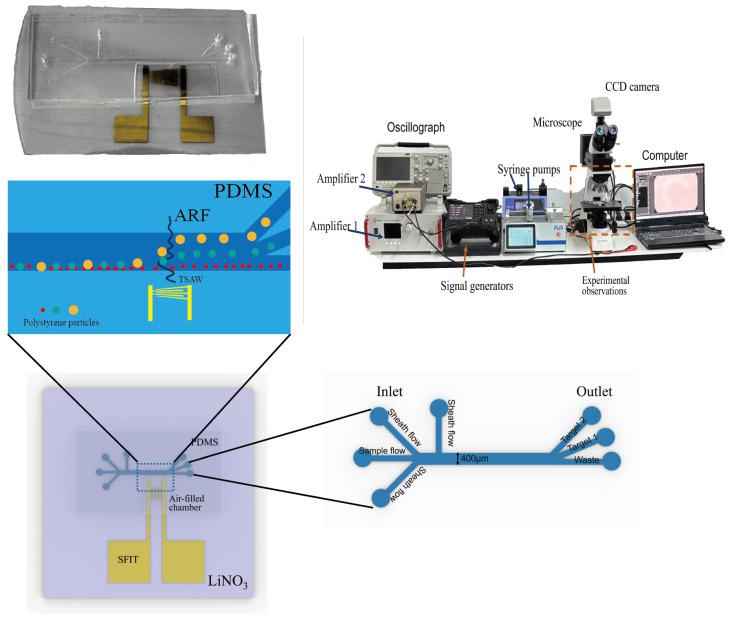
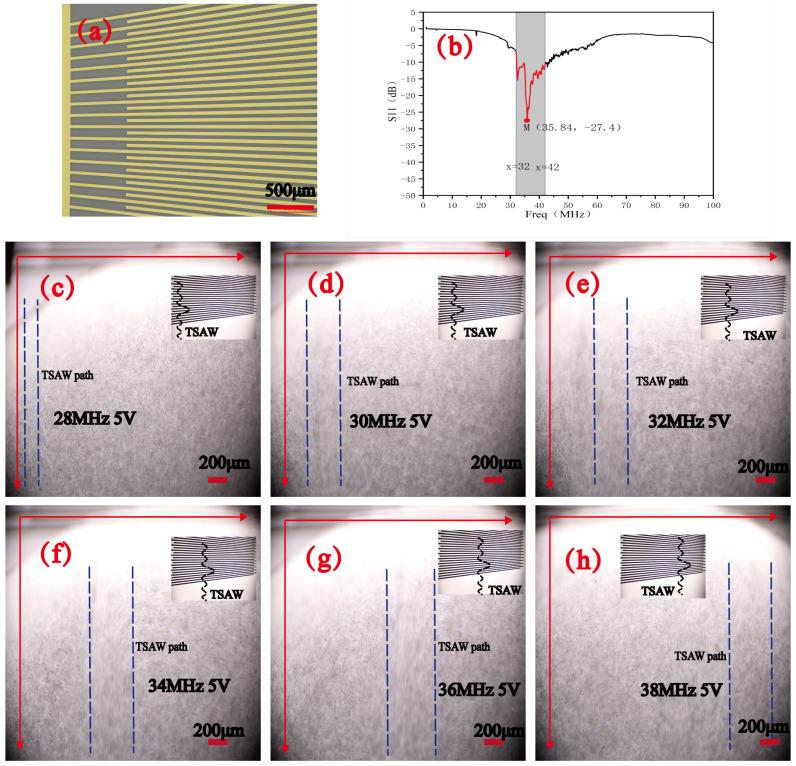
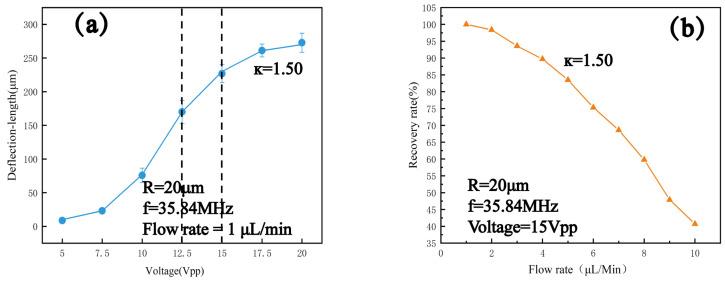
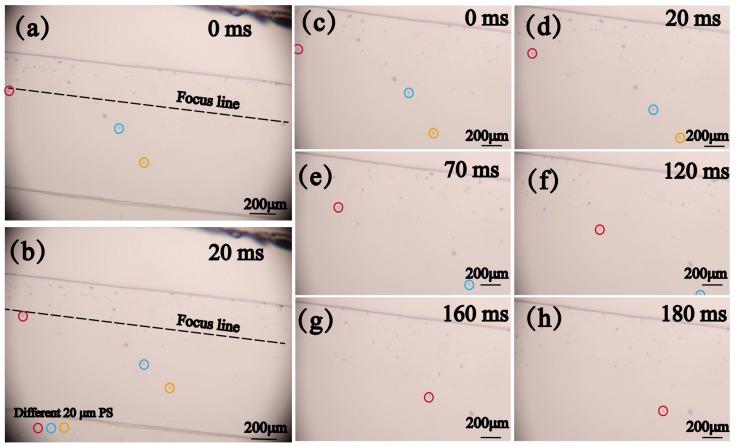
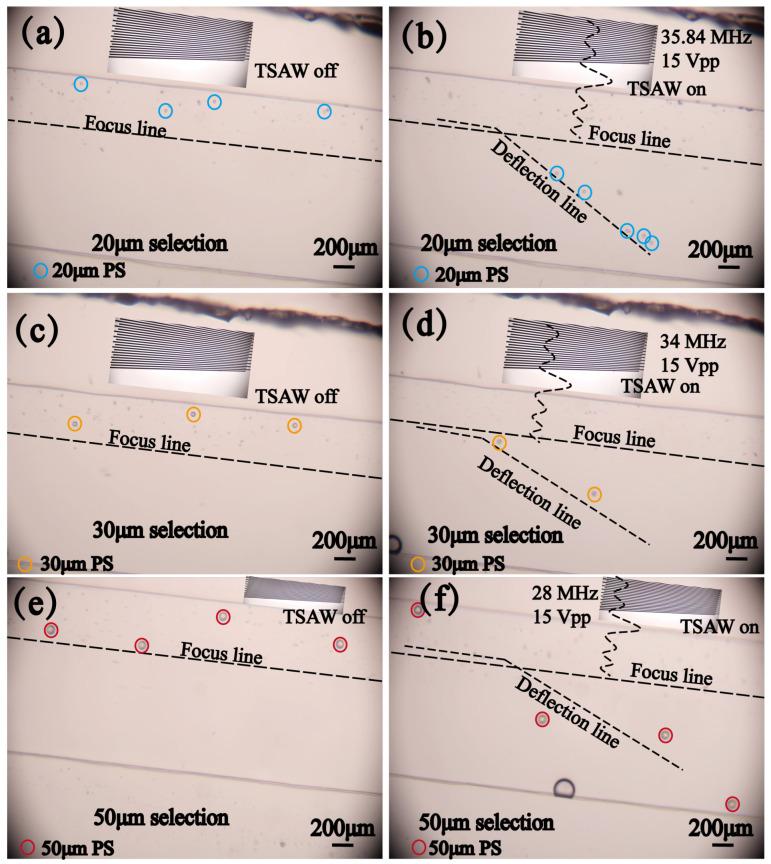
Sorting particles or cells of specific sizes in complex systems has long been a focus of many researchers. Acoustic surface waves, which generate acoustic radiation forces on particles or cells and, thus, influence their motion, are commonly used for the non-destructive separation of particles or cells of specific sizes. In previous studies, the frequency of acoustic surface wave generation has been limited by the interdigitated transducer (IDT). To extend the effective operating frequency range of the IDT, a slanted-finger interdigitated transducer (SFIT) with a wide acoustic path and multiple operating frequencies was designed. Compared with traditional acoustic sorting devices, which suffer from a limited frequency range and narrow acoustic paths, this new design greatly expands both the operating frequency range and acoustic path width, and enables adjustable operating frequencies, providing a solution for sorting particles or cells with uneven sizes in complex environments. The optimal resonance frequency is distributed within the 32-42 MHz range, and the operating frequencies within this range can generate a standing wave acoustic path of approximately 200 μm, thus enhancing the effectiveness of the operating frequencies. The microfluidic sorting device based on SFIT can efficiently and accurately sort polystyrene (PS) with particle sizes of 20 μm, 30 μm, and 50 μm from mixed PS microspheres (5, 10, 20 μm), (5, 10, 30 μm), and (5, 10, 50 μm), with a sorting efficiency and purity exceeding 96%. Additionally, the device is capable of sorting other types of mixed microspheres (5, 10, 20, 30, 50 μm). This new wide-acoustic-path, multi-frequency sorting device demonstrates the ability to sort particlesin a high-purity, label-free manner, offering a more alternative to traditional sorting methods.
在复杂系统中对特定大小的颗粒或细胞进行分选长期以来一直是众多研究人员关注的焦点。声表面波会在颗粒或细胞上产生声辐射力,进而影响它们的运动,通常用于对特定大小的颗粒或细胞进行无损分离。在以往的研究中,声表面波产生的频率一直受叉指换能器(IDT)的限制。为了扩展IDT的有效工作频率范围,设计了一种具有宽声路和多个工作频率的倾斜指叉指换能器(SFIT)。与传统声分选装置相比,传统装置存在频率范围有限和声路狭窄的问题,这种新设计极大地扩展了工作频率范围和声路宽度,并实现了工作频率的可调性,为在复杂环境中对大小不均的颗粒或细胞进行分选提供了解决方案。最佳共振频率分布在32 - 42兆赫兹范围内,该范围内的工作频率可产生约200微米的驻波声路,从而提高了工作频率的有效性。基于SFIT的微流控分选装置能够高效、准确地从混合聚苯乙烯(PS)微球(5、10、20微米)、(5、10、30微米)和(5、10、50微米)中分选出粒径为20微米、30微米和50微米的聚苯乙烯,分选效率和纯度超过96%。此外,该装置还能够分选其他类型的混合微球(5、10、20、30、50微米)。这种新型宽声路、多频率分选装置展示了以高纯度、无标记方式分选颗粒的能力,为传统分选方法提供了更多替代方案。


 Zotero 插件