
嵌入免疫细胞膜衍生囊泡中的纳米光动力剂用于肿瘤治疗
Tumor Treatment by Nano-Photodynamic Agents Embedded in Immune Cell Membrane-Derived Vesicles.
作者信息
He Zhaoyang, Huang Yunpeng, Wen Yu, Zou Yufeng, Nie Kai, Liu Zhongtao, Li Xiong, Zou Heng, Wang Yongxiang
机构信息
Department of General Surgery, Second Xiangya Hospital, Central South University, Changsha 410011, China.
出版信息
Pharmaceutics. 2025 Apr 7;17(4):481. doi: 10.3390/pharmaceutics17040481.
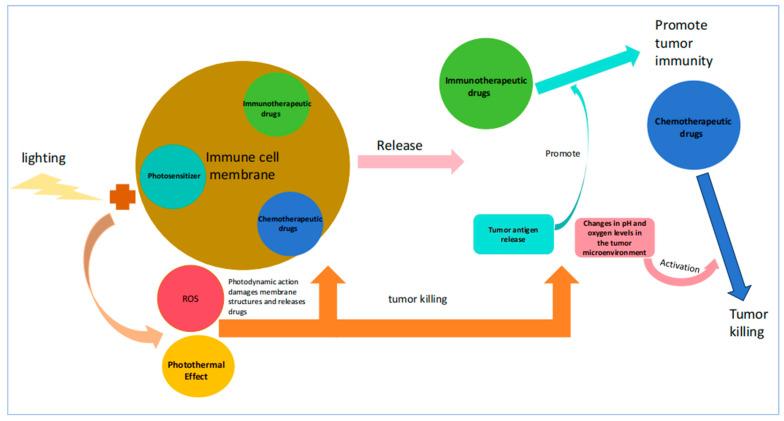
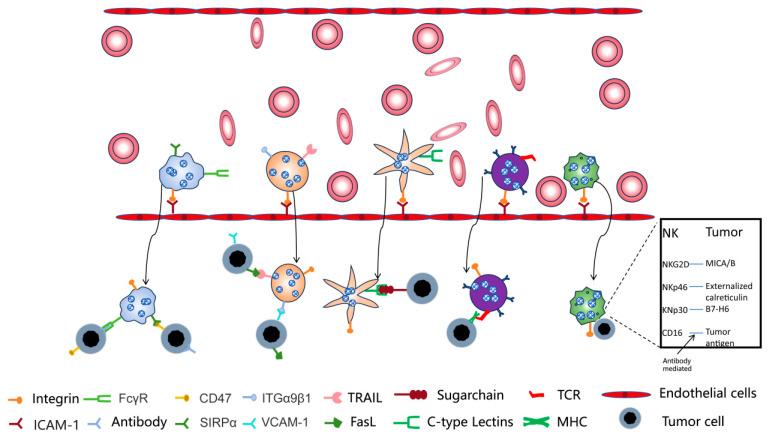
Non-invasive phototherapy includes modalities such as photodynamic therapy (PDT) and photothermal therapy (PTT). When combined with tumor immunotherapy, these therapeutic approaches have demonstrated significant efficacy in treating advanced malignancies, thus attracting considerable attention from the scientific community. However, the progress of these therapies is hindered by inherent limitations and potential adverse effects. Recent findings indicate that certain therapeutic strategies, including phototherapy, can induce immunogenic cell death (ICD), thereby opening new avenues for the integration of phototherapy with tumor immunotherapy. Currently, the development of biofilm nanomaterial-encapsulated drug delivery systems has reached a mature stage. Immune cell membrane-encapsulated nano-photosensitizers hold great promise, as they can enhance the tumor immune microenvironment. Based on bioengineering technology, immune cell membranes can be designed according to the tumor immune microenvironment, thereby enhancing the targeting and immune properties of nano-photosensitizers. Additionally, the space provided by the immune cell membrane allows for the co-encapsulation of immunotherapeutic agents and chemotherapy drugs, achieving a synergistic therapeutic effect. At the same time, the timing of photodynamic therapy (PDT) can be precisely controlled to regulate the action timing of both immunotherapeutic and chemotherapy drugs. This article summarizes and analyzes current research based on the aforementioned advancements.
非侵入性光疗包括光动力疗法(PDT)和光热疗法(PTT)等方式。当与肿瘤免疫疗法联合使用时,这些治疗方法在治疗晚期恶性肿瘤方面已显示出显著疗效,从而引起了科学界的广泛关注。然而,这些疗法的进展受到其固有局限性和潜在不良反应的阻碍。最近的研究结果表明,某些治疗策略,包括光疗,可以诱导免疫原性细胞死亡(ICD),从而为光疗与肿瘤免疫疗法的整合开辟了新途径。目前,生物膜纳米材料封装的药物递送系统的开发已达到成熟阶段。免疫细胞膜封装的纳米光敏剂具有很大的潜力,因为它们可以增强肿瘤免疫微环境。基于生物工程技术,可以根据肿瘤免疫微环境设计免疫细胞膜,从而增强纳米光敏剂的靶向性和免疫特性。此外,免疫细胞膜提供的空间允许共封装免疫治疗剂和化疗药物,实现协同治疗效果。同时,可以精确控制光动力疗法(PDT)的时间,以调节免疫治疗药物和化疗药物的作用时间。本文基于上述进展对当前研究进行了总结和分析。



 Zotero 插件