
中国杭州甲型H3N2季节性流感的持续流行及其病毒基因多样性
The Ongoing Epidemics of Seasonal Influenza A(H3N2) in Hangzhou, China, and Its Viral Genetic Diversity.
作者信息
Zheng Xueling, Cao Feifei, Yu Yue, Yu Xinfen, Zhou Yinyan, Cheng Shi, Qiu Xiaofeng, Ao Lijiao, Yang Xuhui, Sun Zhou, Li Jun
机构信息
Hangzhou Center for Disease Control and Prevention (Hangzhou Health Supervision Institution), Hangzhou 310002, China.
Zhejiang Key Laboratory of Multi-Omics in Infection and Immunity, Hangzhou 310002, China.
出版信息
Viruses. 2025 Apr 4;17(4):526. doi: 10.3390/v17040526.
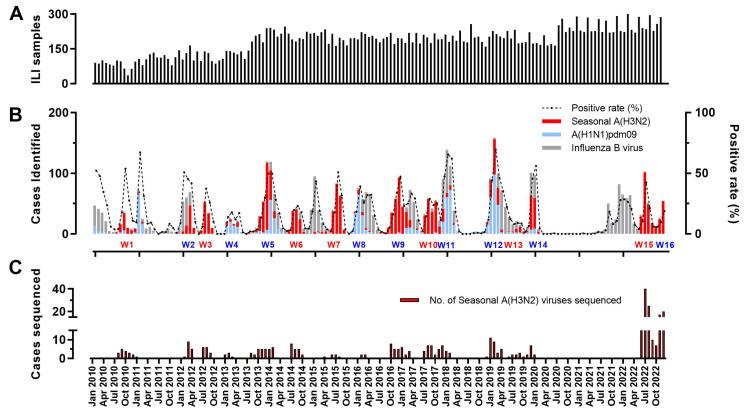
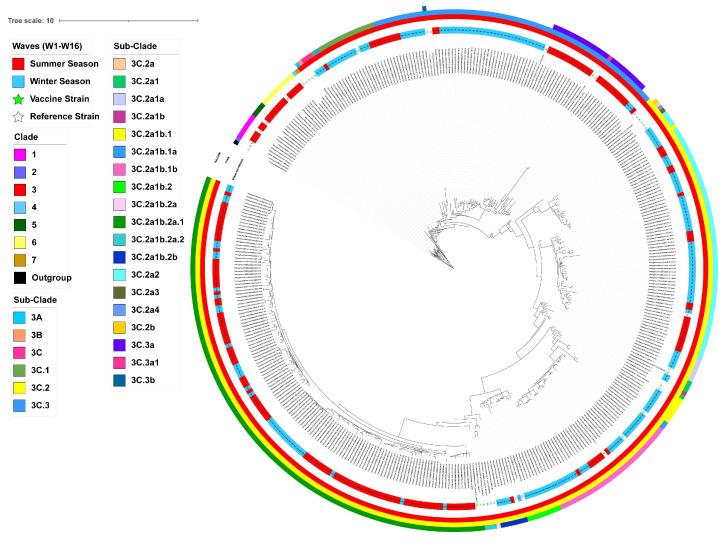
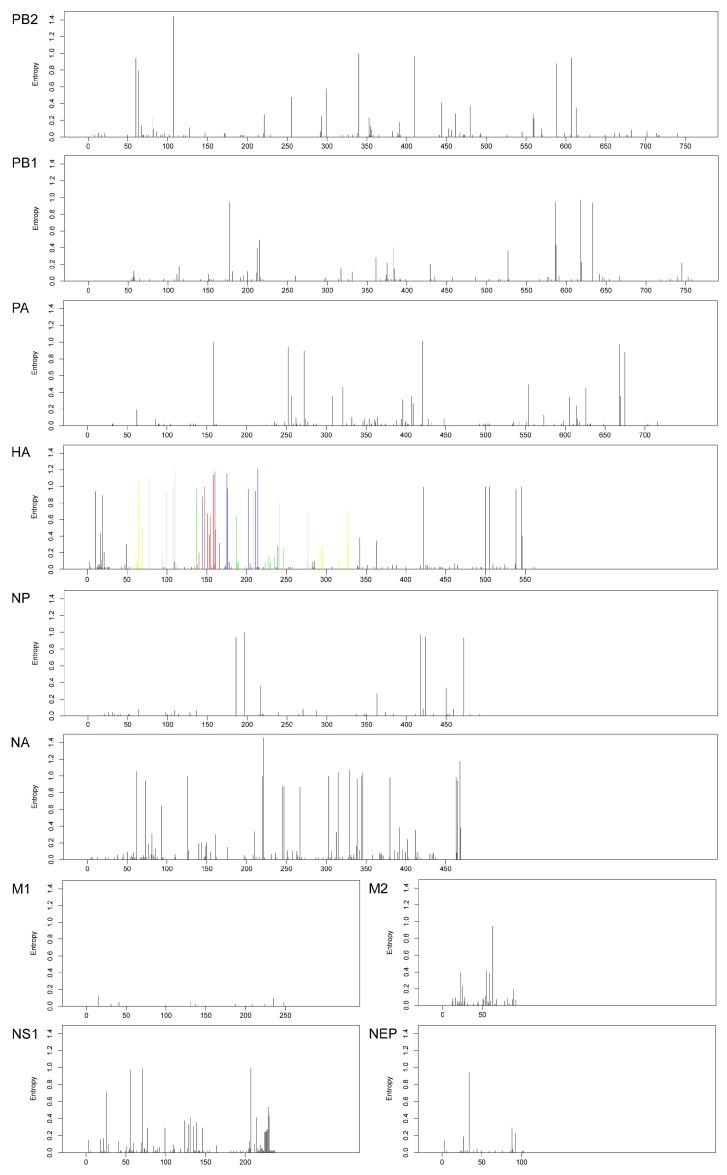
This study examined the genetic and evolutionary features of influenza A/H3N2 viruses in Hangzhou (2010-2022) by analyzing 28,651 influenza-like illness samples from two sentinel hospitals. Influenza A/H3N2 coexisted with other subtypes, dominating seasonal peaks (notably summer). Whole-genome sequencing of 367 strains was performed on GridION platforms. Phylogenetic analysis showed they fell into 16 genetic groups, with multiple clades circulating simultaneously. Shannon entropy indicated HA, NA, and NS gene segments exhibited significantly higher variability than other genomic segments, with HA glycoprotein mutations concentrated in antigenic epitopes A-E. Antiviral resistance showed no inhibitor resistance mutations in PA, PB1, or PB2, but NA mutations were detected in some strains, and most strains harbored M2 mutations. A Bayesian molecular clock showed the HA segment exhibited the highest nucleotide substitution rate (3.96 × 10 substitutions/site/year), followed by NA (3.77 × 10) and NS (3.65 × 10). Selective pressure showed A/H3N2 strains were predominantly under purifying selection, with only sporadic positive selection at specific sites. The Pepitope model demonstrated that antigenic epitope mismatches between circulating H3N2 variants and vaccine strains led to a significant decline in influenza vaccine effectiveness (VE), particularly in 2022. Overall, the study underscores the complex circulation patterns of influenza in Hangzhou and the global importance of timely vaccine strain updates.
本研究通过分析两家哨点医院的28,651份流感样病例样本,研究了杭州地区(2010 - 2022年)甲型H3N2流感病毒的遗传和进化特征。甲型H3N2流感病毒与其他亚型共存,主导季节性高峰(尤其是夏季)。在GridION平台上对367株病毒进行了全基因组测序。系统发育分析表明,它们分为16个遗传组,多个进化枝同时流行。香农熵表明,HA、NA和NS基因片段的变异性显著高于其他基因组片段,HA糖蛋白突变集中在抗原表位A - E。抗病毒耐药性方面,PA、PB1或PB2未检测到抑制剂耐药性突变,但在一些毒株中检测到NA突变,且大多数毒株存在M2突变。贝叶斯分子钟显示,HA片段的核苷酸替换率最高(3.96×10⁻³替换/位点/年),其次是NA(3.77×10⁻³)和NS(3.65×10⁻³)。选择压力表明,A/H3N2毒株主要处于纯化选择之下,仅在特定位点有零星的正选择。Pepitope模型表明,流行的H3N2变体与疫苗株之间的抗原表位不匹配导致流感疫苗效力(VE)显著下降,特别是在2022年。总体而言,该研究强调了杭州地区流感复杂的流行模式以及及时更新疫苗株的全球重要性。

 Zotero 插件