
从水提取物中绿色合成银纳米颗粒及其对鸡胚生长的影响。
Green Synthesis of Silver Nanoparticles from Aqueous Extract and Their Effect on and Chicken Embryo Growth.
作者信息
Michalec Sebastian, Nieckarz Wiktoria, Klimek Wiktoria, Lange Agata, Matuszewski Arkadiusz, Piotrowska Klara, Hotowy Anna, Kunowska-Slósarz Małgorzata, Sosnowska Malwina
机构信息
Department of Nanobiotechnology, Institute of Biology, Warsaw University of Life Sciences, 02-787 Warsaw, Poland.
Department of Animal Environment Biology, Institute of Animal Sciences, Warsaw University of Life Sciences, 02-787 Warsaw, Poland.
出版信息
Molecules. 2025 Mar 29;30(7):1521. doi: 10.3390/molecules30071521.
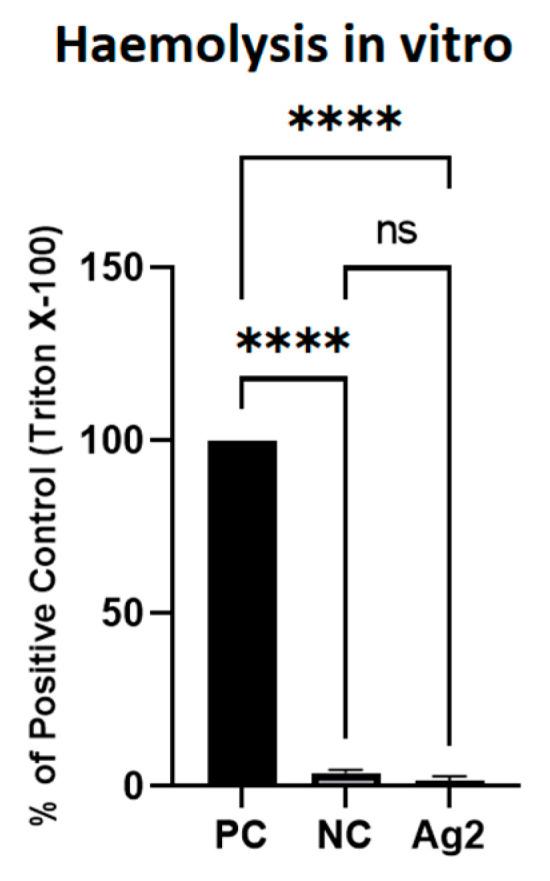
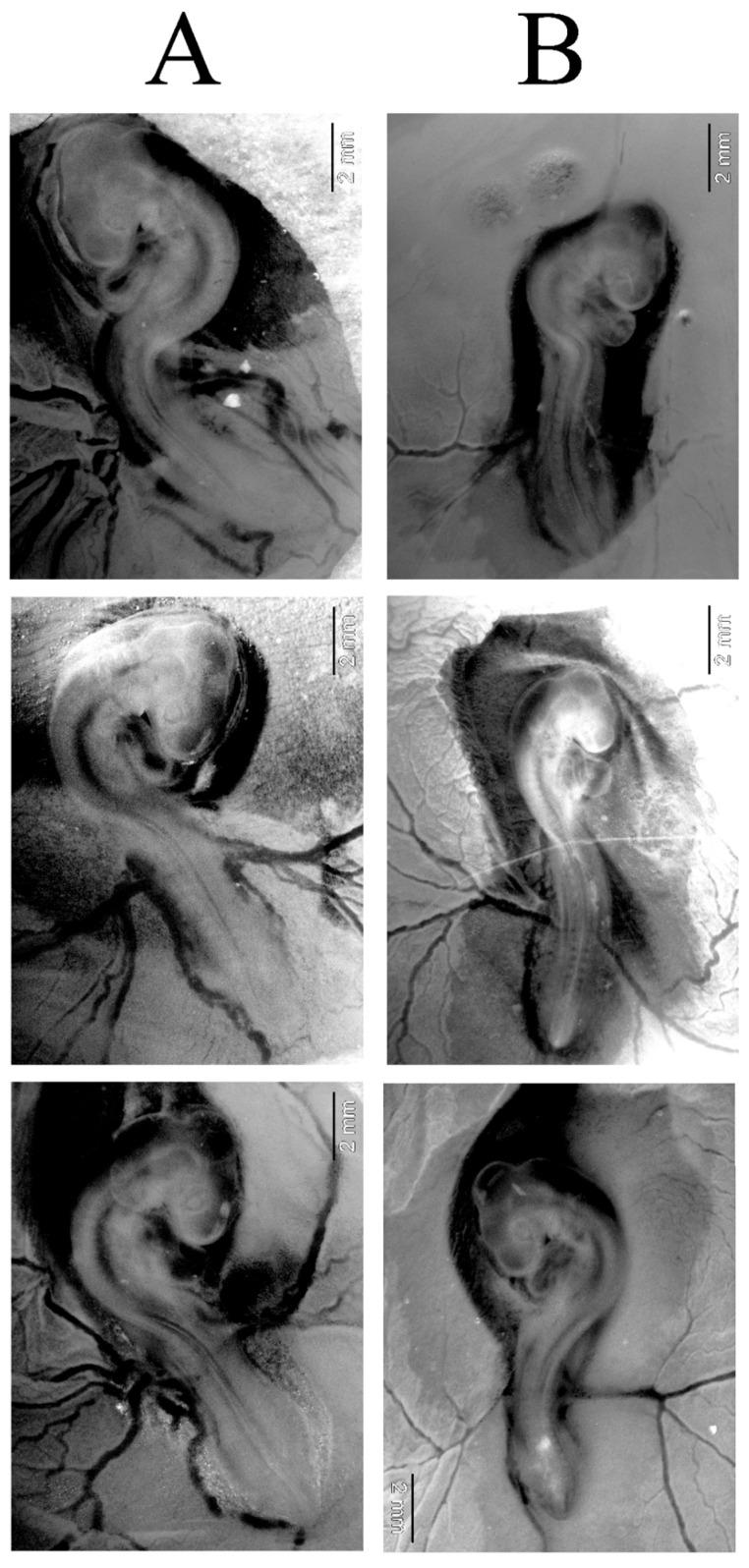
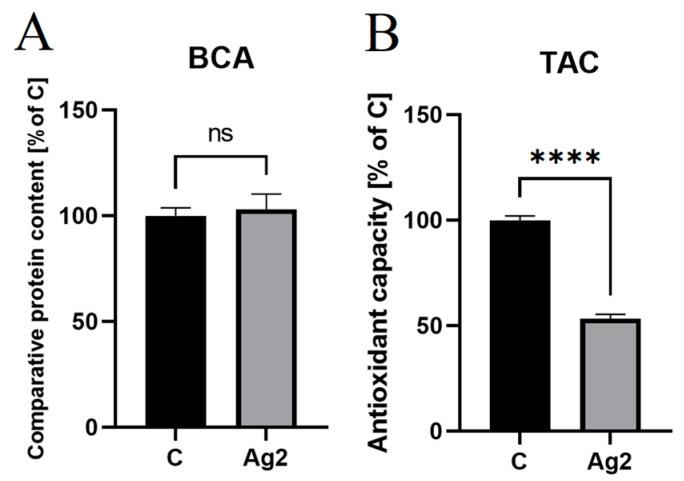
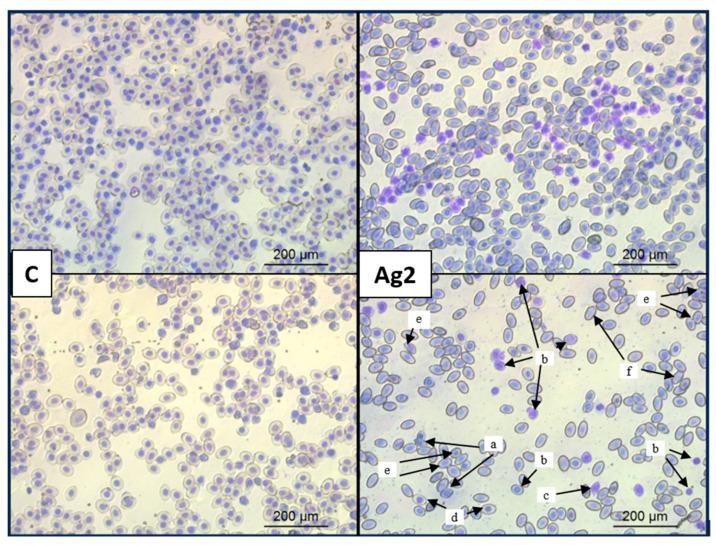
Silver nanoparticles (AgNPs), synthesised using algal extract and silver nitrate, are studied in medicine for their antibacterial properties in poultry. This study assessed the effect of AgNPs on bacterial inhibition and early development and blood parameters in Ross 308 chicken embryos. AgNPs were characterised using transmission electron microscopy, scanning electron microscopy with a focused ion beam, UV-Vis spectroscopy, and a zetasizer. The antibacterial properties of the AgNP colloid against were assessed using minimal inhibitory concentration, minimal bacterial concentration, and PrestoBlue assays. AgNP colloid (2 mg/L) was injected into egg albumen on day 0. Chicken embryos were incubated for 3 and 16 d. The effect of AgNPs on 3 d old embryos was evaluated based on mortality and somite count using the Hamburger-Hamilton classification. For older embryos, mortality, dimensions, anatomical changes, organ mass, plasma liver enzymes and antioxidants, and red blood cell morphology were determined. Blood samples from the control group embryos were assessed for the impact of AgNPs on hemolysis. AgNPs inhibited growth at concentrations >6.75 mg/L. A 3 d exposure to AgNPs caused an insignificant decrease in the number of somites without affecting embryo mortality. However, a 16 d exposure to AgNPs reduced live embryos and plasma antioxidants, changed the levels of ALT, AST, and GGT, altered red blood cell morphology, and caused hemolysis. Toxicity of AgNPs was model-dependent, whereby the chicken embryo was more sensitive to AgNPs than the bacterium.
使用藻类提取物和硝酸银合成的银纳米颗粒(AgNPs)因其在家禽中的抗菌特性而在医学领域得到研究。本研究评估了AgNPs对罗斯308鸡胚细菌抑制、早期发育和血液参数的影响。使用透射电子显微镜、聚焦离子束扫描电子显微镜、紫外可见光谱和zeta电位分析仪对AgNPs进行了表征。使用最低抑菌浓度、最低细菌浓度和PrestoBlue测定法评估了AgNP胶体对[具体细菌]的抗菌性能。在第0天将AgNP胶体(2 mg/L)注入蛋清中。鸡胚孵化3天和16天。基于死亡率和体节计数,使用汉堡-汉密尔顿分类法评估AgNPs对3日龄胚胎的影响。对于较大的胚胎,测定死亡率、尺寸、解剖学变化、器官质量、血浆肝酶和抗氧化剂以及红细胞形态。评估对照组胚胎的血液样本中AgNPs对溶血的影响。AgNPs在浓度>6.75 mg/L时抑制[具体细菌]生长。暴露于AgNPs 3天导致体节数量略有减少,但不影响胚胎死亡率。然而,暴露于AgNPs 16天会减少活胚胎数量和血浆抗氧化剂,改变谷丙转氨酶(ALT)、谷草转氨酶(AST)和γ-谷氨酰转肽酶(GGT)水平,改变红细胞形态并导致溶血。AgNPs的毒性取决于模型,鸡胚对AgNPs比细菌更敏感。



 Zotero 插件