
中国天津糖尿病患者中新冠病毒灭活疫苗代谢益处的纵向评估
Longitudinal Evaluation of Metabolic Benefits of Inactivated COVID-19 Vaccination in Diabetic Patients in Tianjin, China.
作者信息
Wang Jingyi, Wang Zhida, Sun Bei, Chen Liming
机构信息
NHC Key Laboratory of Hormones and Development, Chu Hsien-I Memorial Hospital and Tianjin Institute of Endocrinology, Tianjin Medical University, Tianjin, China.
Tianjin Key Laboratory of Metabolic Diseases, Tianjin Medical University, Tianjin, China.
出版信息
Med Sci Monit. 2025 Apr 27;31:e947450. doi: 10.12659/MSM.947450.
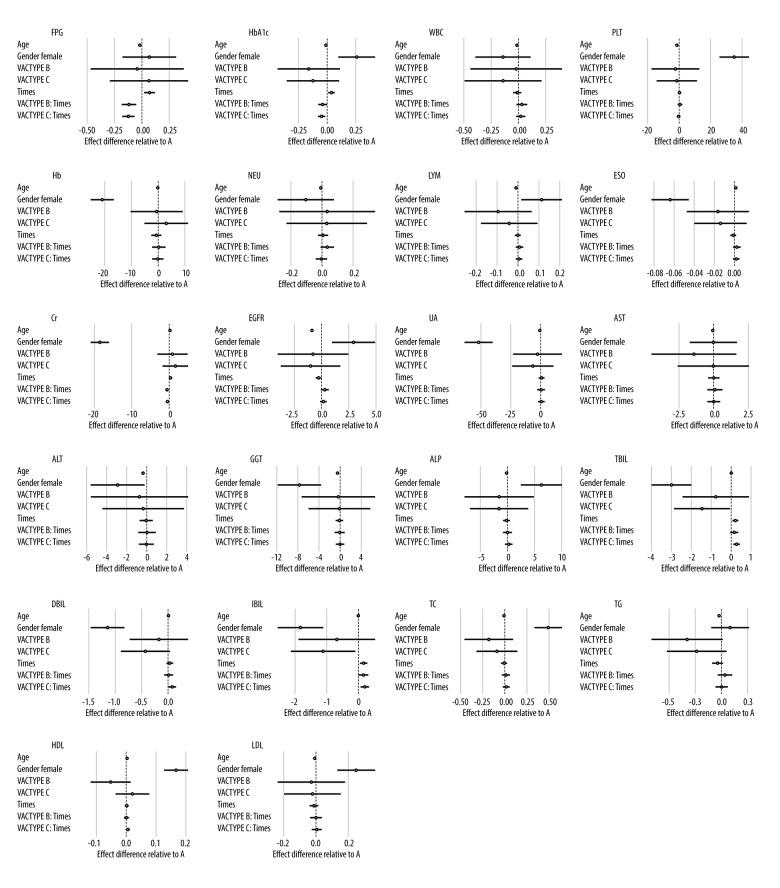
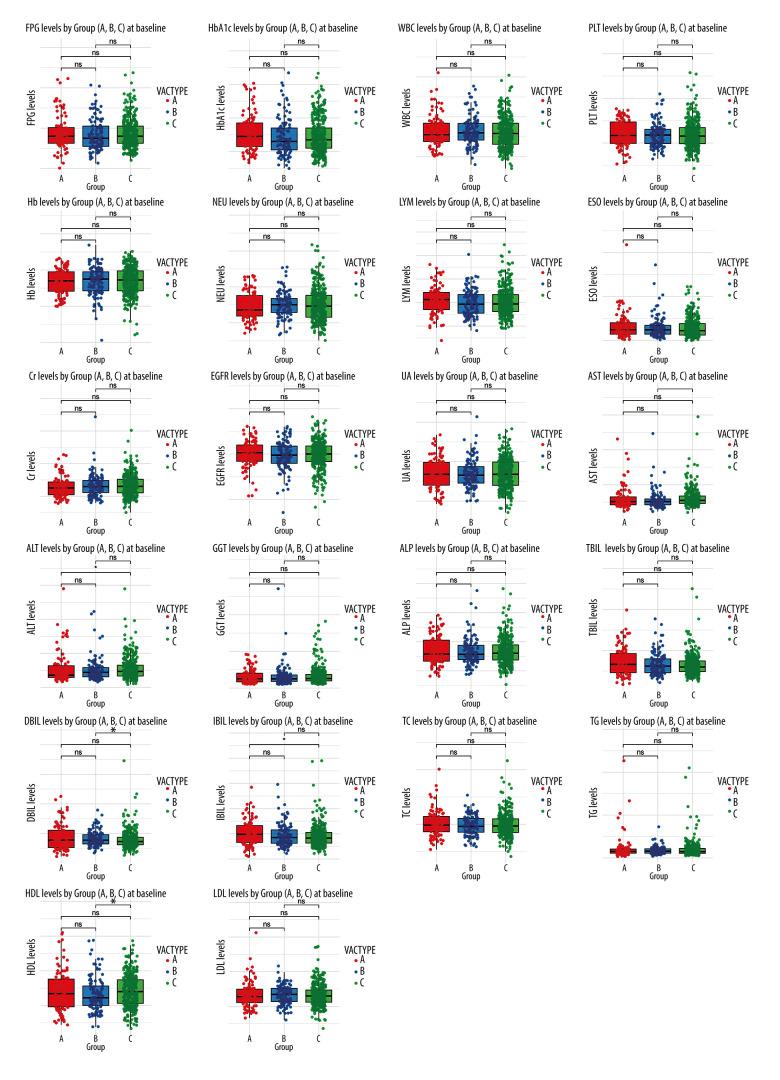
BACKGROUND Diabetes significantly heightens risks of COVID-19 infection, and vaccine hesitancy remains high due to safety concerns. MATERIAL AND METHODS This study assessed the effects of inactivated COVID-19 vaccine in 548 diabetic patients from Tianjin, China, categorized by vaccination status: unvaccinated (n=94), primary immunization (n=117), and booster immunization (n=337). A total of 22 clinical values were assessed prior to vaccination, 3 months after vaccination, and 12 months after vaccination. Variables with a normal distribution were compared across groups using one-way ANOVA, while non-normally distributed variables were compared using the Kruskal-Wallis test and chi-square tests for categorical data. Linear mixed-effects models were used to evaluate the effects of time and vaccine type on these clinical values, with random intercepts to account for within-subject variability and interaction terms for detailed group comparisons over time. RESULTS Baseline results showed no major differences across groups, including fasting glucose, HbA1c, granulocytes, hemoglobin, platelets, renal function markers such as uric acid, creatinine, and eGFR. Booster vaccination significantly reduced FPG (Estimate=-0.123, p<0.001) and HbA1c (Estimate=-0.049, p<0.01), with primary vaccination also reducing FPG (Estimate=-0.118, p<0.001) and HbA1c (Estimate=-0.040, p<0.05). However, creatinine decreased and bilirubin levels rose in vaccinated groups but remained within the normal physiological range. Other indicators showed no significant changes. CONCLUSIONS In conclusion, COVID-19 inactivated vaccine can provide metabolic benefits for diabetic patients.
背景
糖尿病显著增加感染新型冠状病毒肺炎(COVID-19)的风险,并且由于安全担忧,疫苗犹豫率仍然很高。
材料与方法
本研究评估了中国天津548名糖尿病患者接种灭活COVID-19疫苗的效果,根据疫苗接种状态分类:未接种(n=94)、初次免疫(n=117)和加强免疫(n=337)。在接种疫苗前、接种后3个月和接种后12个月共评估了22项临床指标。对呈正态分布的变量采用单因素方差分析进行组间比较,对非正态分布的变量采用Kruskal-Wallis检验,并对分类数据采用卡方检验。使用线性混合效应模型评估时间和疫苗类型对这些临床指标的影响,采用随机截距来解释个体内变异性,并使用交互项进行随时间的详细组间比较。
结果
基线结果显示各组之间无重大差异,包括空腹血糖、糖化血红蛋白(HbA1c)、粒细胞、血红蛋白、血小板以及肾功能指标如尿酸、肌酐和估算肾小球滤过率(eGFR)。加强免疫显著降低空腹血糖(估计值=-0.123,p<0.001)和HbA1c(估计值=-0.049,p<0.01),初次免疫也降低空腹血糖(估计值=-0.118,p<0.001)和HbA1c(估计值=-0.040,p<0.05)。然而,接种疫苗组的肌酐降低,胆红素水平升高,但仍在正常生理范围内。其他指标无显著变化。
结论
总之,COVID-19灭活疫苗可为糖尿病患者带来代谢益处。

 Zotero 插件