
军事基础训练期间对新兵进行持续监测以减少人员流失。
Continuous Monitoring of Recruits During Military Basic Training to Mitigate Attrition.
作者信息
Decorte Robbe, Vanhaeverbeke Jelle, VanDen Berghe Sarah, Slembrouck Maarten, Verstockt Steven
机构信息
IDLab, Ghent University-Imec, Technologiepark-Zwijnaarde 122, 9052 Ghent, Belgium.
Department of Rehabilitation Sciences, Ghent University, C. Heymanslaan 10, 9000 Ghent, Belgium.
出版信息
Sensors (Basel). 2025 Mar 14;25(6):1828. doi: 10.3390/s25061828.
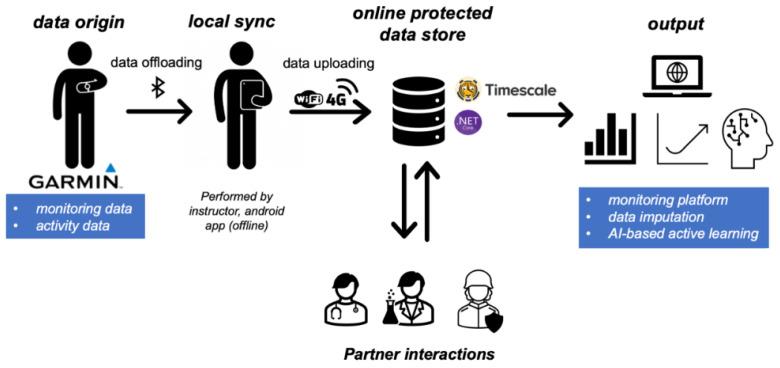
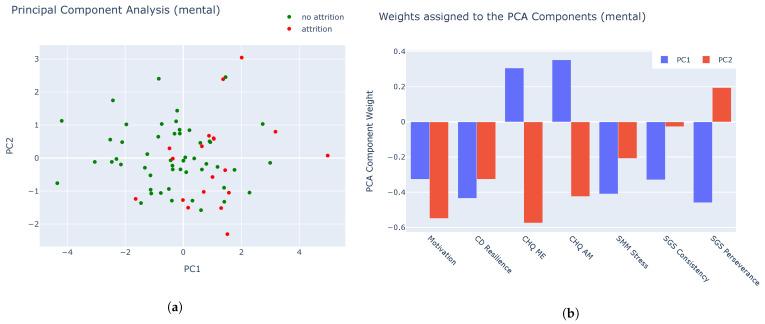
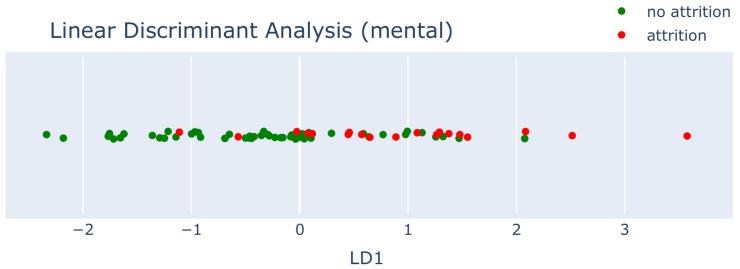
This paper explores the use of wearable technology (Garmin Fenix 7) to monitor physiological and psychological factors contributing to attrition during basic military training. Attrition, or the voluntary departure of recruits from the military, often results from physical and psychological challenges, such as fatigue, injury, and stress, which lead to significant costs for the military. To better understand and mitigate attrition, we designed and implemented a comprehensive and continuous data-capturing methodology to monitor 63 recruits during their basic infantry training. It's optimized for military use by being minimally invasive (for both recruits and operators), preventing data leakage, and being built for scale. We analysed data collected from two test phases, focusing on seven key psychometric and physical features derived from baseline questionnaires and physiological measurements from wearable devices. The preliminary results revealed that recruits at risk of attrition tend to cluster in specific areas of the feature space in both Linear Discriminant Analysis (LDA) and Principal Component Analysis (PCA). Key indicators of attrition included low motivation, low resilience, and a stress mindset. Furthermore, we developed a predictive model using physiological data, such as sleep scores and step counts from Garmin devices, achieving a macro mean absolute error (MAE) of 0.74. This model suggests the potential to reduce the burden of daily wellness questionnaires by relying on continuous, unobtrusive monitoring.
本文探讨了可穿戴技术(佳明Fenix 7)在基础军事训练期间监测导致人员流失的生理和心理因素方面的应用。人员流失,即新兵自愿离开军队,通常是由身体和心理挑战导致的,如疲劳、受伤和压力,这给军队带来了巨大成本。为了更好地理解和减轻人员流失,我们设计并实施了一种全面且持续的数据采集方法,在63名新兵进行基础步兵训练期间对他们进行监测。该方法通过微创(对新兵和操作人员而言)、防止数据泄露以及为大规模应用而构建,实现了针对军事用途的优化。我们分析了从两个测试阶段收集的数据,重点关注从基线问卷和可穿戴设备的生理测量中得出的七个关键心理测量和身体特征。初步结果显示,在线性判别分析(LDA)和主成分分析(PCA)中,有人员流失风险的新兵往往聚集在特征空间的特定区域。人员流失的关键指标包括动力不足、恢复力低和压力心态。此外,我们利用佳明设备的睡眠分数和步数等生理数据开发了一个预测模型,实现了0.74的宏观平均绝对误差(MAE)。该模型表明,依靠持续、不引人注意的监测,有可能减轻每日健康问卷的负担。




 Zotero 插件