
诱导型一氧化氮合酶(iNOS)作为抗肺动脉高压的新靶点有前景吗?
Is Inducible Nitric Oxide Synthase (iNOS) Promising as a New Target Against Pulmonary Hypertension?
作者信息
Ryszkiewicz Piotr, Schlicker Eberhard, Malinowska Barbara
机构信息
Department of Experimental Physiology and Pathophysiology, Medical University of Bialystok, Mickiewicz Str. 2A, 15-222 Bialystok, Poland.
Department of Pharmacology and Toxicology, University of Bonn, Venusberg Campus 1, 53127 Bonn, Germany.
出版信息
Antioxidants (Basel). 2025 Mar 21;14(4):377. doi: 10.3390/antiox14040377.
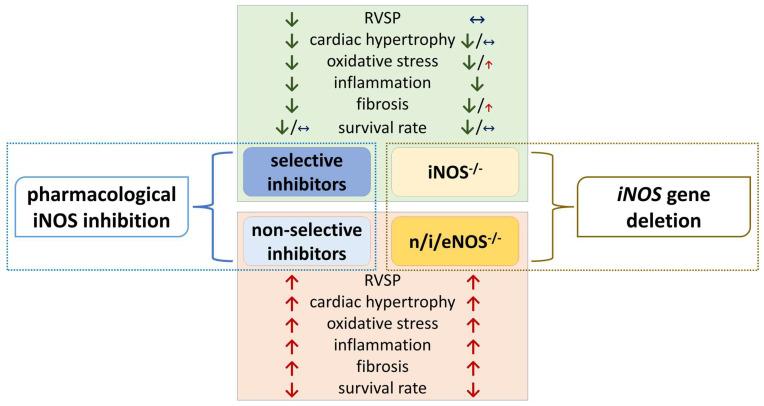
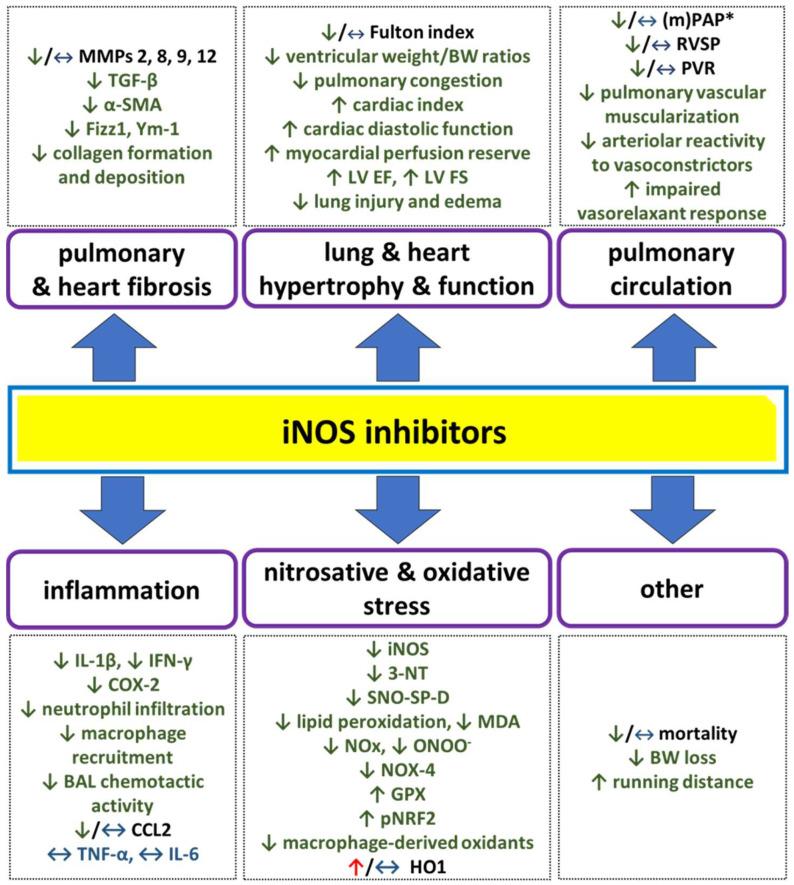
Pulmonary hypertension (PH) is a progressive disease characterized by elevated blood pressure in the pulmonary arteries, associated also with inflammation and oxidative stress. Inducible nitric oxide synthase (iNOS) is one of the key mediators of inflammation and immune system activation. Although preclinical studies mostly suggest a detrimental role of iNOS overactivation in PH, there is a lack of exhaustive analyses and summaries. Therefore, this literature overview aims to fill this gap. The involvement of iNOS in the pathogenesis of the four main clinical groups of PH is discussed to assess whether targeting iNOS could be a promising way to treat PH. iNOS expression patterns in the organs primarily affected by PH are analyzed both in animals and in humans. Consequently, the effectiveness of pharmacological iNOS inhibition and/or iNOS gene deletion is discussed and compared, also with reference to the activity of constitutive NOS isoforms, particularly endothelial NOS (eNOS). Overall, our overview suggests that selective iNOS inhibitors could be considered as a novel treatment strategy for PH, as decreases in right ventricular and pulmonary artery pressure, the alleviation of ventricular hypertrophy, and improvements of pulmonary and cardiac function were observed, among others. Nevertheless, further research efforts in this area are needed.
肺动脉高压(PH)是一种进行性疾病,其特征是肺动脉血压升高,还伴有炎症和氧化应激。诱导型一氧化氮合酶(iNOS)是炎症和免疫系统激活的关键介质之一。尽管临床前研究大多表明iNOS过度激活在PH中起有害作用,但缺乏详尽的分析和总结。因此,本综述旨在填补这一空白。讨论了iNOS在四种主要临床类型PH发病机制中的作用,以评估靶向iNOS是否可能是治疗PH的一种有前景的方法。分析了在动物和人类中主要受PH影响的器官中的iNOS表达模式。因此,还参考组成型NOS同工型,特别是内皮型NOS(eNOS)的活性,讨论并比较了药理学上抑制iNOS和/或缺失iNOS基因的有效性。总体而言,我们的综述表明,选择性iNOS抑制剂可被视为PH的一种新型治疗策略,因为观察到右心室和肺动脉压力降低、心室肥厚减轻以及肺和心脏功能改善等情况。然而,该领域仍需要进一步的研究努力。

 Zotero 插件