
端粒长度在1型糖尿病中既是病因又是结果:来自双向孟德尔随机化的证据。
Telomere Length as Both Cause and Consequence in Type 1 Diabetes: Evidence from Bidirectional Mendelian Randomization.
作者信息
Wei Guanping, Chen Ruiping, Liu Shupeng, Cai Shenhua, Feng Zhijun
机构信息
Department of Emergency, The First Affiliated Hospital of Sun Yat-sen University, Guangzhou 510080, China.
Department of Thoracic Surgery, The First Affiliated Hospital of Sun Yat-sen University, Guangzhou 510080, China.
出版信息
Biomedicines. 2025 Mar 22;13(4):774. doi: 10.3390/biomedicines13040774.
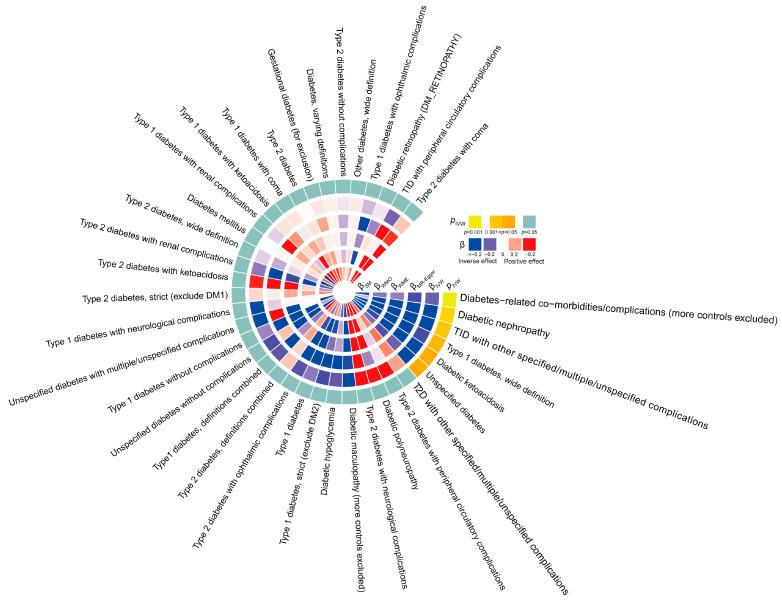
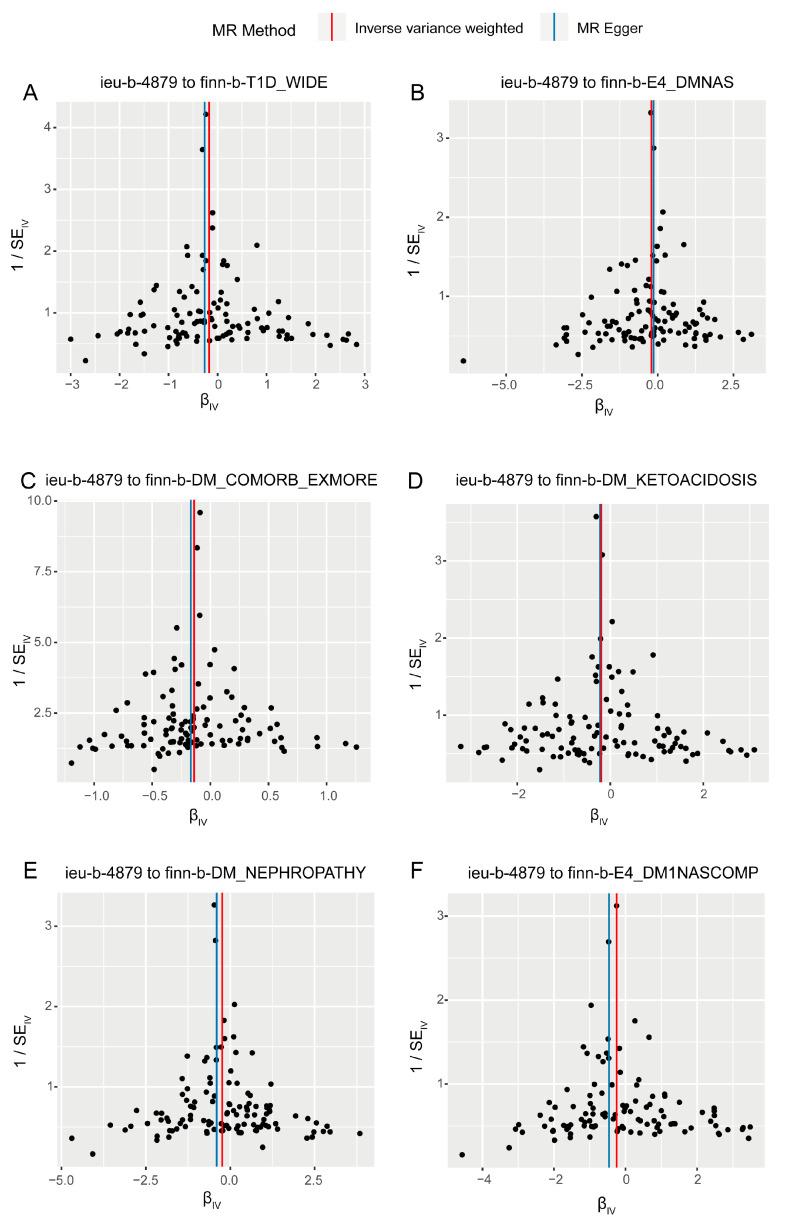
Diabetes is the most prevalent metabolic disease globally, characterized by dysregulated glucose control and accompanied by multiple refractory complications. As a critical marker of cellular homeostasis, telomere length (TL) may be associated with the progression of diabetes. However, the causal relationship between diabetes and TL remains unclear, particularly whether cellular homeostasis imbalance acts as a consequence of diabetic complications or a precipitating factor in disease development. We performed a bidirectional Mendelian randomization (MR) analysis using genome-wide association study (GWAS) data. Following the three core assumptions of MR analysis, we conducted quality control on all instrumental variables to ensure methodological rigor. The inverse variance weighted (IVW) method served as the primary analytical method, supplemented by additional MR methods to evaluate the significance of the results. Furthermore, we performed sensitivity analyses to ensure the reliability and robustness of the findings. Forward analysis revealed that shortened TL significantly increases the risk of broadly defined Type 1 diabetes (T1D) and unspecified types of diabetes ( < 0.05). Additionally, we identified a positive causal relationship between TL and several diabetes-related complications, including co-morbidities, diabetic nephropathy, and diabetic ketoacidosis ( < 0.05). Interestingly, the reverse analysis demonstrated a positive causal effect of T1D and its complications on TL ( < 0.05); however, this effect disappeared after adjusting for insulin use ( > 0.05). Bidirectional MR analyses revealed a complex relationship between TL and T1D, where shortened telomeres increase T1D risk while T1D itself may trigger compensatory mechanisms affecting telomere maintenance, with insulin playing a crucial regulatory role in this relationship. These findings suggest telomere biology may be fundamentally involved in T1D pathogenesis and could inform future therapeutic approaches.
糖尿病是全球最普遍的代谢性疾病,其特征为血糖控制失调,并伴有多种难治性并发症。作为细胞稳态的关键标志物,端粒长度(TL)可能与糖尿病的进展有关。然而,糖尿病与TL之间的因果关系仍不明确,特别是细胞稳态失衡是糖尿病并发症的结果还是疾病发展的诱发因素。我们使用全基因组关联研究(GWAS)数据进行了双向孟德尔随机化(MR)分析。遵循MR分析的三个核心假设,我们对所有工具变量进行了质量控制,以确保方法的严谨性。逆方差加权(IVW)方法作为主要分析方法,并辅以其他MR方法来评估结果的显著性。此外,我们进行了敏感性分析,以确保研究结果的可靠性和稳健性。正向分析显示,缩短的TL显著增加了广义1型糖尿病(T1D)和未指定类型糖尿病的风险(<0.05)。此外,我们确定了TL与几种糖尿病相关并发症之间存在正因果关系,包括合并症、糖尿病肾病和糖尿病酮症酸中毒(<0.05)。有趣的是,反向分析显示T1D及其并发症对TL有正向因果效应(<0.05);然而,在调整胰岛素使用后,这种效应消失了(>0.05)。双向MR分析揭示了TL与T1D之间的复杂关系,其中端粒缩短增加了T1D风险,而T1D本身可能触发影响端粒维持的补偿机制,胰岛素在这种关系中起关键调节作用。这些发现表明端粒生物学可能在T1D发病机制中起根本作用,并可为未来的治疗方法提供参考。



 Zotero 插件