
自然杀伤细胞在癌症免疫治疗中的作用:机制、逃逸策略及治疗进展
The Role of NK Cells in Cancer Immunotherapy: Mechanisms, Evasion Strategies, and Therapeutic Advances.
作者信息
Morcillo-Martín-Romo Paula, Valverde-Pozo Javier, Ortiz-Bueno María, Arnone Maurizio, Espinar-Barranco Laura, Espinar-Barranco Celia, García-Rubiño María Eugenia
机构信息
Centre for Biomedical Research (CIBM), University of Granada, 18100 Granada, Spain.
Departamento de Química y Bioquímica, Facultad de Farmacia, Universidad San Pablo-CEU, CEU Universities, Urbanización Montepríncipe, 28668 Boadilla del Monte, Spain.
出版信息
Biomedicines. 2025 Apr 2;13(4):857. doi: 10.3390/biomedicines13040857.
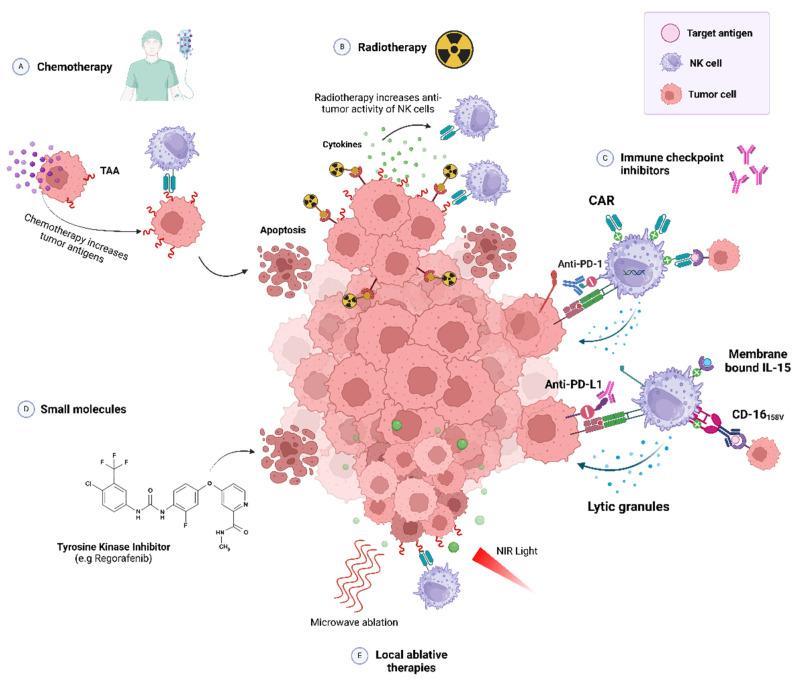
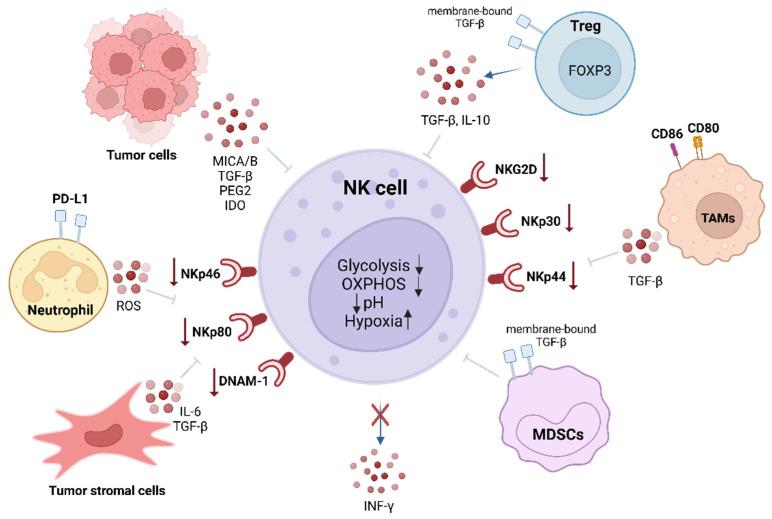
Natural killer (NK) cells play a crucial role in tumor surveillance by exerting cytotoxic activity and modulating immune responses. However, tumors employ diverse evasion strategies that limit NK cell effectiveness. This review aims to explore the molecular mechanisms of NK cell activation and inhibition in cancer, the influence of the tumor microenvironment, and the latest advancements in NK cell-based immunotherapies, including adoptive NK cell transfer and Chimeric Antigen Receptor-Natural Killer (CAR-NK) cell therapies. A comprehensive literature review was conducted, prioritizing peer-reviewed studies from the last decade on NK cell biology, tumor immune evasion, and immunotherapeutic applications. The analysis includes data from preclinical models and clinical trials evaluating NK cell expansion strategies, cytokine-based stimulation, and CAR-NK cell therapy developments. NK cells eliminate tumors through cytotoxic granule release, death receptor pathways, and cytokine secretion. However, tumor cells evade NK-mediated immunity by downregulating activating ligands, secreting immunosuppressive molecules, and altering the tumor microenvironment. Novel NK cell-based therapies, such as CAR-NK cells and combination approaches with immune checkpoint inhibitors, enhance NK cell persistence and therapeutic efficacy against both hematologic and solid malignancies. Clinical trials suggest improved safety profiles compared to CAR-T therapies, with reduced cytokine release syndrome and graft-versus-host disease. While NK cell-based immunotherapies hold great promise, challenges remain, including limited persistence and tumor-induced immunosuppression. Addressing these hurdles will be critical for optimizing NK cell therapies and advancing next-generation, off-the-shelf immunotherapeutics for broader clinical applications.
自然杀伤(NK)细胞通过发挥细胞毒性活性和调节免疫反应,在肿瘤监测中发挥关键作用。然而,肿瘤采用多种逃避策略来限制NK细胞的有效性。本综述旨在探讨癌症中NK细胞激活和抑制的分子机制、肿瘤微环境的影响以及基于NK细胞的免疫疗法的最新进展,包括过继性NK细胞转移和嵌合抗原受体自然杀伤(CAR-NK)细胞疗法。我们进行了全面的文献综述,重点关注过去十年中关于NK细胞生物学、肿瘤免疫逃逸和免疫治疗应用的同行评审研究。分析包括来自临床前模型和临床试验的数据,这些试验评估了NK细胞扩增策略、基于细胞因子的刺激以及CAR-NK细胞疗法的进展。NK细胞通过释放细胞毒性颗粒、死亡受体途径和分泌细胞因子来消除肿瘤。然而,肿瘤细胞通过下调激活配体、分泌免疫抑制分子和改变肿瘤微环境来逃避NK介导的免疫。新型基于NK细胞的疗法,如CAR-NK细胞以及与免疫检查点抑制剂的联合方法,可增强NK细胞的持久性和对血液系统恶性肿瘤和实体恶性肿瘤的治疗效果。临床试验表明,与CAR-T疗法相比,安全性有所改善,细胞因子释放综合征和移植物抗宿主病减少。虽然基于NK细胞的免疫疗法前景广阔,但挑战依然存在,包括持久性有限和肿瘤诱导的免疫抑制。克服这些障碍对于优化NK细胞疗法和推进下一代现成免疫疗法以实现更广泛的临床应用至关重要。


 Zotero 插件