
炎症性肠病患者中幽门螺杆菌的患病率及其与疾病严重程度的关联。
Prevalence of H. Pylori in inflammatory bowel disease patients and its association with severity.
作者信息
Alotaibi Abdullah D, Al-Abdulwahab Abdullah A, Ismail Mona H, AlElyani Jaber M, Alamri Turki A, Alsulaiman Raed M, Alhafid Ibrahim A, Alzahrani Ibrahim M, AlSulaiman Reem S, Althubaity Arwa, Buhulaigah Sarah H, AlQurain Abdulaziz A, Alrezuk Abdulaziz M
机构信息
Department of Internal Medicine, College of Medicine, Imam Abdulrahman Bin Faisal university, Dammam, Eastern Province, Saudi Arabia.
King Fahad University Hospital, Shura Street, Al Aqrabiyah, Al Khobar, 34445, Saudi Arabia.
出版信息
BMC Gastroenterol. 2025 Apr 29;25(1):317. doi: 10.1186/s12876-025-03892-1.
INTRODUCTION
One key area of interest in gastroenterology research is the relationship between Helicobacter pylori (H. pylori) and Inflammatory bowel disease (IBD). Several studies have shown varying results regarding the prevalence of H. pylori in IBD patients and its impact on disease progression, severity, and overall outcome.
METHOD
This is a prospective cohort study conducted at King Fahad University Hospital in Al Khobar, Saudi Arabia from November 2023 to May 2024 to determine the prevalence of H. pylori in IBD patients and its association with severity. The study included 2 arms for comparison which are IBD patients and control group, IBD will be further classified to CD and UC. Prevalence of H. pylori infection and severity of the disease was compared between these groups.
RESULTS
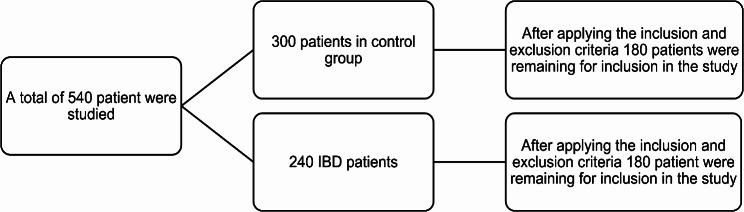
A total of 360 patients were included in the study which were divided equally into IBD group and control group. The IBD was subdivided into CD with 91 cases and UC with 89 cases. H. Pylori was significantly higher in control group (23.3%) compared with UC cases (13.2%) p value: 0.048. H. pylori infection was significantly high in smokers p value = < 0.0001. The presence of autoimmune disease was significantly associated with H. Pylori infection (16.4%) p value: 0.023.
CONCLUSION
H. pylori infection was significantly higher in the control group in comparison to IBD group. In addition, smoking and autoimmune disease were significantly associated with H. pylori infection. Finally, the overall association between severity of CD, UC and medication use with H. Pylori were insignificant.
引言
胃肠病学研究的一个关键关注领域是幽门螺杆菌(H. pylori)与炎症性肠病(IBD)之间的关系。几项研究显示,关于IBD患者中幽门螺杆菌的患病率及其对疾病进展、严重程度和总体结局的影响,结果各不相同。
方法
这是一项前瞻性队列研究,于2023年11月至2024年5月在沙特阿拉伯胡拜尔的法赫德国王大学医院进行,以确定IBD患者中幽门螺杆菌的患病率及其与严重程度的关联。该研究包括两个进行比较的组,即IBD患者组和对照组,IBD将进一步分为克罗恩病(CD)和溃疡性结肠炎(UC)。比较这些组之间幽门螺杆菌感染的患病率和疾病的严重程度。
结果
该研究共纳入360名患者,平均分为IBD组和对照组。IBD又细分为91例CD患者和89例UC患者。对照组中幽门螺杆菌的患病率(23.3%)显著高于UC患者(13.2%),p值:0.048。吸烟者中幽门螺杆菌感染率显著较高,p值<0.0001。自身免疫性疾病的存在与幽门螺杆菌感染显著相关(16.4%),p值:0.023。
结论
与IBD组相比,对照组中幽门螺杆菌感染率显著更高。此外,吸烟和自身免疫性疾病与幽门螺杆菌感染显著相关。最后,CD、UC的严重程度以及用药与幽门螺杆菌之间的总体关联不显著。
 Zotero 插件