
细胞因子谱作为接受PD-1阻断免疫化疗的晚期胃癌患者治疗结局的预测生物标志物:一项荟萃分析
Cytokine profiles as predictive biomarkers for treatment outcomes in advanced gastric cancer patients undergoing PD-1 blockade immunochemotherapy: a meta-analysis.
作者信息
Yang Fumeng, Shaibu Zakari, Liu Qian, Zhu Wei
机构信息
School of Medicine, Jiangsu University, Zhenjiang, 212013, Jiangsu, China.
Department of Laboratory Medicine, Lianyungang Clinical College, Jiangsu University & The Second People's Hospital of Lianyungang, Lianyungang, 222006, Jiangsu, China.
出版信息
Clin Exp Med. 2025 May 3;25(1):136. doi: 10.1007/s10238-025-01676-1.
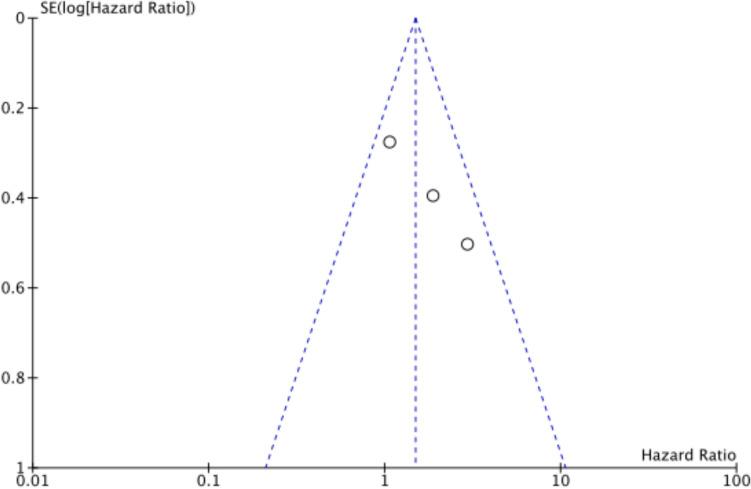
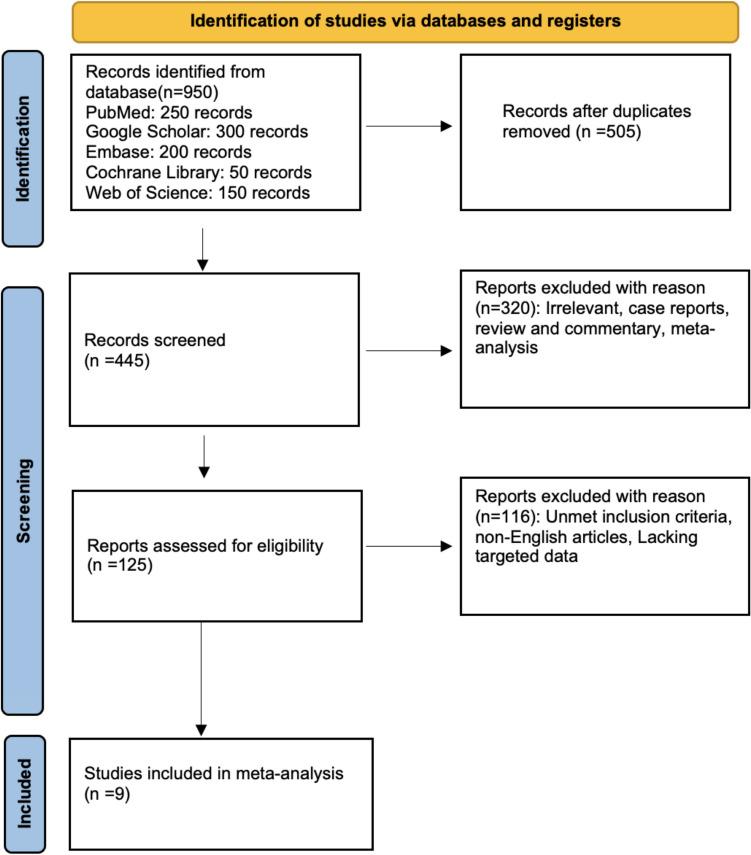
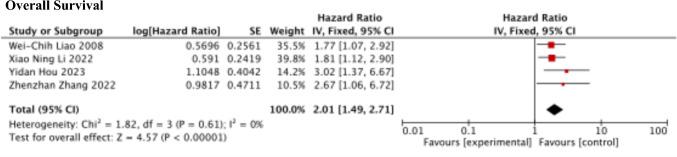
Immunotherapy, specifically PD-1 blockade, is a promising treatment for advanced gastric cancer (AGC). However, predicting patient response is challenging. Cytokines, key immune response regulators, could be important biomarkers for forecasting patient outcomes and susceptibility to PD-1 blockade immunochemotherapy in AGC. This meta-analysis aims to evaluate the potential of cytokine profiles as predictive biomarkers for treatment outcomes in patients with AGC undergoing immunochemotherapy. Meta-analysis. Original studies on the evaluation of various serum samples of cytokines in AGC patients after immunochemotherapy were searched in PubMed, Google Scholar, Embase, Cochrane Library, and Web of Science, with a focus on literature published up to October 31, 2023. Data from multiple studies were pooled to analyze the impact of IL-2, IL-4, IL-6, IL-8, IL-10, and IFN-γ expression on treatment outcomes using RevMan 5.4.1. Prospero ID: CRD42024557837. Five studies were included. In AGC patients receiving immunochemotherapy, high levels of IL-4 were correlated with enhanced PFS following therapy. In contrast, there were no significant differences observed in the expression of IL-2, IL-6, IL-10, and IFN-γ for PFS in AGC after treatment. Notably, elevated IL-6 expression was significantly associated with poorer OS in AGC patients undergoing immunochemotherapy. The findings suggest that expression levels of cytokines, particularly IL-4 and IL-6, play a significant role in predicting treatment outcomes in AGC patients undergoing immunochemotherapy. Further research is warranted to validate these results and elucidate the underlying mechanisms driving these associations.
免疫疗法,特别是程序性死亡受体1(PD-1)阻断疗法,是晚期胃癌(AGC)一种很有前景的治疗方法。然而,预测患者的反应具有挑战性。细胞因子作为关键的免疫反应调节因子,可能是预测AGC患者预后以及对PD-1阻断免疫化疗敏感性的重要生物标志物。本荟萃分析旨在评估细胞因子谱作为接受免疫化疗的AGC患者治疗结果预测生物标志物的潜力。荟萃分析。在PubMed、谷歌学术、Embase、Cochrane图书馆和科学网中检索关于免疫化疗后AGC患者各种细胞因子血清样本评估的原始研究,重点关注截至2023年10月31日发表的文献。使用RevMan 5.4.1汇总多项研究的数据,以分析白细胞介素-2(IL-2)、白细胞介素-4(IL-4)、白细胞介素-6(IL-6)、白细胞介素-8(IL-8)、白细胞介素-10(IL-10)和干扰素-γ(IFN-γ)表达对治疗结果的影响。国际前瞻性系统评价注册库(Prospero)编号:CRD42024557837。纳入了五项研究。在接受免疫化疗的AGC患者中,高水平的IL-4与治疗后无进展生存期(PFS)延长相关。相比之下,治疗后AGC患者中IL-2、IL-6、IL-10和IFN-γ的表达在PFS方面未观察到显著差异。值得注意的是,在接受免疫化疗的AGC患者中,IL-6表达升高与较差的总生存期(OS)显著相关。研究结果表明,细胞因子的表达水平,特别是IL-4和IL-6,在预测接受免疫化疗的AGC患者的治疗结果中起重要作用。有必要进一步研究以验证这些结果并阐明驱动这些关联的潜在机制。

 Zotero 插件