
色氨酸代谢与缺血性中风:一种复杂的平衡。
Tryptophan metabolism and ischemic stroke: An intricate balance.
作者信息
Yao Chongjie, Xie Dong, Zhang Yuchen, Shen Yuanhao, Sun Pingping, Ma Zhao, Li Jin, Tao Jiming, Fang Min
机构信息
Rehabilitation Department, Shuguang Hospital, Shanghai University of Traditional Chinese Medicine, Shanghai, China.
School of Acupuncture-Moxibustion and Tuina, Shanghai University of Traditional Chinese Medicine, Shanghai, China.
出版信息
Neural Regen Res. 2026 Feb 1;21(2):466-477. doi: 10.4103/NRR.NRR-D-24-00777. Epub 2025 Jan 13.
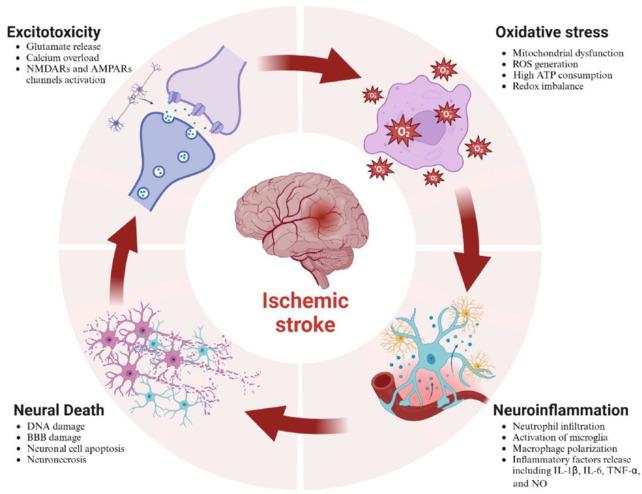
Ischemic stroke, which is characterized by hypoxia and ischemia, triggers a cascade of injury responses, including neurotoxicity, inflammation, oxidative stress, disruption of the blood-brain barrier, and neuronal death. In this context, tryptophan metabolites and enzymes, which are synthesized through the kynurenine and 5-hydroxytryptamine pathways, play dual roles. The delicate balance between neurotoxic and neuroprotective substances is a crucial factor influencing the progression of ischemic stroke. Neuroprotective metabolites, such as kynurenic acid, exert their effects through various mechanisms, including competitive blockade of N-methyl-D-aspartate receptors, modulation of α7 nicotinic acetylcholine receptors, and scavenging of reactive oxygen species. In contrast, neurotoxic substances such as quinolinic acid can hinder the development of vascular glucose transporter proteins, induce neurotoxicity mediated by reactive oxygen species, and disrupt mitochondrial function. Additionally, the enzymes involved in tryptophan metabolism play major roles in these processes. Indoleamine 2,3-dioxygenase in the kynurenine pathway and tryptophan hydroxylase in the 5-hydroxytryptamine pathway influence neuroinflammation and brain homeostasis. Consequently, the metabolites generated through tryptophan metabolism have substantial effects on the development and progression of ischemic stroke. Stroke treatment aims to restore the balance of various metabolite levels; however, precise regulation of tryptophan metabolism within the central nervous system remains a major challenge for the treatment of ischemic stroke. Therefore, this review aimed to elucidate the complex interactions between tryptophan metabolites and enzymes in ischemic stroke and develop targeted therapies that can restore the delicate balance between neurotoxicity and neuroprotection.
缺血性中风以缺氧和局部缺血为特征,会引发一系列损伤反应,包括神经毒性、炎症、氧化应激、血脑屏障破坏和神经元死亡。在这种情况下,通过犬尿氨酸和5-羟色胺途径合成的色氨酸代谢产物及酶发挥着双重作用。神经毒性物质和神经保护物质之间的微妙平衡是影响缺血性中风进展的关键因素。神经保护代谢产物,如犬尿酸,通过多种机制发挥作用,包括竞争性阻断N-甲基-D-天冬氨酸受体、调节α7烟碱型乙酰胆碱受体以及清除活性氧。相比之下,喹啉酸等神经毒性物质会阻碍血管葡萄糖转运蛋白的发育,诱导由活性氧介导的神经毒性,并破坏线粒体功能。此外,参与色氨酸代谢的酶在这些过程中起主要作用。犬尿氨酸途径中的吲哚胺2,3-双加氧酶和5-羟色胺途径中的色氨酸羟化酶会影响神经炎症和脑稳态。因此,通过色氨酸代谢产生的代谢产物对缺血性中风的发生和发展具有重大影响。中风治疗旨在恢复各种代谢产物水平的平衡;然而,精确调节中枢神经系统内的色氨酸代谢仍然是缺血性中风治疗的一项重大挑战。因此,本综述旨在阐明缺血性中风中色氨酸代谢产物与酶之间的复杂相互作用,并开发能够恢复神经毒性和神经保护之间微妙平衡的靶向治疗方法。


 Zotero 插件