
2021年全球疾病负担研究对老年人2型糖尿病饮食风险归因的全球负担洞察
Global burden of Type 2 Diabetes Mellitus attributable to dietary risks in elderly adults: insights from the Global Burden of Disease study 2021.
作者信息
Tang Yiting, Chen Yupeng, Zhou Yang, Wu Bingrong, Zhang Shan, Gong Yanbing, Ni Qing
机构信息
Beijing University of Chinese Medicine, Beijing, China.
Department of Endocrinology, Guang'anmen Hospital of China Academy of Chinese Medical Sciences, Beijing, China.
出版信息
Front Nutr. 2025 Apr 24;12:1557923. doi: 10.3389/fnut.2025.1557923. eCollection 2025.
BACKGROUND
Type 2 Diabetes Mellitus (T2DM) poses a significant global health challenge, particularly among elderly adults. Dietary risk factors, such as high consumption of processed meats and sugar-sweetened beverages and low intake of whole grains and fruits, play a critical role in the burden of T2DM. This study aims to comprehensively quantify the global burden of T2DM attributable to dietary risks among elderly adults, identify significant dietary risk factors driving disease burden, and evaluate temporal, regional, and demographic variations to inform targeted public health strategies and interventions for reducing the impact of T2DM.
METHODS
This study utilized data from the Global Burden of Diseases, Injuries, and Risk Factors Study (GBD) 2021 to assess T2DM burden attributable to dietary risks among adults aged 65 years and older across 204 countries and territories. Metrics included age-standardized mortality rates (ASMR) and disability-adjusted life-year rates (ASDR). Dietary risk factors analyzed included low intake of whole grains, fruits, vegetables, and fiber, as well as high intake of processed meat, red meat, and sugar-sweetened beverages. Joinpoint regression and decomposition analyses were performed to examine temporal trends and drivers of changes by region, SDI level, sex, and age.
RESULTS
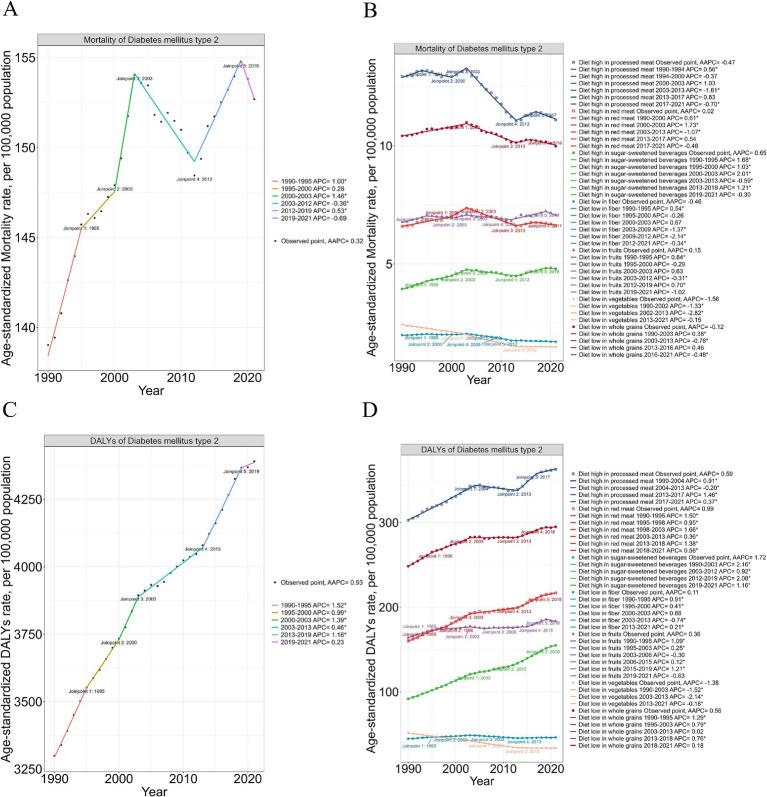
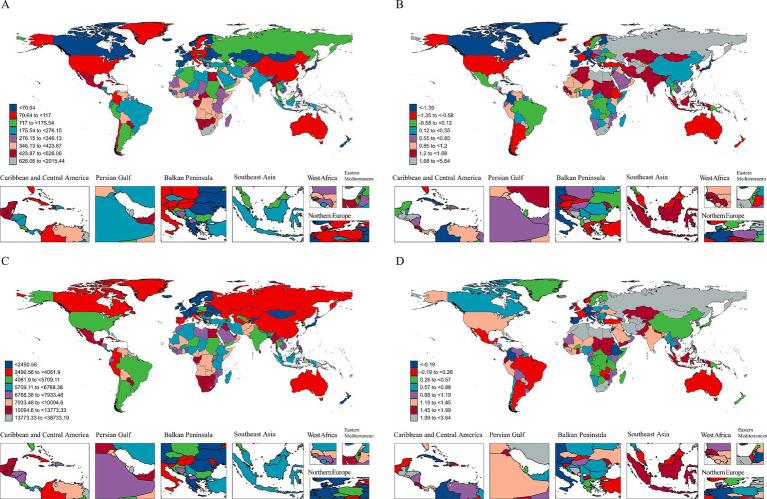
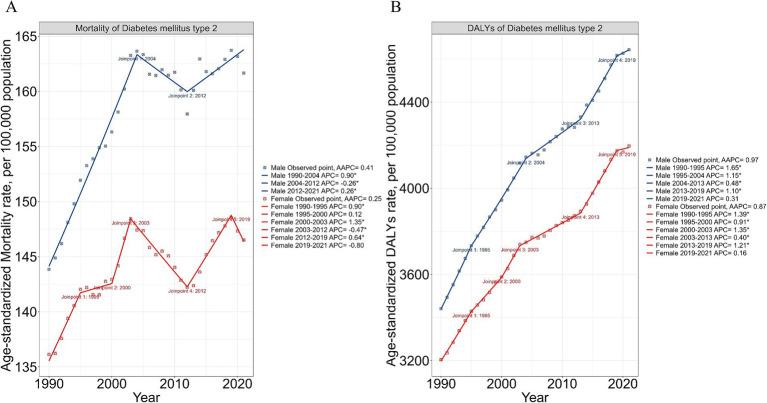
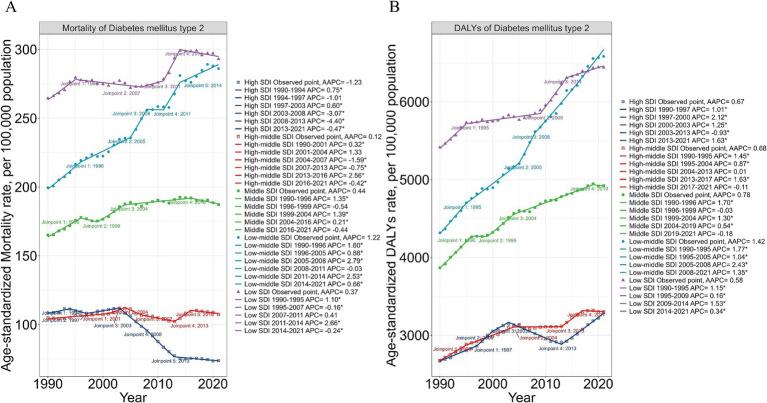
In 2021, dietary risks accounted for 23.61% of T2DM-related deaths and 24.85% of DALYs among elderly adults. ASMR showed a slight decline globally (AAPC: -0.08), while ASDR exhibited a significant upward trend (AAPC: +0.7) from 1990 to 2021. High SDI regions demonstrated decreasing ASMR but persistent DALYs due to prolonged survival with complications. Conversely, low and middle SDI regions exhibited rapid increases in ASMR and ASDR, driven by dietary transitions and limited healthcare resources. Males consistently bore a higher burden than females, with pronounced disparities in low and middle SDI regions. Aging and population growth were the primary drivers of the increasing burden globally.
CONCLUSION
This study underscores the substantial burden of T2DM attributable to dietary risks among elderly adults and highlights significant regional and demographic disparities. Targeted public health interventions, personalized nutritional strategies, and improved healthcare access are essential to mitigate this burden. Future research should explore the impact of emerging dietary trends and precision nutrition on T2DM prevention and management.
背景
2型糖尿病(T2DM)对全球公共卫生构成了重大挑战,在老年人中尤为如此。饮食风险因素,如加工肉类和含糖饮料的高摄入量以及全谷物和水果的低摄入量,在T2DM负担中起着关键作用。本研究旨在全面量化老年人中归因于饮食风险的T2DM全球负担,确定导致疾病负担的重要饮食风险因素,并评估时间、区域和人口统计学差异,以为减少T2DM影响的针对性公共卫生策略和干预措施提供依据。
方法
本研究利用全球疾病、伤害和风险因素负担研究(GBD)2021的数据,评估204个国家和地区65岁及以上成年人中归因于饮食风险的T2DM负担。指标包括年龄标准化死亡率(ASMR)和伤残调整生命年率(ASDR)。分析的饮食风险因素包括全谷物、水果、蔬菜和纤维的低摄入量,以及加工肉类、红肉和含糖饮料的高摄入量。进行了连接点回归和分解分析,以研究按地区、社会人口指数(SDI)水平、性别和年龄划分的时间趋势和变化驱动因素。
结果
2021年,饮食风险占老年人中与T2DM相关死亡的23.61%和伤残调整生命年的24.85%。1990年至2021年期间,全球ASMR略有下降(年度百分比变化率:-0.08),而ASDR则呈现显著上升趋势(年度百分比变化率:+0.7)。高SDI地区的ASMR有所下降,但由于并发症导致的生存期延长,伤残调整生命年持续存在。相反,低SDI和中等SDI地区的ASMR和ASDR迅速上升,这是由饮食转变和有限的医疗资源驱动的。男性始终比女性承担更高的负担,在低SDI和中等SDI地区存在明显差异。老龄化和人口增长是全球负担增加的主要驱动因素。
结论
本研究强调了老年人中归因于饮食风险的T2DM的巨大负担,并突出了显著的区域和人口统计学差异。针对性的公共卫生干预措施、个性化营养策略和改善医疗服务可及性对于减轻这一负担至关重要。未来的研究应探索新兴饮食趋势和精准营养对T2DM预防和管理的影响。


 Zotero 插件