
中国人类和大鼠中戊型肝炎病毒(大鼠戊型肝炎病毒)的流行情况。
Prevalence of (rat hepatitis E virus) in humans and rats in China.
作者信息
Cui Xiuji, Situ Jianwen, Tang Ting, Li Zhiyu, Chen Dongzhui, Ho Stanley Siu-Fung, Chung Hiu-Laam, Wong Tsz-Chung, Liang Yonghao, Deng Chaowen, Su Yongxian, Cai Huijun, Lo Simon Kam-Fai, Huang Shiyao, Zeng Sheng, Zhang Liyuan, Chen Yunchun, Wu Shusheng, Shun Estie Hon-Kiu, Chew Nicholas Foo-Siong, Tsoi James Yiu-Hung, Lo Kelvin Hon-Yin, Xing Fanfan, Cheng Vincent Chi-Chung, Yuen Kwok-Yung, Yin Feifei, Chan Jasper Fuk-Woo, Sridhar Siddharth
机构信息
Hainan Medical University-The University of Hong Kong Joint Laboratory of Tropical Infectious Diseases, Key Laboratory of Tropical Translational Medicine of Ministry of Education, Academician Workstation of Hainan Province, School of Basic Medicine and Life Sciences, Hainan Medical University, Haikou, Hainan, China.
Department of Microbiology, Queen Mary Hospital, Pokfulam, Hong Kong Special Administrative Region of China.
出版信息
JHEP Rep. 2025 Mar 4;7(5):101370. doi: 10.1016/j.jhepr.2025.101370. eCollection 2025 May.
BACKGROUND & AIMS: (rat hepatitis E virus; rHEV) is a ubiquitous pathogen of rats that has recently emerged as a cause of hepatitis in humans. Although several rHEV cases have been detected worldwide, the extent of human exposure to this hepatitis agent is still poorly defined. We conducted a multicenter surveillance study in China examining rHEV exposures in demographically diverse human populations from a One Health perspective.
METHODS
In this multicenter cross-sectional study, we used fully validated rHEV IgG enzymatic immunoassays and reverse transcription PCR in 1,199 individuals with (n = 655) or without hepatitis (n = 544) recruited from three centers in China (Hainan, Hong Kong, and Shenzhen). The patient population included both urban and rural populations. Characteristics of infected individuals and phylogenetic links with rat epizootics were described.
RESULTS
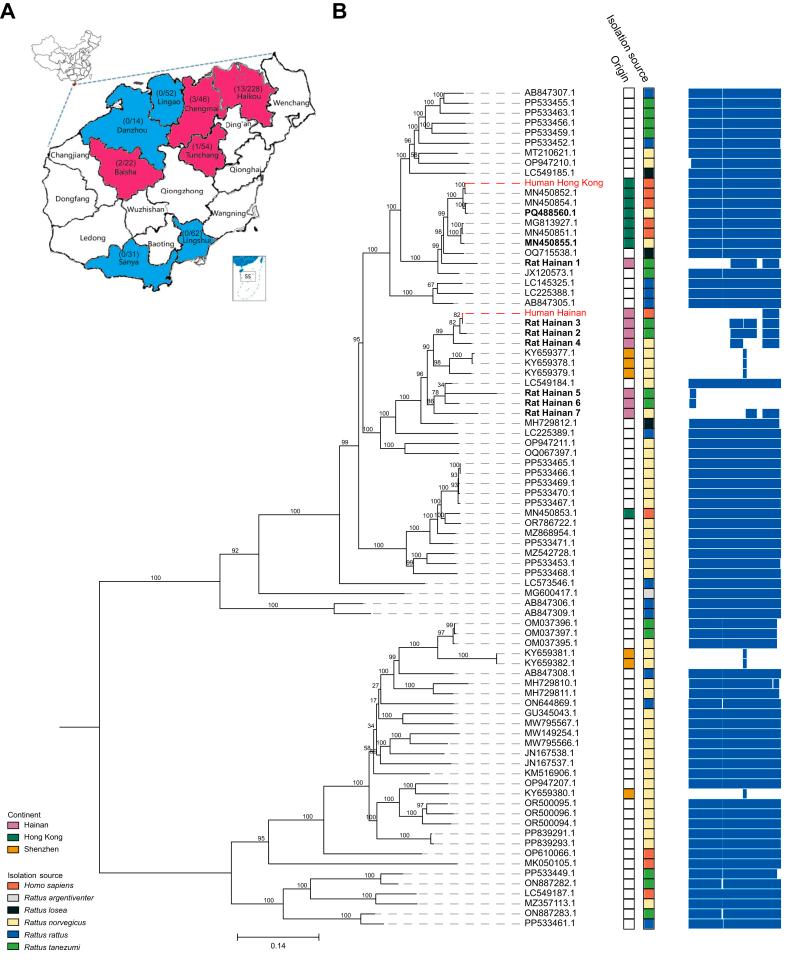
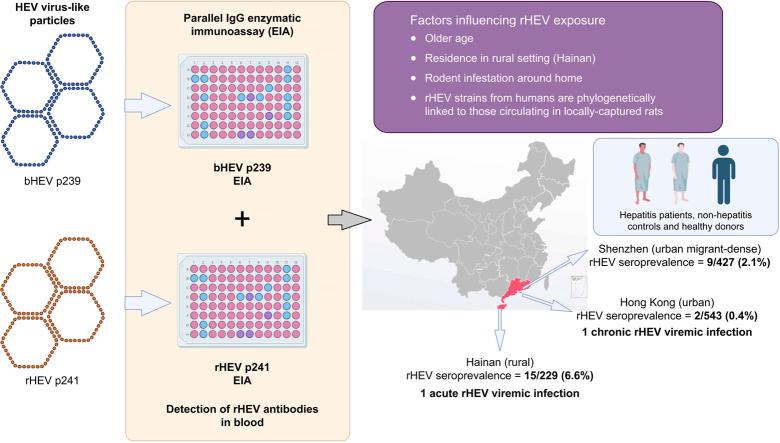
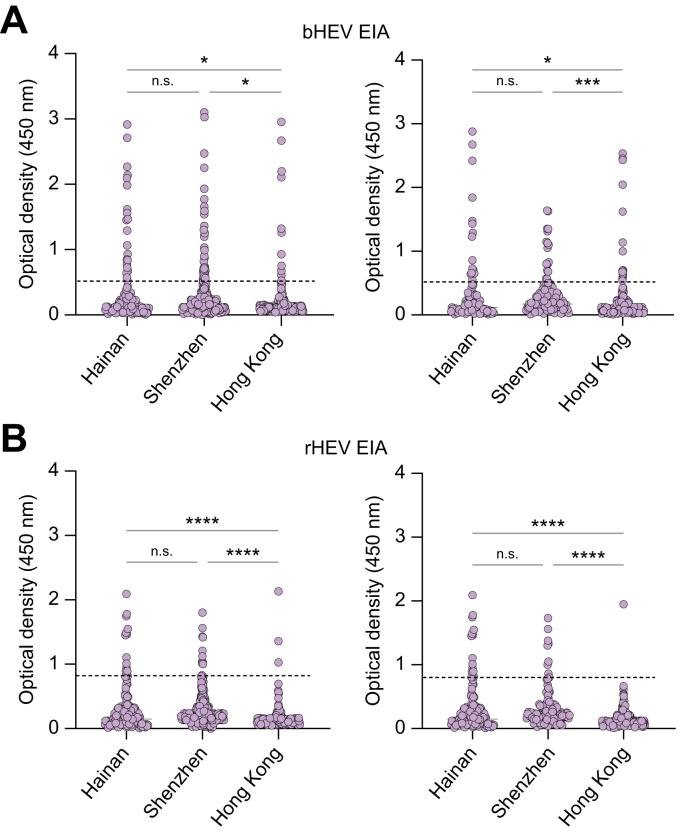
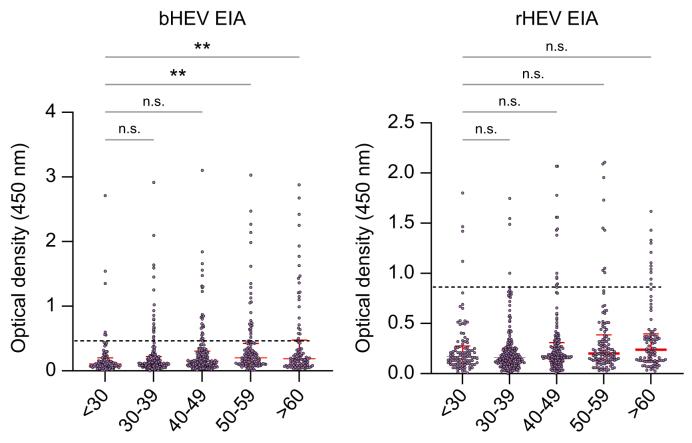
rHEV IgG seroprevalence was higher in the rural Hainan cohort (15/229, 6.6%) compared with Shenzhen (9/427, 2.1%) and Hong Kong cohorts (2/543, 0.4%) ( <0.0001). This difference persisted on multivariable logistic regression with an adjusted odds ratio of 20.52 (95% CI: 13.86-30.39). rHEV exposure was also associated with increasing age and environmental rodent exposure. We observed rHEV viraemia in two hepatitis patients (2/655; 0.3%) in Hainan and Hong Kong with hepatitis B and renal transplantation, respectively. The latter developed chronic hepatitis E. 19/509 (3.7%) rats captured in Hainan harbored rHEV. Both human rHEV isolates were phylogenetically related to rodent-derived rHEV strains circulating in Hainan and Hong Kong, respectively.
CONCLUSIONS
Humans are intermittently exposed to rHEV, especially in rural settings with rodent exposure. Overt hepatitis occurs in individuals with liver disease or immunosuppression. Spillover strains are related to epizootics in rodents offering opportunities for targeted disinfestation.
IMPACT AND IMPLICATIONS
Building on our previous work finding that (rHEV) is a novel cause of sporadic viral hepatitis in humans, we studied rHEV exposures in humans from various epidemiological settings. We found intermittent exposure to rat hepatitis E in individuals living in both urban and rural settings with a markedly higher seroprevalence in the latter. Spillover viremic infections in individuals with underlying liver disease or immunosuppression were closely linked to epizootic rHEV strains circulating in rodents. Physicians and diagnostic laboratories should incorporate rHEV testing in algorithms for viral hepatitis while policymakers should consider rHEV surveillance in rodents to guide disinfestation efforts.
背景与目的
大鼠戊型肝炎病毒(rHEV)是大鼠中普遍存在的病原体,最近已成为人类肝炎的病因。尽管在全球范围内已检测到数例rHEV病例,但人类接触这种肝炎病原体的程度仍不清楚。我们在中国进行了一项多中心监测研究,从“同一健康”的角度检查不同人口统计学特征的人群中rHEV的接触情况。
方法
在这项多中心横断面研究中,我们对从中国三个中心(海南、香港和深圳)招募的1199名有(n = 655)或无肝炎(n = 544)的个体,使用经过充分验证的rHEV IgG酶免疫测定法和逆转录PCR。患者群体包括城市和农村人口。描述了感染个体的特征以及与大鼠流行病的系统发育联系。
结果
海南农村队列中rHEV IgG血清阳性率(15/229,6.6%)高于深圳(9/427,2.1%)和香港队列(2/543,0.4%)(P<0.0001)。在多变量逻辑回归中,这种差异仍然存在,调整后的优势比为20.52(95%CI:13.86 - 30.39)。rHEV暴露也与年龄增长和环境啮齿动物暴露有关。我们在海南和香港分别观察到两名患有乙型肝炎和肾移植的肝炎患者出现rHEV病毒血症(2/655;0.3%)。后者发展为慢性戊型肝炎肝炎肝炎。在海南捕获的19/509(3.7%)只大鼠携带rHEV。两例人类rHEV分离株在系统发育上分别与在海南和香港传播的啮齿动物来源的rHEV毒株相关。
结论
人类间歇性接触rHEV,尤其是在有啮齿动物接触的农村地区。显性肝炎发生在患有肝病或免疫抑制的个体中。溢出毒株与啮齿动物中的流行病有关,为有针对性的灭虫提供了机会。
影响与意义
基于我们之前的研究发现(rHEV)是人类散发性病毒性肝炎的新病因,我们研究了不同流行病学背景人群中rHEV的接触情况。我们发现生活在城市和农村地区的个体都间歇性接触大鼠戊型肝炎,后者的血清阳性率明显更高。患有潜在肝病或免疫抑制的个体中溢出性病毒血症感染与啮齿动物中传播的流行性rHEV毒株密切相关。医生和诊断实验室应将rHEV检测纳入病毒性肝炎的诊断流程,而政策制定者应考虑对啮齿动物进行rHEV监测,以指导灭虫工作。
 Zotero 插件