
具有爆发式和滑行式游泳的鱼群模型中的集体相位和长期动态
Collective phases and long-term dynamics in a fish school model with burst-and-coast swimming.
作者信息
Wang Weijia, Escobedo Ramón, Sanchez Stéphane, Han Zhangang, Sire Clément, Theraulaz Guy
机构信息
Centre de Biologie Intégrative, CNRS, Université de Toulouse III - Paul Sabatier, Centre de Recherches sur la Cognition Animale, Toulouse, France.
Beijing Normal University School of Systems Science, Beijing, People's Republic of China.
出版信息
R Soc Open Sci. 2025 May 9;12(5):240885. doi: 10.1098/rsos.240885. eCollection 2025 May.
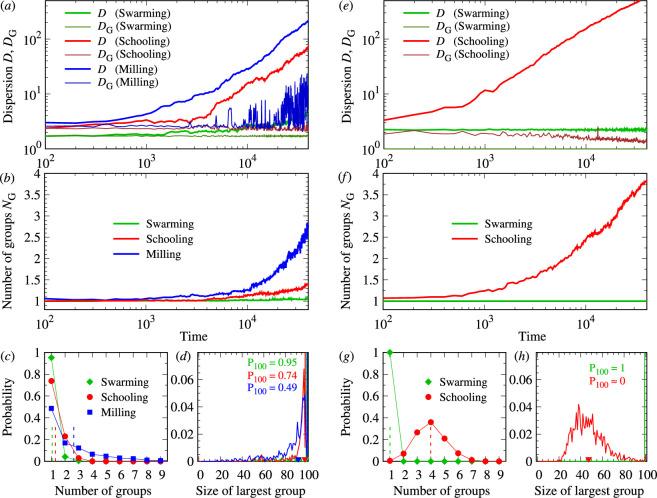
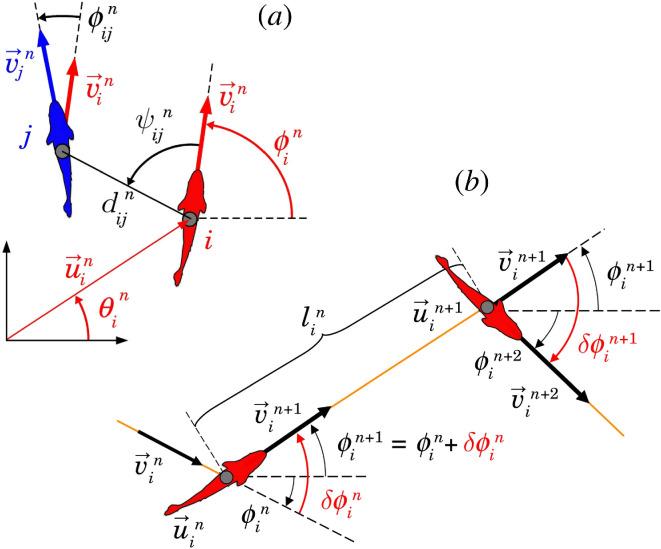
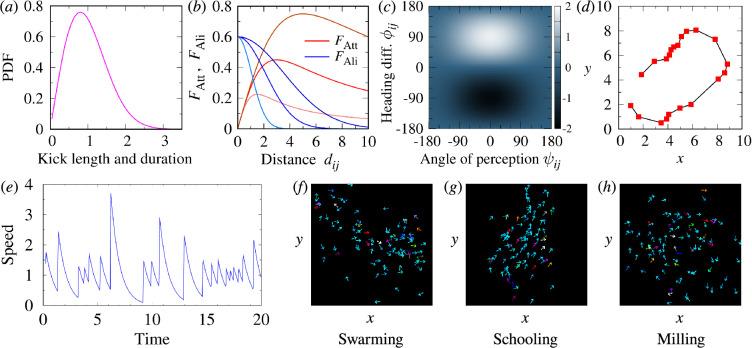
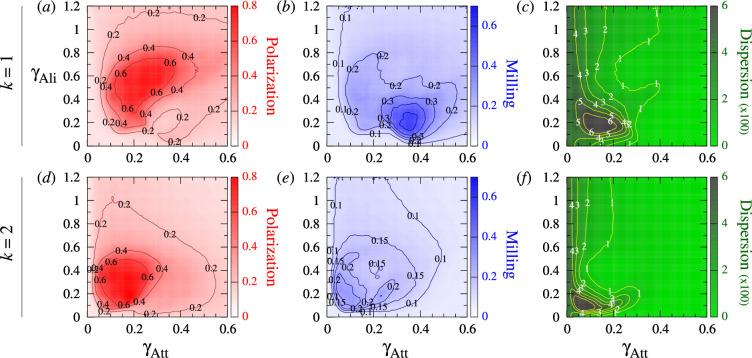
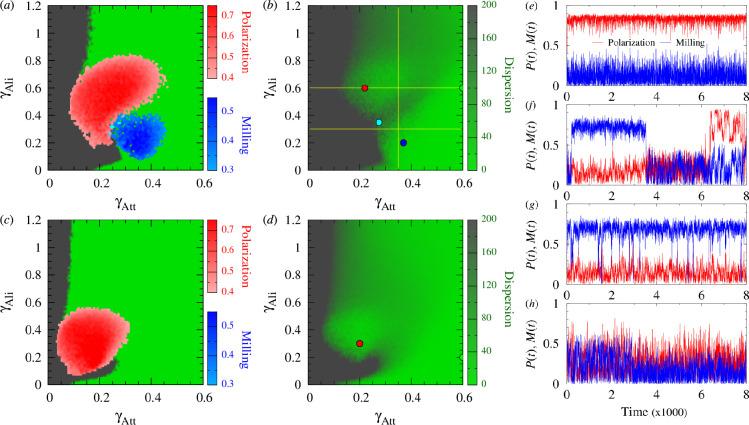
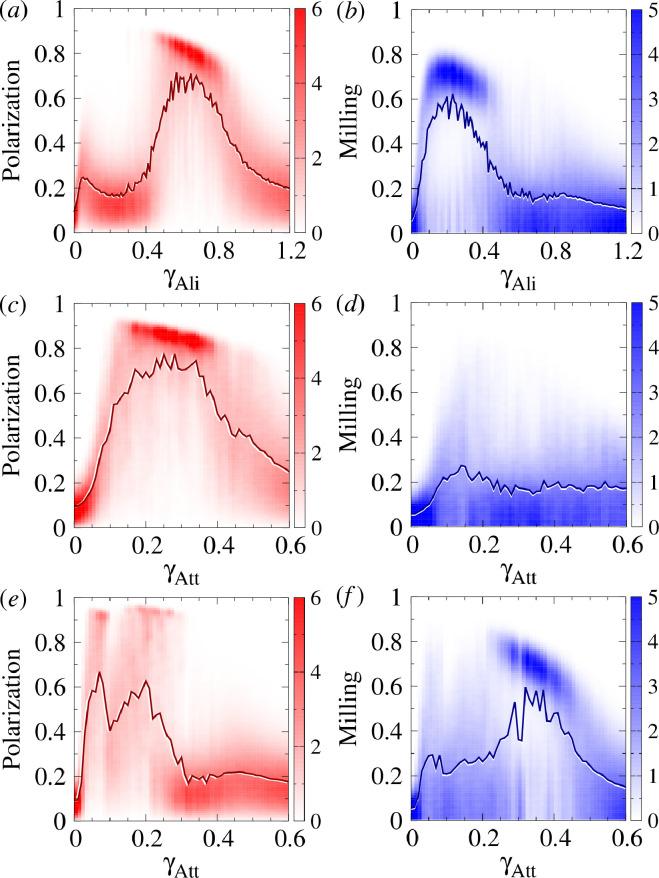
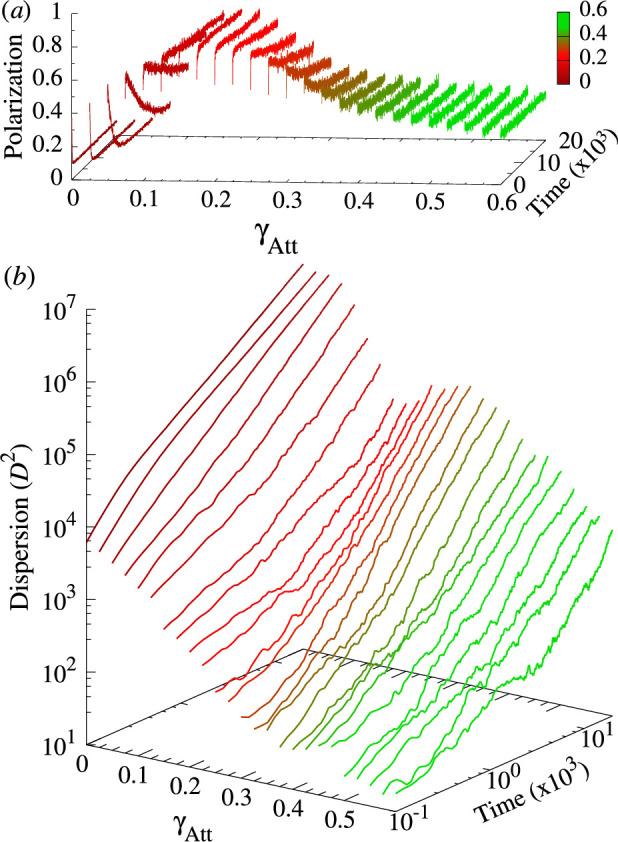
Intermittent and asynchronous burst-and-coast swimming is widely adopted by various species of fish as an energy-efficient mode of locomotion. This swimming mode significantly influences how fish integrate information and make decisions in a social context. Here, we introduce a simplified fish school model in which individuals have an asynchronous burst-and-coast swimming mode and selectively interact only with one or two neighbours that exert the largest influence on their behaviour over a limited spatial range. The interactions consist of a fish that is attracted to and aligned with these neighbours. We show that, by adjusting the interactions between individuals above a sufficiently high level, depending on the relative strength of attraction and alignment, the model can produce a cohesive fish school that replicates the main collective phases observed in nature: schooling, milling and swarming when each individual interacts with only one neighbour; and schooling and swarming when each individual interacts with two neighbours. Moreover, the model showed that these patterns can be maintained over long simulations. However, with the exception of swarming, these patterns do not persist indefinitely, and fish lose cohesion and progressively disperse. We further identified the mechanisms that lead to group dispersion.
间歇性和异步爆发式滑行游泳被各种鱼类广泛采用,作为一种节能的运动模式。这种游泳模式显著影响鱼类在社会环境中整合信息和做出决策的方式。在这里,我们引入了一个简化的鱼群模型,其中个体具有异步爆发式滑行游泳模式,并且仅在有限的空间范围内选择性地与对其行为影响最大的一两个邻居进行互动。这些互动包括一条被这些邻居吸引并与之对齐的鱼。我们表明,通过在足够高的水平上调整个体之间的互动,根据吸引和对齐的相对强度,该模型可以产生一个凝聚的鱼群,复制自然界中观察到的主要集体阶段:当每个个体仅与一个邻居互动时的成群、打转和蜂拥;当每个个体与两个邻居互动时的成群和蜂拥。此外,该模型表明这些模式可以在长时间模拟中保持。然而,除了蜂拥之外,这些模式不会无限期持续,鱼会失去凝聚力并逐渐分散。我们进一步确定了导致群体分散的机制。
 Zotero 插件