
转录组学揭示主动脉夹层中铁死亡抑制的保护机制
Transcriptome Insights into Protective Mechanisms of Ferroptosis Inhibition in Aortic Dissection.
作者信息
Shih Chun-Che, Chen Chi-Yu, Chuu Chih-Pin, Huang Chun-Yang, Lu Chia-Jung, Lu Hsin-Ying
机构信息
Department of Surgery, School of Medicine, College of Medicine, Taipei Medical University, 250 Wuxing Street, Taipei 11031, Taiwan.
Division of Cardiovascular Surgery, Department of Surgery, Wan Fang Hospital, Taipei Medical University, Taipei 11031, Taiwan.
出版信息
Int J Mol Sci. 2025 May 2;26(9):4338. doi: 10.3390/ijms26094338.
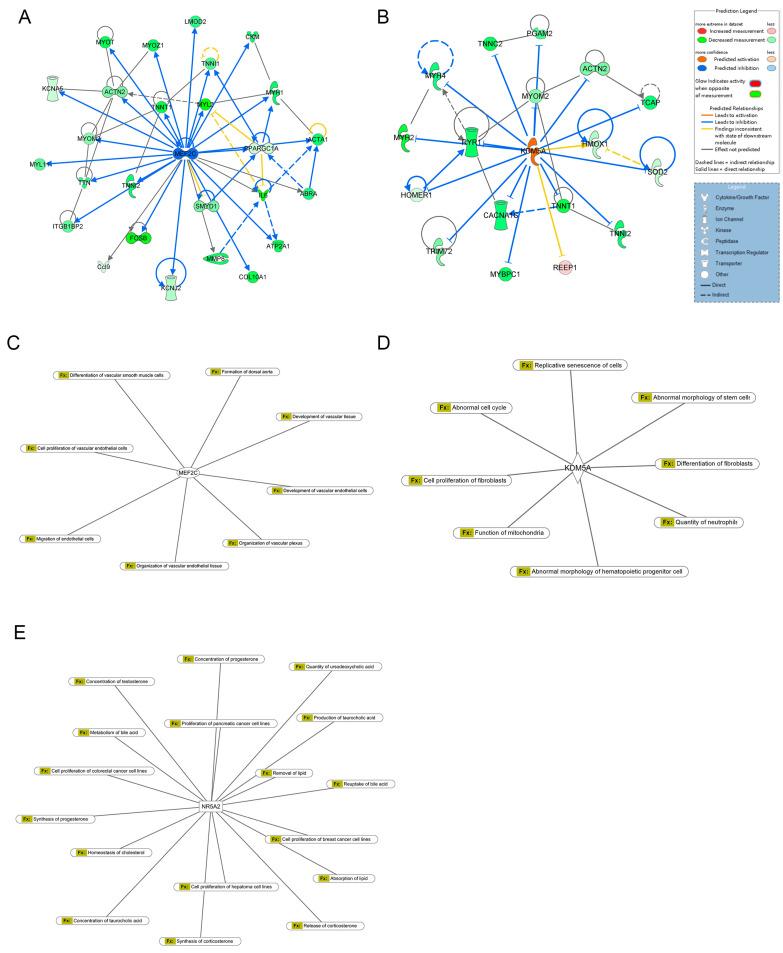
Aortic dissection (AD) is a life-threatening vascular condition with limited pharmacological options, and shared risk factors with cardiac disease include hypertension, atherosclerosis, smoking, and dyslipidemia. This study investigated Ferrostatin-1 (Fer-1), a ferroptosis inhibitor, in a BAPN/Ang-II-induced mouse model of AD, revealing significant therapeutic potential. Fer-1 significantly reduced AD incidence and mortality by preserving aortic wall integrity. RNA sequencing identified 922 differentially expressed genes, with 416 upregulated and 506 downregulated. Bioinformatics analysis revealed that Fer-1 modulates key regulators, such as and , impacting immune responses, oxidative stress, apoptosis, and lipid metabolism. Additionally, Fer-1 alters miRNA expression, with the upregulation of miR-361-5p and downregulation of miR-3151-5p, targeting pathways involved in inflammation, oxidative stress, and smooth muscle cell (SMC) phenotypic stability. Functional pathway analysis highlighted the inhibition of actin cytoskeleton, , and signaling, essential for SMC differentiation and extracellular matrix remodeling. Gene interaction network analysis identified 21 central molecules, including , , and , associated with lipid metabolism, inflammation, and vascular remodeling. This research elucidates the mechanism of ferroptosis in AD pathogenesis and establishes Fer-1 as a promising therapeutic intervention. AD and cardiac diseases share molecular mechanisms, risk factors, and pathological processes, positioning AD within the broader scope of cardiovascular pathology. By attenuating lipid peroxidation, oxidative stress, and inflammation, Fer-1 may have cardioprotective effects beyond AD, providing a foundation for future translational research in cardiovascular medicine.
主动脉夹层(AD)是一种危及生命的血管疾病,药物治疗选择有限,与心脏病的共同危险因素包括高血压、动脉粥样硬化、吸烟和血脂异常。本研究在BAPN/Ang-II诱导的AD小鼠模型中研究了铁死亡抑制剂Ferrostatin-1(Fer-1),发现其具有显著的治疗潜力。Fer-1通过维持主动脉壁完整性显著降低了AD的发病率和死亡率。RNA测序鉴定出922个差异表达基因,其中416个上调,506个下调。生物信息学分析表明,Fer-1调节关键调节因子,如 和 ,影响免疫反应、氧化应激、细胞凋亡和脂质代谢。此外,Fer-1改变miRNA表达,miR-361-5p上调,miR-3151-5p下调,靶向参与炎症、氧化应激和平滑肌细胞(SMC)表型稳定性的途径。功能通路分析强调了对肌动蛋白细胞骨架、 和 信号的抑制,这对SMC分化和细胞外基质重塑至关重要。基因相互作用网络分析确定了21个核心分子,包括 、 和 ,与脂质代谢、炎症和血管重塑相关。本研究阐明了铁死亡在AD发病机制中的作用机制,并确定Fer-1是一种有前途的治疗干预措施。AD和心脏病具有共同的分子机制、危险因素和病理过程,将AD置于心血管病理学的更广泛范围内。通过减轻脂质过氧化、氧化应激和炎症,Fer-1可能对AD以外的心脏具有保护作用,为未来心血管医学的转化研究奠定基础。




 Zotero 插件