
CD44变异体在滤泡细胞源性甲状腺癌中的表达:对克服多药耐药性的意义
CD44 Variant Expression in Follicular Cell-Derived Thyroid Cancers: Implications for Overcoming Multidrug Resistance.
作者信息
Mosoane Benny, McCabe Michelle, Jackson Brandon S, Dlamini Zodwa
机构信息
Department of Anatomical Pathology, Faculty of Health Sciences, University of Pretoria, Pretoria 0001, South Africa.
Breast and Endocrine Unit, Department of General Surgery, University of Pretoria, Kalafong Provincial Tertiary Hospital, Pretoria 0001, South Africa.
出版信息
Molecules. 2025 Apr 24;30(9):1899. doi: 10.3390/molecules30091899.
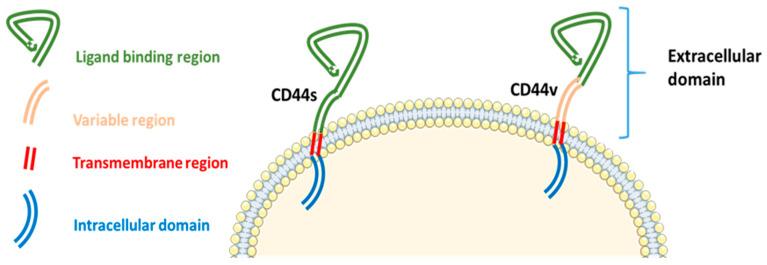
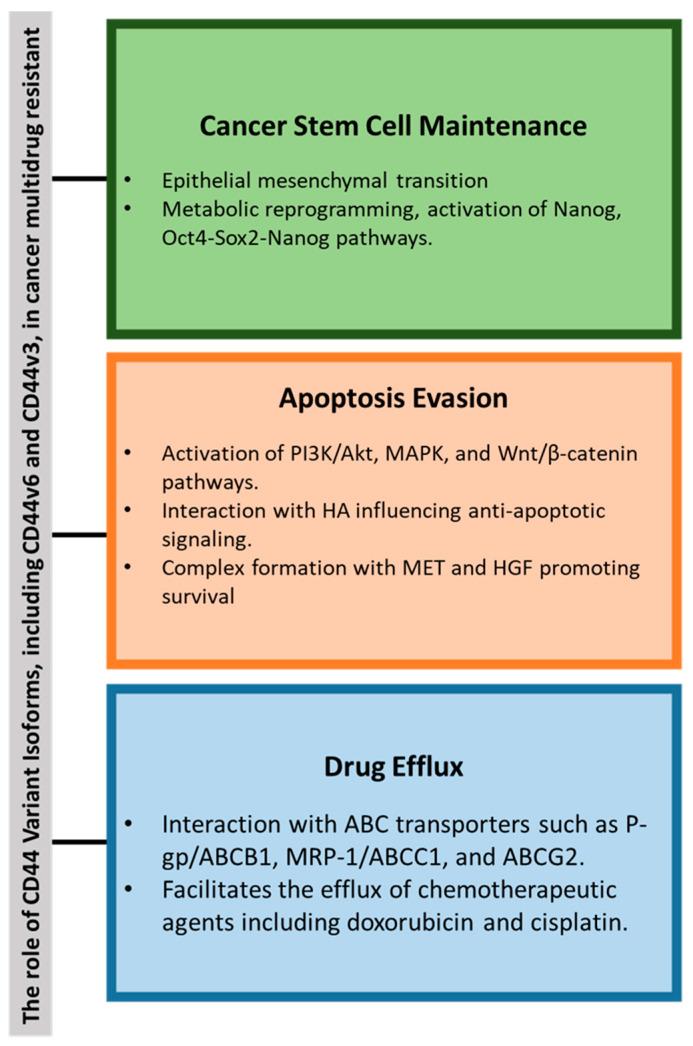
Thyroid cancer (TC) is a significant global health issue that exhibits notable heterogeneity in incidence and outcomes. In low-resource settings such as Africa, delayed diagnosis and limited healthcare access exacerbate mortality rates. Among follicular cell-derived thyroid cancers-including papillary (PTC), follicular (FTC), anaplastic (ATC), and poorly differentiated (PDTC) subtypes-the role of CD44 variants has emerged as a critical factor influencing tumor progression and multidrug resistance (MDR). CD44, a transmembrane glycoprotein, and its splice variants (CD44v) mediate cell adhesion, migration, and survival, contributing to cancer stem cell (CSC) maintenance and therapy resistance. Differential expression patterns of CD44 isoforms across TC subtypes have shown diagnostic, prognostic, and therapeutic implications. Specifically, CD44v6 expression in PTC has been correlated with metastasis and aggressive tumor behavior, while in FTC, its expression aids in distinguishing malignant from benign lesions. Furthermore, CD44 contributes to MDR through enhanced drug efflux via ABC transporters, apoptosis evasion, and CSC maintenance via the Wnt/β-catenin and PI3K/Akt pathways. Targeted therapies against CD44 such as monoclonal antibodies, hyaluronic acid-based nanocarriers, and gene-editing technologies hold promise in overcoming MDR. However, despite the mounting evidence supporting CD44-targeted strategies in various cancers, research on this therapeutic potential in TC remains limited. This review synthesizes existing knowledge on CD44 variant expression in follicular cell-derived thyroid cancers and highlights potential therapeutic strategies to mitigate MDR, particularly in high-burden regions, thereby improving patient outcomes and survival.
甲状腺癌(TC)是一个重大的全球健康问题,其发病率和预后存在显著异质性。在非洲等资源匮乏地区,诊断延迟和医疗服务受限加剧了死亡率。在滤泡细胞源性甲状腺癌中,包括乳头状癌(PTC)、滤泡状癌(FTC)、未分化癌(ATC)和低分化癌(PDTC)亚型,CD44变体的作用已成为影响肿瘤进展和多药耐药(MDR)的关键因素。CD44是一种跨膜糖蛋白,其剪接变体(CD44v)介导细胞黏附、迁移和存活,有助于维持癌症干细胞(CSC)并导致治疗耐药。TC各亚型中CD44异构体的差异表达模式具有诊断、预后和治疗意义。具体而言,PTC中CD44v6的表达与转移和侵袭性肿瘤行为相关,而在FTC中,其表达有助于区分恶性和良性病变。此外,CD44通过ABC转运蛋白增强药物外排、逃避细胞凋亡以及通过Wnt/β-连环蛋白和PI3K/Akt途径维持CSC,从而导致MDR。针对CD44的靶向治疗,如单克隆抗体、基于透明质酸的纳米载体和基因编辑技术,有望克服MDR。然而,尽管越来越多的证据支持在各种癌症中采用针对CD44的策略,但关于TC中这种治疗潜力的研究仍然有限。本综述综合了滤泡细胞源性甲状腺癌中CD44变体表达的现有知识,并强调了减轻MDR的潜在治疗策略,特别是在高负担地区,从而改善患者的预后和生存率。



 Zotero 插件