
粪便微生物群移植可缓解肾移植受者的免疫抑制剂相关性腹泻和复发性尿路感染:一项回顾性分析
Fecal microbiota transplantation alleviates immunosuppressant-associated diarrhea and recurrent urinary tract infection in kidney transplant recipients: a retrospective analysis.
作者信息
Hu Jianmin, Liu Ding, Liao Guorong, Guo Ying, Li Min, Liao Jun, Chen Hua, Zhou Song, Yang Siqiang, Li Shichao, Liu Yongguang, Zhao Ming
机构信息
Department of Organ Transplantation, Zhujiang Hospital, Southern Medical University, No.253 Industrial Avenue, Haizhu District, Guangzhou, 510282, China.
出版信息
Gut Pathog. 2025 May 14;17(1):28. doi: 10.1186/s13099-025-00705-4.
BACKGROUND
Immunosuppressant administration subsequent to organ transplantation exerts a substantial influence on gut microbiota composition, thereby affecting patients' prognosis and quality of life.
METHODS AND RESULTS
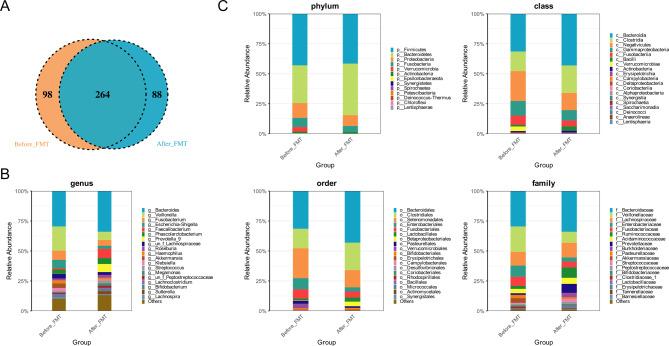
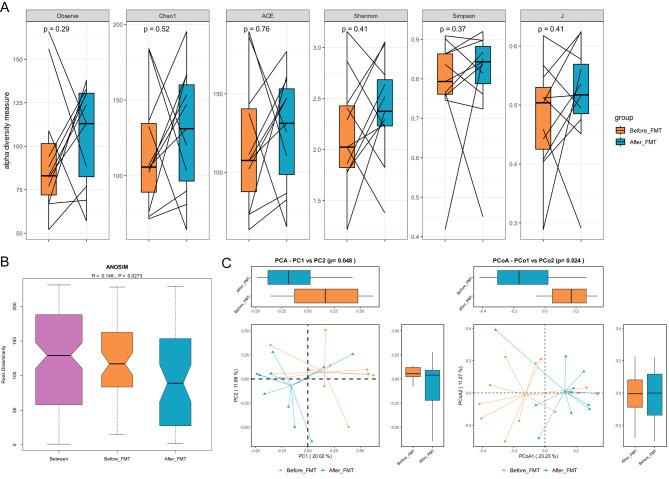
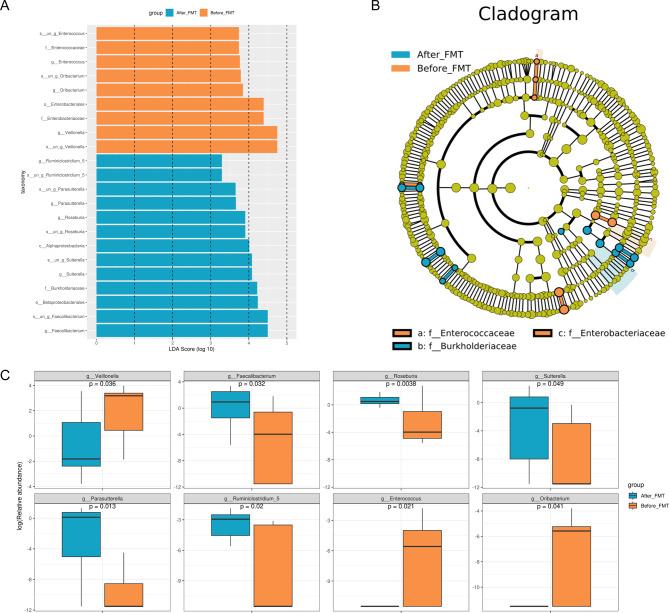
We conducted a retrospective analysis involving 18 patients who experienced severe diarrhea or recurrent urinary tract infection (rUTI) due to prolonged immunosuppressant usage after kidney transplantation. Following episodes of severe diarrhea or rUTI, these individuals underwent fecal microbiota transplantation (FMT), resulting in notable alleviation of clinical symptoms. No unexpected adverse or serious adverse events were reported. In comparison to the pre-FMT period, the α-diversity of the intestinal microbiota in patients did not exhibit a significant difference following FMT; however, there was a notable distinction in the β-diversity and analysis of similarity (ANOSIM). In addition, our findings indicated a significant decline in the relative abundance of the bacterial genera Veillonella, Enterococcus, and Oribacterium, whereas a marked elevation was observed in the relative abundance of Faecalibacterium, Roseburia, Sutterella, Parasutterella, and Ruminiclostridium 5 after FMT in patients. Furthermore, there was a notable alteration in the metabolic pathway of gut microbiota in patients following FMT, with a significant enrichment observed in pathways such as Flavone and flavonol biosynthesis, Cytoskeleton proteins, Chromosome-related processes, NOD-like receptor signaling pathway, Progesterone-mediated oocyte maturation, and Antigen processing and presentation.
CONCLUSION
FMT exhibited an effective approach for managing rUTI and diarrhea arising from postoperative immunosuppressant exposure in kidney transplant recipients.
背景
器官移植后使用免疫抑制剂对肠道微生物群组成有重大影响,从而影响患者的预后和生活质量。
方法与结果
我们进行了一项回顾性分析,纳入了18例肾移植后因长期使用免疫抑制剂而出现严重腹泻或复发性尿路感染(rUTI)的患者。在出现严重腹泻或rUTI发作后,这些患者接受了粪便微生物群移植(FMT),临床症状得到显著缓解。未报告意外不良事件或严重不良事件。与FMT前相比,患者肠道微生物群的α多样性在FMT后无显著差异;然而,β多样性和相似性分析(ANOSIM)存在显著差异。此外,我们的研究结果表明,韦荣球菌属、肠球菌属和口腔杆菌属的相对丰度显著下降,而在接受FMT后的患者中,粪杆菌属、罗氏菌属、萨特氏菌属、副萨特氏菌属和瘤胃梭菌5的相对丰度显著升高。此外,患者在FMT后肠道微生物群的代谢途径有显著改变,在黄酮和黄酮醇生物合成、细胞骨架蛋白、染色体相关过程、NOD样受体信号通路、孕酮介导的卵母细胞成熟以及抗原加工和呈递等途径中观察到显著富集。
结论
FMT是治疗肾移植受者术后免疫抑制剂暴露引起的rUTI和腹泻的有效方法。



 Zotero 插件