
探索血浆代谢物与注意力缺陷多动障碍之间的因果关联。
Exploring causal associations between plasma metabolites and attention-deficit/hyperactivity disorder.
作者信息
Shi Shangyun, Baranova Ancha, Cao Hongbao, Zhang Fuquan
机构信息
Department of Psychiatry, The Affiliated Brain Hospital of Nanjing Medical University, 264 Guangzhou Road, Nanjing, 210029, China.
School of Systems Biology, George Mason University, Fairfax, 22030, USA.
出版信息
BMC Psychiatry. 2025 May 16;25(1):498. doi: 10.1186/s12888-025-06951-9.
BACKGROUND
Observational studies reported altered levels of plasma metabolites in attention-deficit/hyperactivity disorder (ADHD). We aim to explore the causal link between plasma metabolites and ADHD.
METHODS
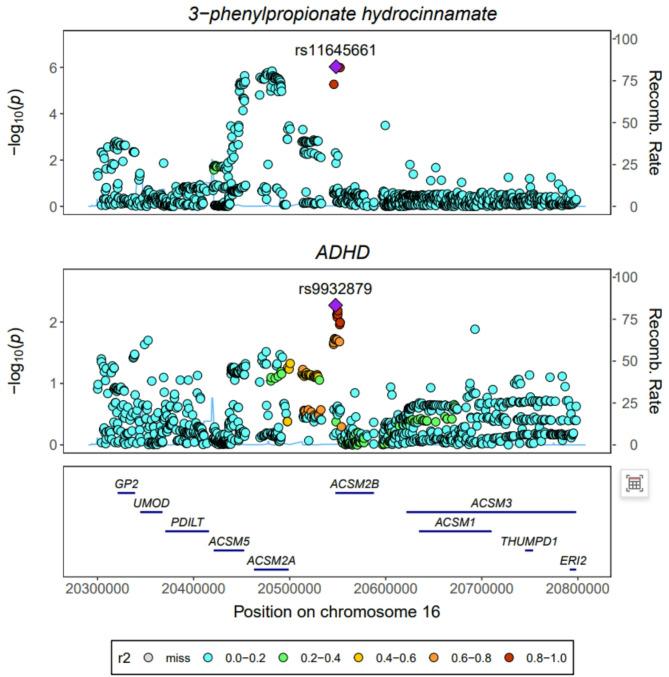
We utilized Mendelian randomization (MR) analysis to assess the causal relationship between plasma metabolites and ADHD and the Genome-wide association study (GWAS) summary datasets were sourced from public databases. GWAS summary datasets were used in the study, including ADHD (n = 292,548) and 871 plasma metabolites (n = 8,299). Moreover, we used DrugBank and ChEMBL to evaluate whether the identified metabolites are potential therapeutic targets, and in addition, Bayesian colocalization analyses were conducted to assess the shared genetic signals between these metabolites and ADHD.
RESULTS
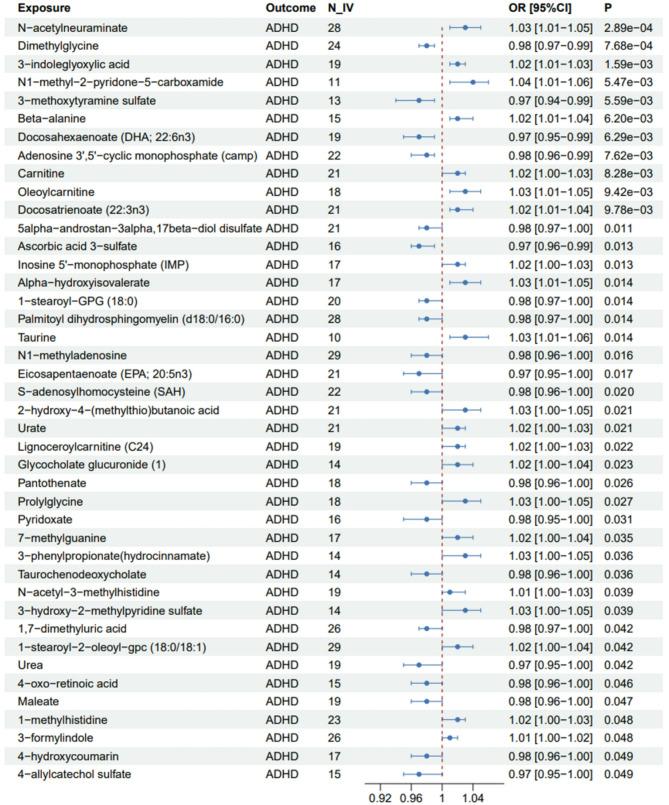
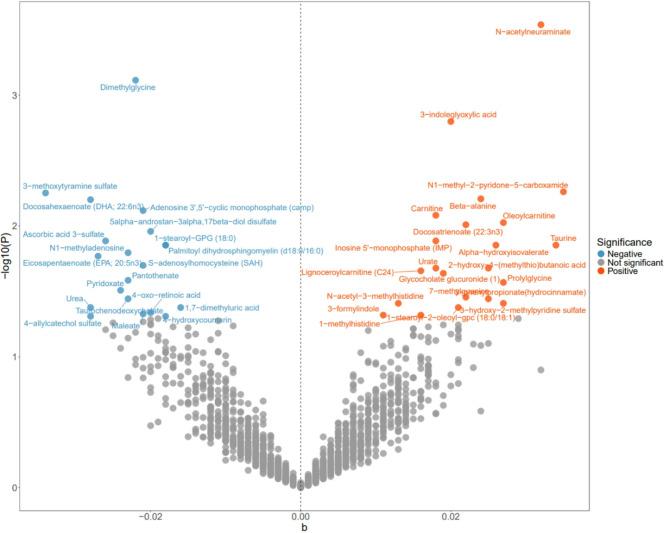
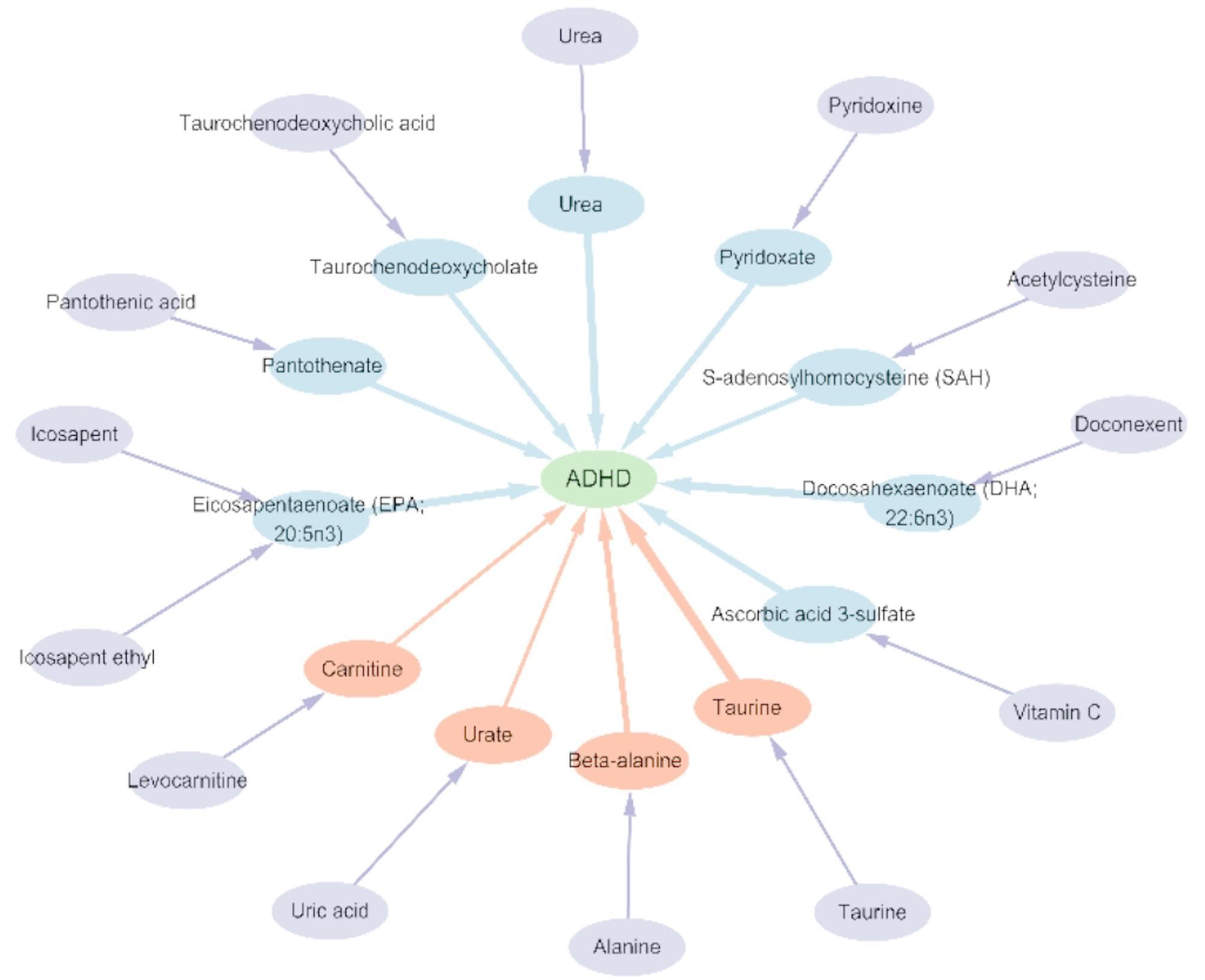
Our MR analysis identified 20 plasma metabolites that conferred protective effects against the risk of ADHD, including dimethylglycine, 3-methoxytyramine sulfate, and adenosine 3',5'-cyclic monophosphate (OR: 0.97-0.98). Additionally, 22 metabolites were associated with an increased risk of ADHD, including N-acetylneuraminate and 3-indoleglyoxylic acid (OR:1.01-1.03). Druggability evaluation showed that 12 of the ADHD-related metabolites have been targeted by pharmacological interventions. For example, doconexent has been used to increase the levels of docosahexaenoic acid. Our reverse MR analysis showed that genetic liability to ADHD may affect the abundance of 91 metabolites. Notably, several plasma metabolites had bidirectional causal associations with ADHD, including docosahexaenoate (DHA; 22:6n3), docosatrienoate (22:3n3), N1-methyladenosine, S-adenosylhomocysteine, and 4-allylcatechol sulfate.
CONCLUSIONS
Our study supported a causal role of plasma metabolites in the susceptibility to ADHD, and the identified metabolites may provide a new avenue for the prevention and treatment of ADHD.
CLINICAL TRIAL NUMBER
Not applicable.
背景
观察性研究报告称,注意缺陷多动障碍(ADHD)患者血浆代谢物水平发生改变。我们旨在探讨血浆代谢物与ADHD之间的因果关系。
方法
我们利用孟德尔随机化(MR)分析来评估血浆代谢物与ADHD之间的因果关系,全基因组关联研究(GWAS)汇总数据集来自公共数据库。本研究使用了GWAS汇总数据集,包括ADHD(n = 292,548)和871种血浆代谢物(n = 8,299)。此外,我们使用药物银行(DrugBank)和化合物数据库(ChEMBL)来评估所鉴定的代谢物是否为潜在治疗靶点,并且进行了贝叶斯共定位分析以评估这些代谢物与ADHD之间的共享遗传信号。
结果
我们的MR分析确定了20种对ADHD风险具有保护作用的血浆代谢物,包括二甲基甘氨酸、3-甲氧基酪胺硫酸盐和3',5'-环磷酸腺苷(比值比:0.97 - 0.98)。此外,22种代谢物与ADHD风险增加相关,包括N-乙酰神经氨酸和3-吲哚乙醛酸(比值比:1.01 - 1.03)。药物可及性评估表明,12种与ADHD相关的代谢物已成为药物干预的靶点。例如,二十二碳六烯酸已被用于提高二十二碳六烯酸水平。我们的反向MR分析表明,ADHD的遗传易感性可能会影响91种代谢物的丰度。值得注意的是,几种血浆代谢物与ADHD存在双向因果关联,包括二十二碳六烯酸(DHA;22:6n3)、二十二碳三烯酸(22:3n3)、N1-甲基腺苷、S-腺苷同型半胱氨酸和4-烯丙基儿茶酚硫酸盐。
结论
我们的研究支持血浆代谢物在ADHD易感性中起因果作用,所鉴定的代谢物可能为ADHD的预防和治疗提供新途径。
临床试验编号
不适用。

 Zotero 插件