
聚(ADP - 核糖)聚合酶(PARP)抑制剂引起的昼夜节律紊乱与卵巢癌患者的治疗毒性相关,并且是副作用的一个预测指标。
Circadian rhythm disruption by PARP inhibitors correlates with treatment toxicity in patients with ovarian cancer and is a predictor of side effects.
作者信息
Malhan Deeksha, Hesse Janina, Nelson Nina, Stankov Kay, Nguyen Jessica, Aboumanify Ouda, Garmshausen Josefin, Rogmans Gunther, Czogalla Bastian, Gerber Jens, Koch Martin, Kupec Tomáš, Tomé Oliver, Witteler Ralf, Deryal Mustafa, Eichbaum Michael, Sehouli Jalid, Braicu Elena Ioana, Relógio Angela
机构信息
Institute for Systems Medicine and Faculty of Human Medicine, MSH Medical School Hamburg, Hamburg, Germany.
Institute for Systems Medicine and Faculty of Human Medicine, MSH Medical School Hamburg, Hamburg, Germany; Leibniz-Institute for Resilience Research (LIR), Mainz, Germany; Johannes Gutenberg University Medical Center Mainz, Mainz, Germany; Institute for Quantitative and Computational Biosciences (IQCB), Johannes-Gutenberg University, Mainz, Germany.
出版信息
EBioMedicine. 2025 May 16;117:105764. doi: 10.1016/j.ebiom.2025.105764.
BACKGROUND
Ovarian cancer is among the most lethal malignancies in women. The advent of PARP inhibitors (PARPi) has improved outcomes. However, treatment-related toxicity remains a critical challenge, impacting patient quality of life and treatment adherence.
METHODS
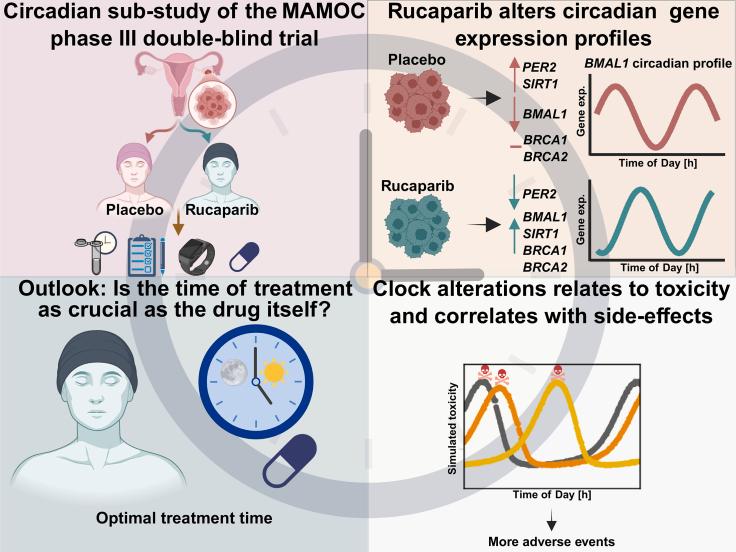
In a circadian sub-study of the MAMOC trial-a double-blind, phase III study-42 patients (FIGO stage IIIA-IV) were randomised in a 2:1 ratio to receive rucaparib or placebo. In a subset of these patients, we performed differential gene expression and rhythmicity analysis on up to 800 genes, including clock and clock-controlled genes. Machine learning algorithms and mathematical modelling were employed to simulate patient-specific toxicity profiles and to explore correlations between gene expression patterns and treatment-related side effects.
FINDINGS
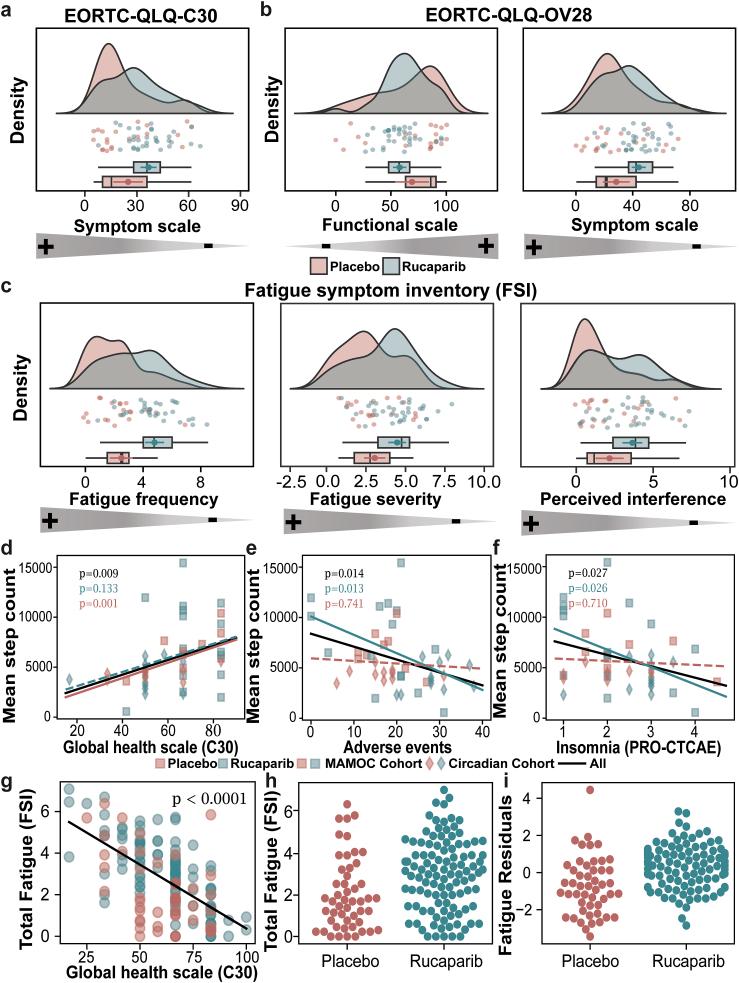
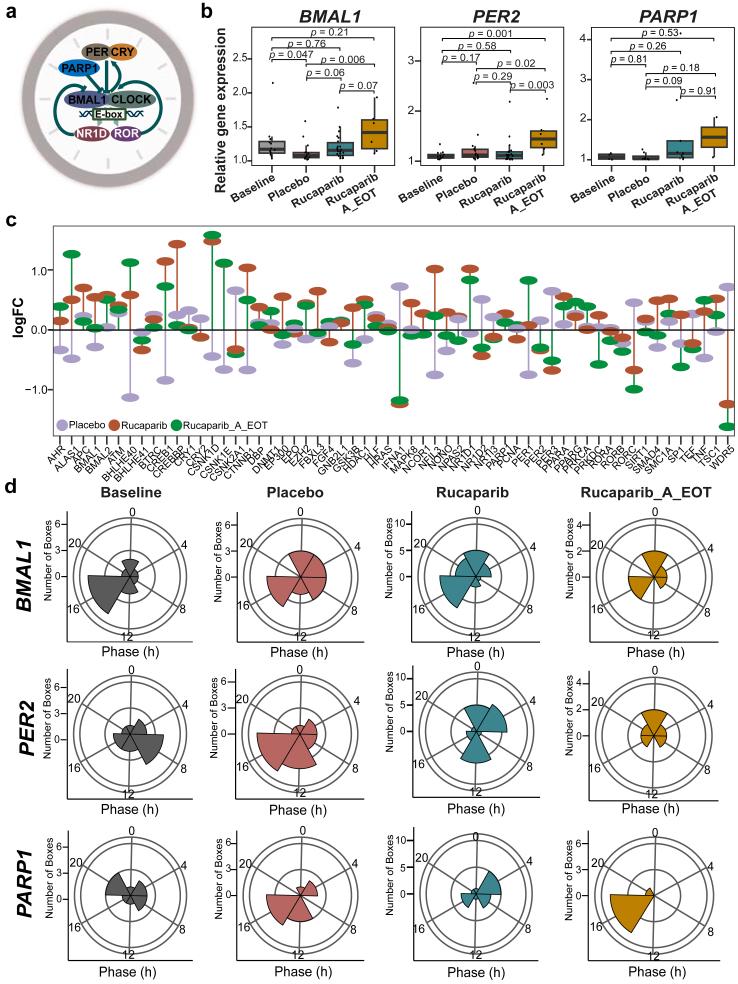
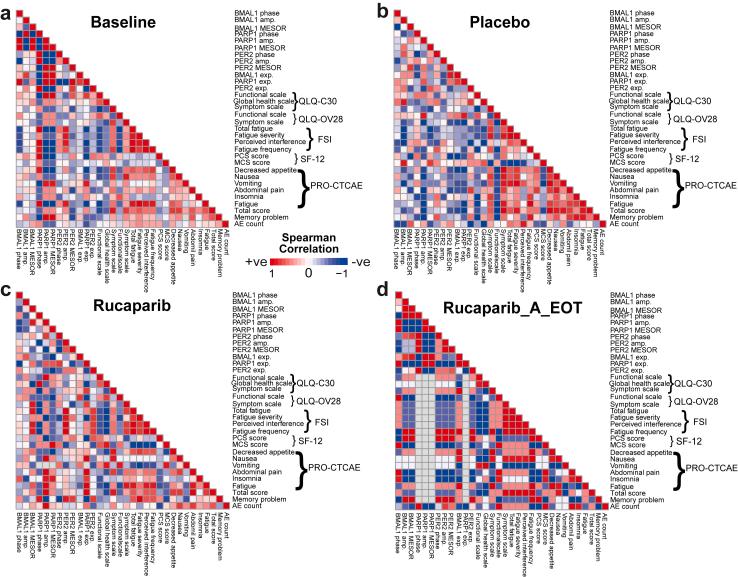
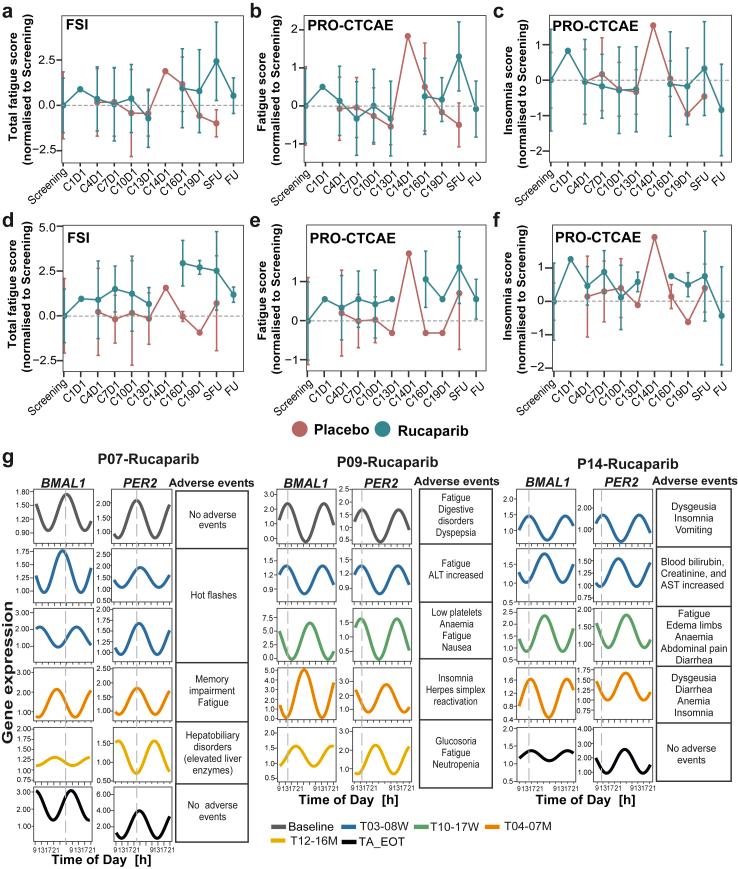
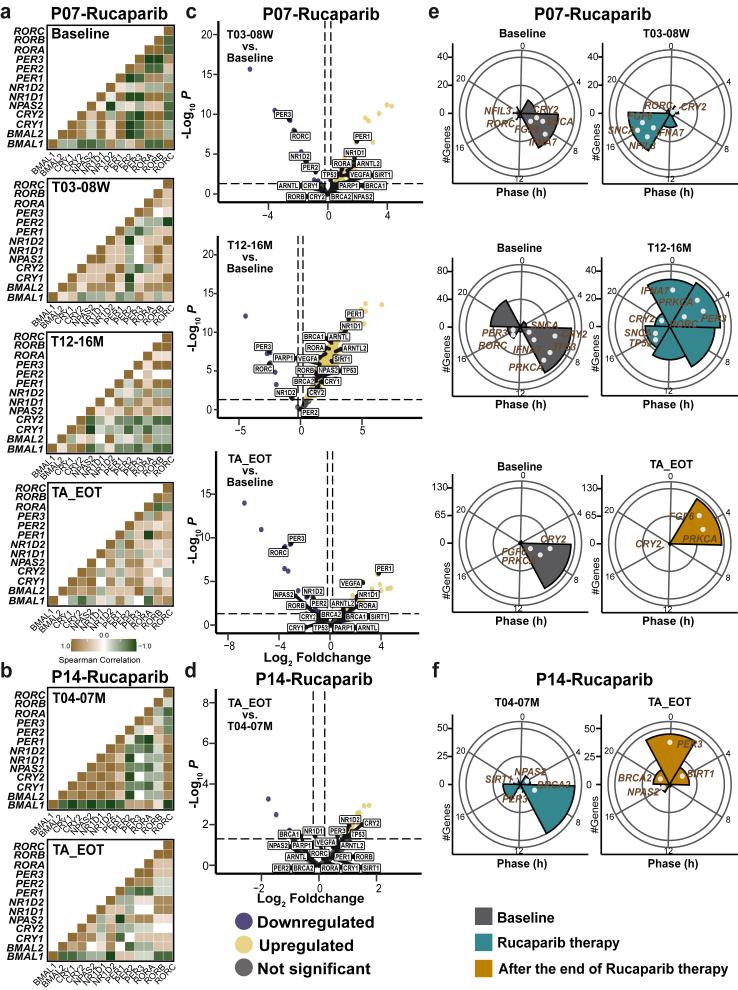
Our analysis revealed significant disruptions in circadian rhythms, specifically in the expression of the core clock genes BMAL1 and PER2, following treatment. These disruptions strongly correlated with the severity and frequency of side effects, including nausea and fatigue, displaying opposite trends between the placebo and rucaparib-treated groups. K-means clustering successfully distinguished rucaparib-treated patients from those receiving placebo based on BMAL1 phase and gene expression profiles. In addition, rucaparib therapy also altered the expression of several clock-controlled genes, including SIRT1, BRCA1, BRCA2, and TP53. Notably, our data suggest that individual differences in circadian rhythms may lead to distinct 24-h toxicity profiles among patients.
INTERPRETATION
These findings suggest that circadian rhythm dysregulation may contribute to the toxicity of PARPi therapy. Aligning treatment timing with circadian rhythms could mitigate these adverse effects, and improve patient outcomes.
FUNDING
This study was funded by the Dr. Rolf Schwiete Stiftung and the MSH Medical School Hamburg, Germany. The MAMOC trial (ClinicalTrials.gov: NCT04227522) was funded by Clovis Oncology, United States.
背景
卵巢癌是女性中最致命的恶性肿瘤之一。聚(ADP-核糖)聚合酶抑制剂(PARPi)的出现改善了治疗结果。然而,治疗相关毒性仍然是一个关键挑战,影响患者的生活质量和治疗依从性。
方法
在MAMOC试验(一项双盲III期研究)的昼夜节律子研究中,42例患者(国际妇产科联盟(FIGO)分期IIIA-IV期)以2:1的比例随机分组,接受鲁卡帕尼或安慰剂治疗。在这些患者的一个亚组中,我们对多达800个基因进行了差异基因表达和节律性分析,包括生物钟基因和生物钟调控基因。采用机器学习算法和数学模型来模拟患者特异性毒性特征,并探索基因表达模式与治疗相关副作用之间的相关性。
结果
我们的分析显示,治疗后昼夜节律出现显著紊乱,特别是核心生物钟基因BMAL1和PER2的表达。这些紊乱与副作用的严重程度和频率密切相关,包括恶心和疲劳,在安慰剂组和鲁卡帕尼治疗组之间呈现相反的趋势。K均值聚类基于BMAL1相位和基因表达谱成功区分了接受鲁卡帕尼治疗的患者和接受安慰剂治疗的患者。此外,鲁卡帕尼治疗还改变了几个生物钟调控基因的表达,包括SIRT1、BRCA1、BRCA2和TP53。值得注意的是,我们的数据表明,昼夜节律的个体差异可能导致患者之间不同的24小时毒性特征。
解读
这些发现表明昼夜节律失调可能导致PARPi治疗的毒性。使治疗时间与昼夜节律同步可以减轻这些不良反应,并改善患者的治疗结果。
资助
本研究由德国罗尔夫·施维特基金会和汉堡MSH医学院资助。MAMOC试验(ClinicalTrials.gov:NCT04227522)由美国克洛维斯肿瘤学公司资助。



 Zotero 插件