
泊松随机测度噪声诱导的流行病学先验中的相干性为深度神经网络提供信息,以识别病毒动态的强度。
Poisson random measure noise-induced coherence in epidemiological priors informed deep neural networks to identify the intensity of virus dynamics.
作者信息
Rashid Saima, Siddiqa Ayesha, Agama Fekadu Tesgera, Idrees Nazeran, Alharthi Mohammed Shaaf
机构信息
Department of Mathematics, Government College University, Faisalabad, 38000, Pakistan.
Department of Mathematics, Wollega University, 395, Nekemte, Ethiopia.
出版信息
Sci Rep. 2025 May 17;15(1):17150. doi: 10.1038/s41598-025-94086-y.
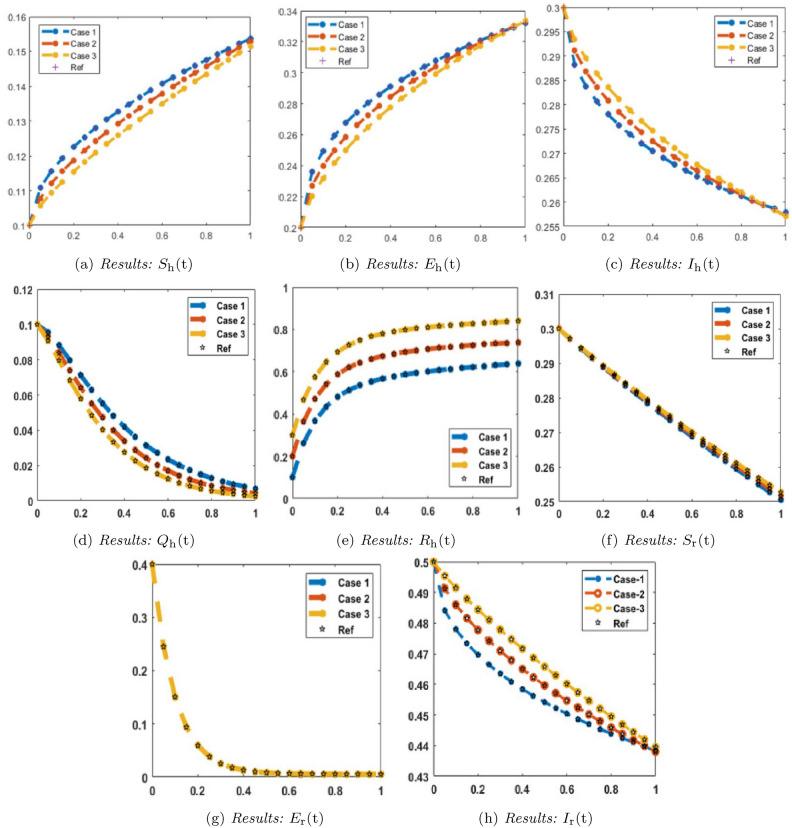
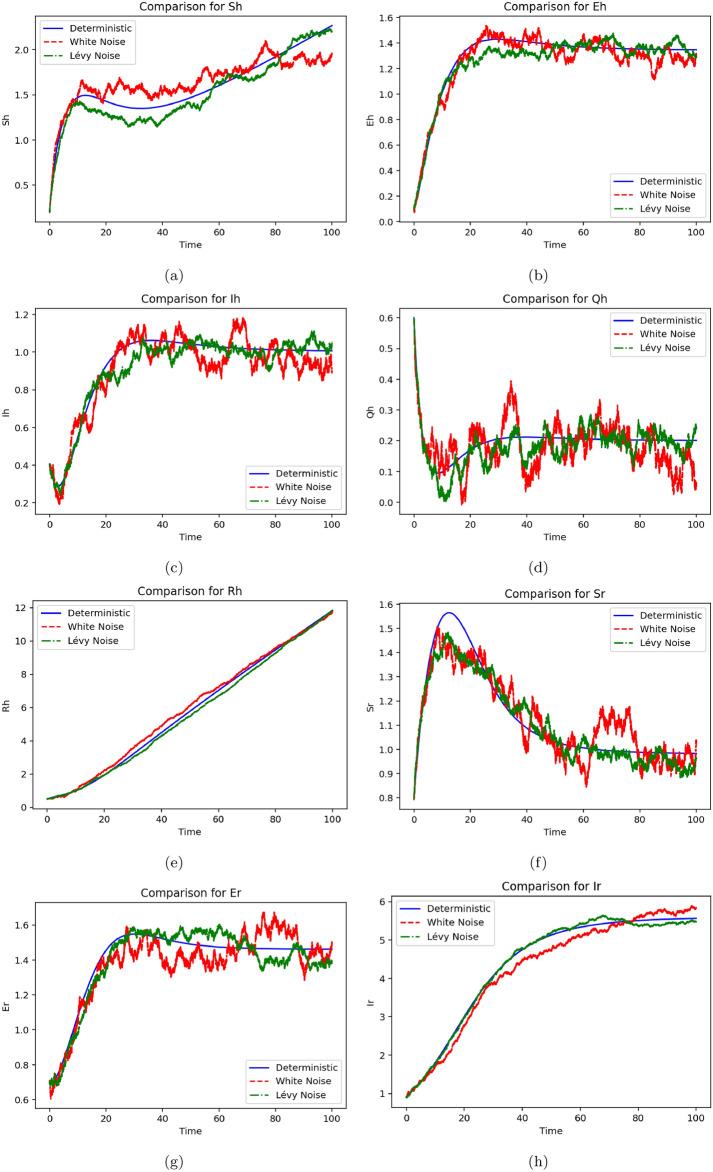
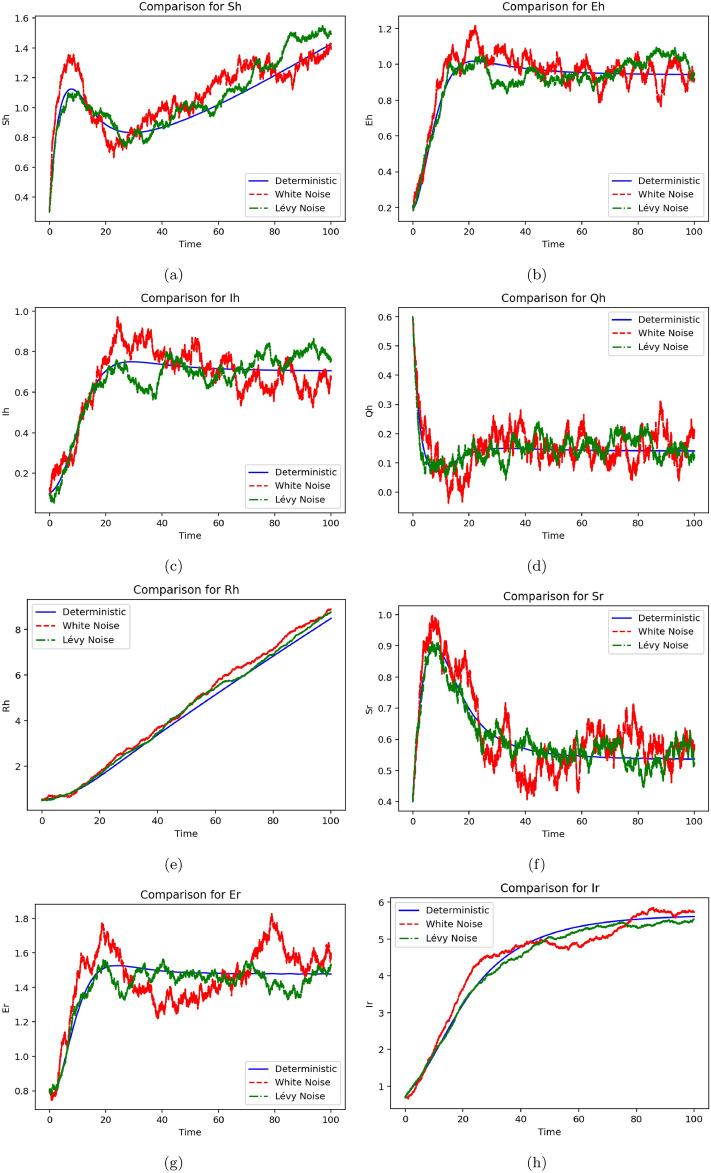
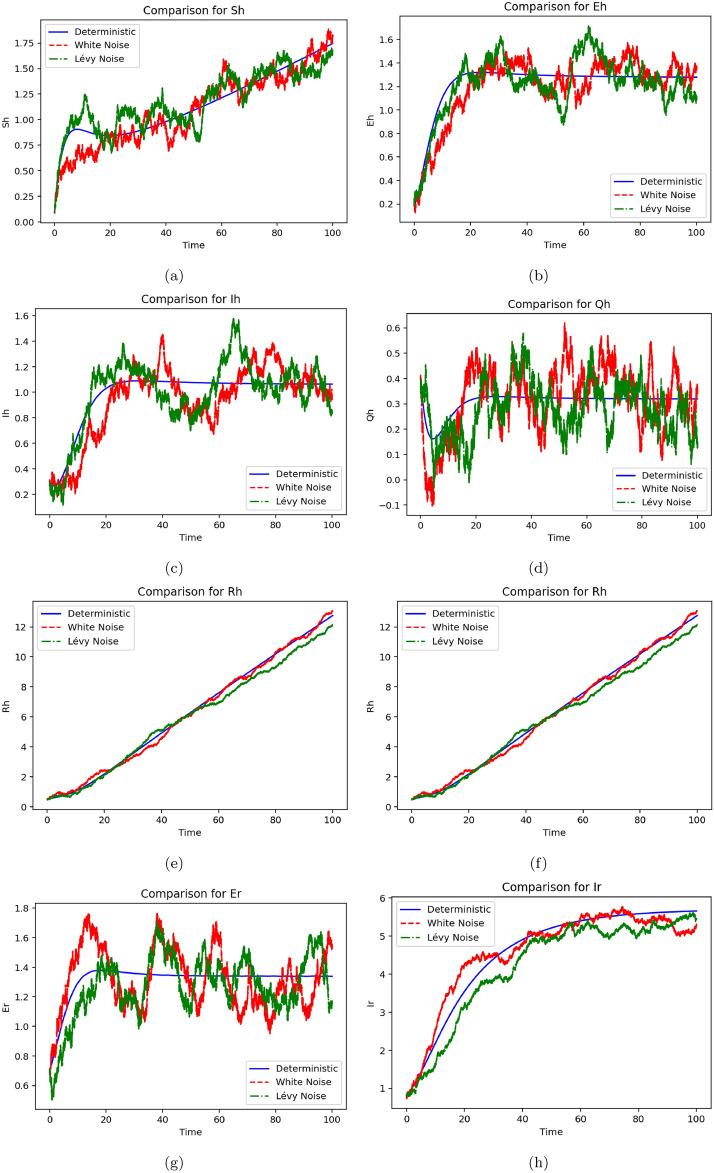
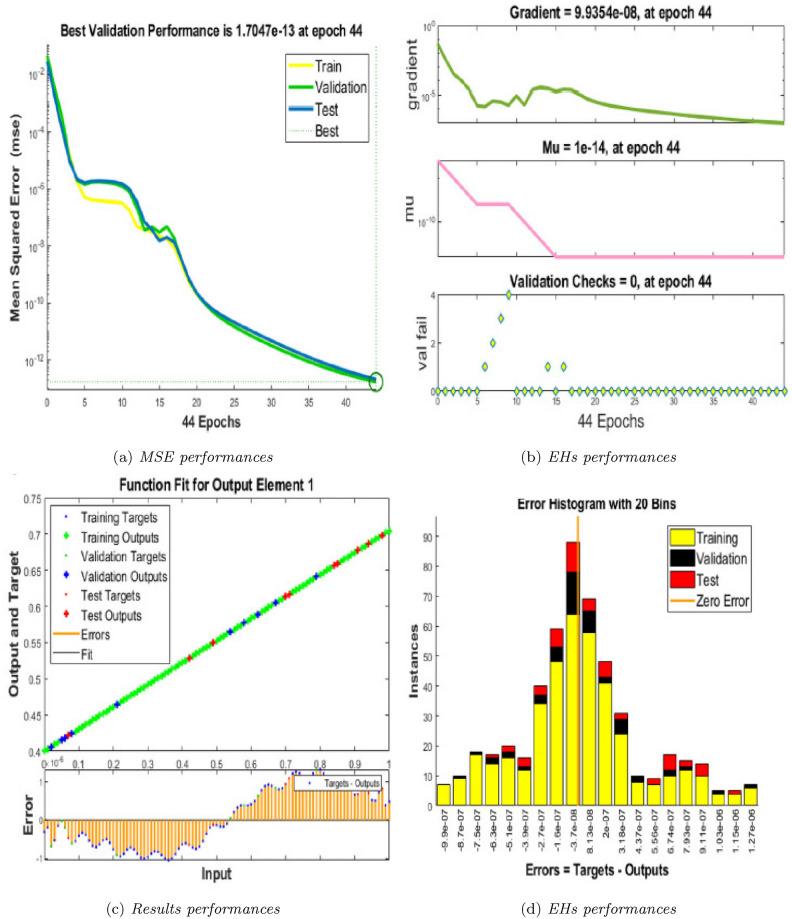
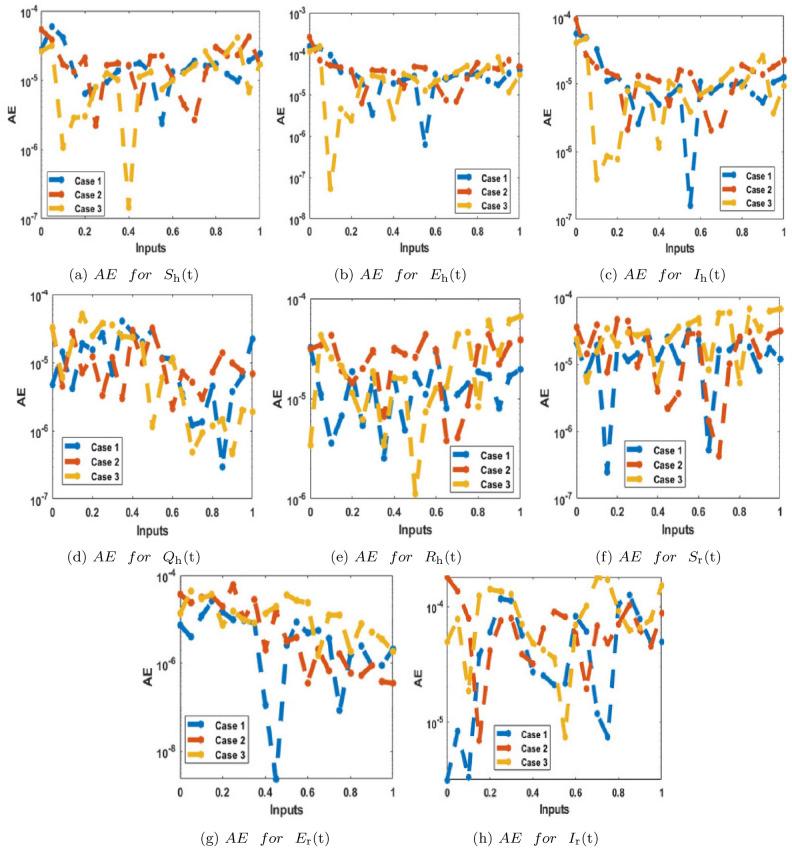
Differential equations-based epidemiological compartmental systems and deep neural networks-based artificial intelligence can effectively analyze and combat monkeypox (MPV) transmission with Poisson random measure noise into a stochastic SEIQR (susceptible, exposed, infected, quarantined, recovered) model human population and SEI (susceptible, exposed, infected) for rodent population. Compartmental models have estimates of parameter complications, whereas machine learning algorithms struggle to understand MPV's progression and lack elucidation. This research introduces Levenberg Marquardt backpropagation neural networks (LMBNNS) in training, a new approach that combines compartmental frameworks with artificial neural networks (ANNs) to explain the complex mechanisms of MPV. Meanwhile, a model description proves the existence and uniqueness of a global positive solution. A threshold parameter is determined and employed to identify the factors that lead to infection in the general public. Furthermore, other criteria are developed to eliminate the infection within the entire population. The MPV is eliminated if [Formula: see text], but continues if [Formula: see text]. The study depends on two functional scenarios to quantitatively clarify the theoretical results. An adapted dataset is generated employing the Adam algorithm to minimize the mean square error (MSE) by setting its data effectiveness to 81% for training, 9% for testing, and 10% for validation. The solver's accuracy is validated by minimal absolute error and complementing responses to every hypothetical situation. In order to verify the adaptation's reliability and precision, productivity is measured using the error histogram, changeover state, and prediction for addressing the MPV model. Visual representations are used to illustrate the investigation and compare results. Utilizing this hybrid approach, we want to increase our comprehension of disease propagation, strengthen forecasting competencies, and influence more efficient public health actions. The combination of stochastic processes and machine learning approaches creates a powerful tool for capturing the inherent uncertainties in infectious disease dynamics, as well as a more accurate framework for real-time epidemic prediction and prevention.
基于微分方程的流行病学 compartmental 系统和基于深度神经网络的人工智能可以有效地分析和对抗猴痘(MPV)传播,该传播带有泊松随机测度噪声,进入一个随机 SEIQR(易感、暴露、感染、隔离、康复)模型的人类群体以及针对啮齿动物群体的 SEI(易感、暴露、感染)模型。 compartmental 模型存在参数复杂性估计问题,而机器学习算法难以理解 MPV 的进展且缺乏阐释。本研究引入了训练中的 Levenberg Marquardt 反向传播神经网络(LMBNNS),这是一种将 compartmental 框架与人工神经网络(ANN)相结合的新方法,用于解释 MPV 的复杂机制。同时,一个模型描述证明了全局正解的存在性和唯一性。确定并采用一个阈值参数来识别导致公众感染的因素。此外,还制定了其他标准以消除整个人口中的感染。如果[公式:见原文],则 MPV 被消除,但如果[公式:见原文],则会持续。该研究依赖于两种功能场景来定量阐明理论结果。使用 Adam 算法生成一个适配数据集,通过将其数据有效性设置为训练 81%、测试 9%和验证 10%来最小化均方误差(MSE)。求解器的准确性通过最小绝对误差和对每个假设情况的补充响应来验证。为了验证适配的可靠性和精度,使用误差直方图、转换状态和预测来衡量生产力,以处理 MPV 模型。使用可视化表示来说明研究并比较结果。利用这种混合方法,我们希望增强对疾病传播的理解,加强预测能力,并影响更有效的公共卫生行动。随机过程和机器学习方法的结合创造了一个强大的工具,用于捕捉传染病动态中的内在不确定性,以及一个更准确的实时疫情预测和预防框架。






 Zotero 插件