
仿生支架以刚度和基质依赖的方式增强诱导多能干细胞星形胶质细胞祖细胞的血管生成、免疫调节和神经营养能力,用于脊髓修复应用。
Biomimetic Scaffolds Enhance iPSC Astrocyte Progenitor Angiogenic, Immunomodulatory, and Neurotrophic Capacity in a Stiffness and Matrix-Dependent Manner for Spinal Cord Repair Applications.
作者信息
O'Connor Cian, Woods Ian, McComish Sarah F, Kerr Sean, McGrath Matthew, Chávez Juan Carlos Palomeque, Maughan Jack, McGuire Tara, Caldwell Maeve A, Dervan Adrian, O'Brien Fergal J
机构信息
Tissue Engineering Research Group, Department of Anatomy & Regenerative Medicine, Royal College of Surgeons in Ireland (RCSI), Dublin 2, Ireland.
Advanced Materials and Bioengineering Research Centre (AMBER), RCSI and Trinity College Dublin (TCD), Dublin 2, Ireland.
出版信息
Adv Healthc Mater. 2025 Jun;14(16):e2500830. doi: 10.1002/adhm.202500830. Epub 2025 May 19.
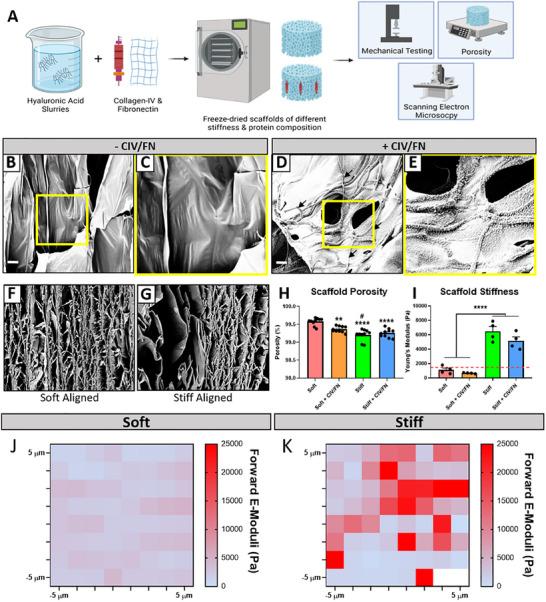
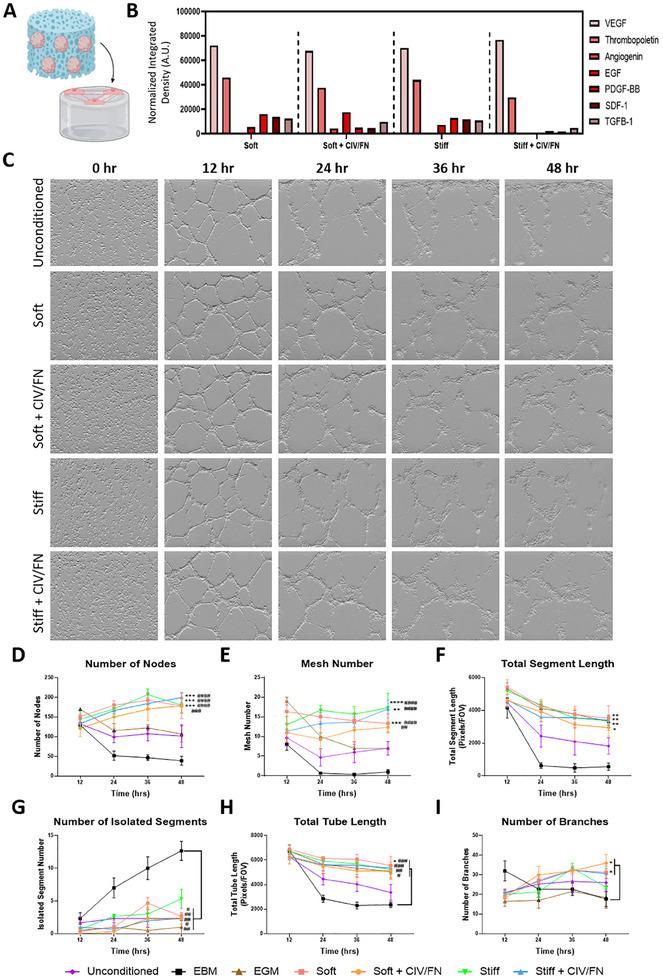
Spinal cord injury repair poses a significant challenge due to the hostile microenvironment of the injury site and the poor survival and function of clinically relevant transplanted cells. Here it is aimed to investigate whether tuning the physicochemical properties of implantable biomimetic biomaterial scaffolds can enhance the localized delivery and reparative potential of patient-derived induced pluripotent stem cells (iPSC) astrocyte progenitors. It is demonstrated that soft, collagen-IV/fibronectin-functionalized hyaluronic acid scaffolds, mimicking the physicochemical properties of healthy spinal cord tissue, optimally support the formation of iPSC-derived multicellular spheroids, promoting neural cell survival and function. These soft, collagen-IV/fibronectin scaffolds enhance angiogenic cytokine release, facilitate vascular network formation, modulate inflammatory responses, and promote neurite outgrowth from growing, mature and injured neurons, while supporting cell infiltration from spinal cord explants. These findings demonstrate that optimized biomimetic scaffold properties provide a supportive environment for iPSC astrocyte progenitors but can also modulate their reparative capacity. These findings highlight the critical role of matrix composition and scaffold stiffness in advancing scaffold-mediated patient-derived stem cell-delivery strategies for spinal cord repair applications.
由于损伤部位恶劣的微环境以及临床相关移植细胞的低存活率和功能欠佳,脊髓损伤修复面临重大挑战。本文旨在研究调整可植入的仿生生物材料支架的物理化学性质是否能够增强患者来源的诱导多能干细胞(iPSC)星形胶质细胞祖细胞的局部递送和修复潜力。结果表明,模仿健康脊髓组织物理化学性质的柔软的、经IV型胶原蛋白/纤连蛋白功能化的透明质酸支架,能够最佳地支持iPSC来源的多细胞球体的形成,促进神经细胞的存活和功能。这些柔软的、经IV型胶原蛋白/纤连蛋白功能化的支架可增强血管生成细胞因子的释放,促进血管网络形成,调节炎症反应,并促进生长中的、成熟的和受损神经元的神经突生长,同时支持脊髓外植体的细胞浸润。这些发现表明,优化的仿生支架特性为iPSC星形胶质细胞祖细胞提供了一个支持性环境,但也可以调节它们的修复能力。这些发现突出了基质组成和支架硬度在推进用于脊髓修复应用的支架介导的患者来源干细胞递送策略中的关键作用。




 Zotero 插件