
开拓新领域:抗菌肽与纳米技术融合以攻克胃肠道病原体
Forging a New Frontier: Antimicrobial Peptides and Nanotechnology Converging to Conquer Gastrointestinal Pathogens.
作者信息
Carnero Canales Christian Shleider, Roque-Borda Cesar Augusto, Cazorla Jessica Ingrid Marquez, Cazorla Renzo Marianito Marquez, Apaza Uner Josseph Pinto, Silva Vanderson de Jesus, Primo Laura Maria Duran Gleriani, Martínez-Morales Maura Jennifer, Miguel Sábio Rafael, Santos Hélder A, Pavan Fernando Rogério
机构信息
Vicerrectorado de Investigación, Universidad Autónoma del Perú, Lima, 150142, Perú.
School of Pharmacy, Biochemistry and Biotechnology, Santa Maria Catholic University (UCSM), Arequipa, 04013, Perú.
出版信息
Small. 2025 Jul;21(26):e2501431. doi: 10.1002/smll.202501431. Epub 2025 May 19.
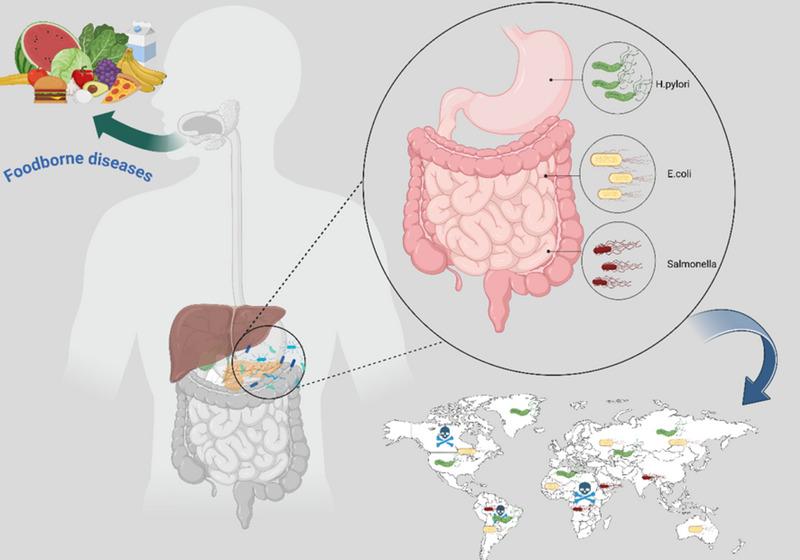
Gastrointestinal infections, which are caused primarily by pathogenic bacteria, remain a significant global health challenge. Their resilience is reinforced by various physical, biological, and biopharmaceutical barriers that complicate conventional therapeutic strategies. This review delves into the intricate landscape of managing these infections, addressing microbiota imbalances, the emergence of multidrug-resistant strains, and the impact of dysbiosis and antibiotic overuse. Faced with these challenges, traditional therapies often fail, which is hindered by low bioavailability, prolonged regimens, and a growing risk of resistance. In this context, nanotechnology applied to antimicrobial peptides (AMPs) has emerged as a promising solution to enhance their stability and targeted delivery. Through a critical approach, diverse nanocarriers and their efficacy against intestinal pathogens are evaluated both in vitro and in vivo. This review advocates for intensified research on the encapsulation and functionalization of AMPs, envisioning their potential to redefine the control of intestinal infections on a global scale.
主要由致病细菌引起的胃肠道感染仍然是一项重大的全球健康挑战。各种物理、生物和生物制药屏障增强了它们的抵抗力,这使得传统治疗策略变得复杂。本综述深入探讨了管理这些感染的复杂情况,涉及微生物群失衡、多重耐药菌株的出现以及生态失调和抗生素过度使用的影响。面对这些挑战,传统疗法往往失败,这受到生物利用度低、疗程长以及耐药风险不断增加的阻碍。在这种背景下,应用于抗菌肽(AMPs)的纳米技术已成为一种有前景的解决方案,可提高其稳定性和靶向递送能力。通过批判性方法,评估了多种纳米载体及其在体外和体内对肠道病原体的功效。本综述主张加强对抗菌肽包封和功能化的研究,设想其在全球范围内重新定义肠道感染控制的潜力。





 Zotero 插件