
脓毒症相关性脑病:机制、诊断及治疗进展
Sepsis-associated encephalopathy: Mechanisms, Diagnosis, and Treatments update.
作者信息
Li Jin, Jia Qi, Yang Lin, Wu You, Peng Yuliang, Du Lixia, Fang Zongping, Zhang Xijing
机构信息
Department of Critical Care Medicine, Xijing Hospital, Fourth Military Medical University, Xi'an 710032, Shaanxi, China.
Department of Anaesthesiology and Perioperative Medicine,Xijing Hospital, Fourth Military Medical University, Xi'an 710032, Shaanxi, China.
出版信息
Int J Biol Sci. 2025 Apr 28;21(7):3214-3228. doi: 10.7150/ijbs.102234. eCollection 2025.
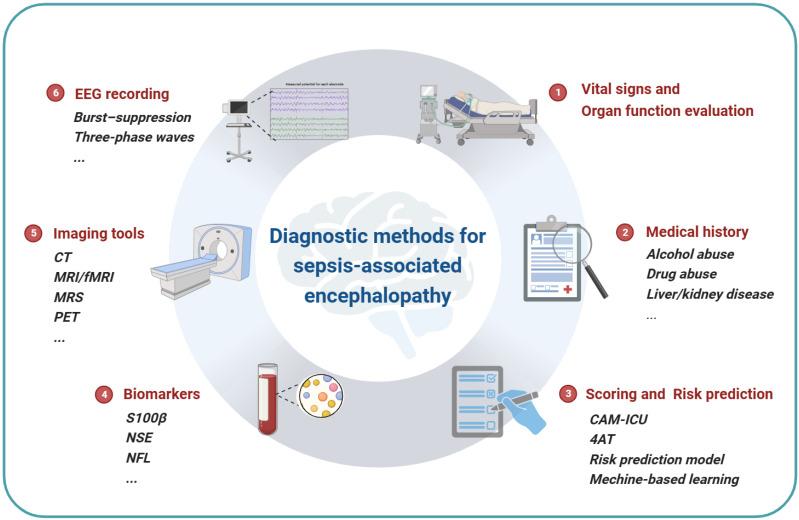
Sepsis-associated encephalopathy (SAE) is defined as a syndrome of cerebral dysfunction secondary to sepsis but in the absence of direct central nervous system infection, structural abnormality, or other types of encephalopathy. The majority of clinical studies indicated that the severity and duration of SAE were highly related to the days of ICU stays, medical costs, and mortality of sepsis. Meanwhile, the persistence of cognitive impairments and psychological diseases in a majority of survived septic patients brings a heavy burden on those individuals and society. However, the pathogenesis of SAE has not been fully elucidated. A valid and unified diagnosis protocol, as well as effective remedy are still absent. The purpose of this narrative review is to discuss and update the current understanding of the clinical manifestations and risk factors, the recent findings and potential perspectives for the mechanism research, diagnostic methods, and treatments for SAE.
脓毒症相关性脑病(SAE)被定义为继发于脓毒症的脑功能障碍综合征,但不存在直接的中枢神经系统感染、结构异常或其他类型的脑病。大多数临床研究表明,SAE的严重程度和持续时间与ICU住院天数、医疗费用以及脓毒症的死亡率密切相关。与此同时,大多数存活的脓毒症患者中认知障碍和心理疾病的持续存在给这些个体和社会带来了沉重负担。然而,SAE的发病机制尚未完全阐明。目前仍缺乏有效的统一诊断方案以及有效的治疗方法。本叙述性综述的目的是讨论和更新目前对SAE的临床表现和危险因素、机制研究的最新发现和潜在观点、诊断方法以及治疗的认识。

 Zotero 插件