
利雅得2型糖尿病患者的社会人口学因素、合并症及生活方式对糖尿病并发症的患病率及影响
Prevalence and impact of sociodemographic factors, comorbidities, and lifestyle on diabetes complications among patients with type 2 diabetes in Riyadh.
作者信息
AlOmeir Othman, Almuqbil Mansour, Alotaibi Nawaf Fahad, Alotaibi Faisal Rashed Nawar, Alnazer Wael Rashad, Alenazi Luay Khaled, Alotaibi Fahad Nasser, Otaif Hussein Abdullah, Alsanie Walaa F, Alamri Abdulhakeem S, Alhomrani Majid, Alshammary Amal F, Asdaq Syed Mohammed Basheeruddin
机构信息
Department of Clinical Pharmacy, College of Pharmacy, Shaqra University, 11961, Shaqra, Saudi Arabia.
Department of Clinical Pharmacy, College of Pharmacy, King Saud University, 11451, Riyadh, Saudi Arabia.
出版信息
Sci Rep. 2025 May 19;15(1):17299. doi: 10.1038/s41598-025-02559-x.
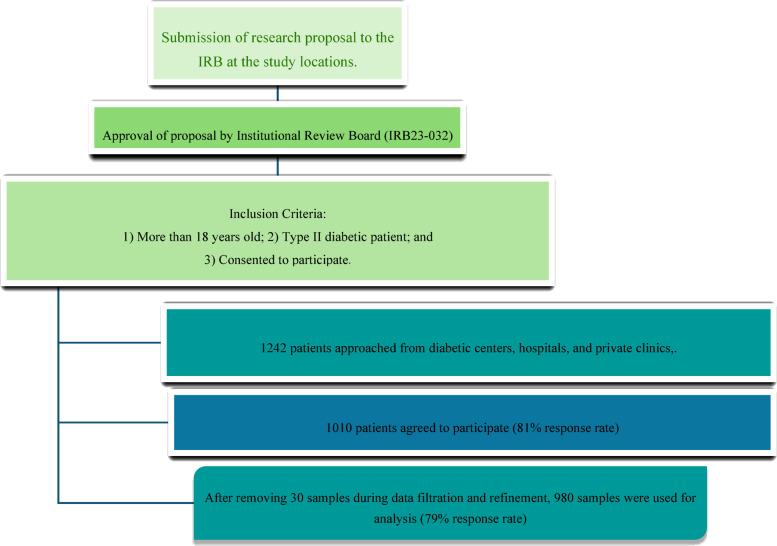
Diabetes mellitus (DM) is a growing public health concern globally, particularly in Saudi Arabia, where increasing prevalence is associated with significant morbidity. This study aimed to assess the prevalence of diabetes-related complications among patients in Riyadh and examine the impact of sociodemographic factors, comorbidities, and lifestyle habits on these complications. A cross-sectional study was conducted with 980 diabetic patients attending health centers in Riyadh from March to April 2023. Data were collected via a validated bilingual questionnaire that captured sociodemographic information, diabetes-related variables, comorbid conditions, lifestyle habits, and complications. Statistical analyses, including descriptive statistics, chi-square tests, and binary regression, were performed via SPSS to identify significant associations. A p-value less than 0.05 was considered significant for all comparisons. Among the participants (980), 38% (378) reported diabetes-related complications, primarily neuropathy (30%), retinopathy (25%), and cardiovascular diseases (20%). Complications were significantly associated with older age (p < 0.001) and longer diabetes duration (more than 5 years; p < 0.001). Individuals with hypertension, hyperlipidemia, heart disease, kidney disease, and obesity had significantly higher complication rates than those without these conditions (p < 0.05). The most pronounced association was observed in participants with heart disease (85% vs. 15%; RR = 1.506), highlighting the need for better management of these comorbidities. Consuming fruits and vegetables, milk, and regular exercise were inversely associated with the risk of complications (p < 0.05). Conversely, sugary drinks, white bread, sheesha/vaping, and inadequate sleep were linked to increased risk (p < 0.05), highlighting the protective role of healthy dietary and lifestyle habits. This study highlights the impact of sociodemographic factors and lifestyle choices-such as age, education, family history, comorbidities, and poor diet-on diabetes complications. While early detection and lifestyle interventions are vital, a cautious approach is needed when applying these findings to other regions, given differences in socioeconomic circumstances.
糖尿病(DM)在全球范围内日益成为一个备受关注的公共卫生问题,在沙特阿拉伯尤其如此,该国糖尿病患病率不断上升,且伴随着高发病率。本研究旨在评估利雅得患者中糖尿病相关并发症的患病率,并探讨社会人口学因素、合并症和生活方式习惯对这些并发症的影响。2023年3月至4月,对980名前往利雅得健康中心就诊的糖尿病患者进行了一项横断面研究。通过一份经过验证的双语问卷收集数据,该问卷涵盖社会人口学信息、糖尿病相关变量、合并症、生活方式习惯和并发症。通过SPSS进行统计分析,包括描述性统计、卡方检验和二元回归,以确定显著关联。所有比较中,p值小于0.05被认为具有显著性。在980名参与者中,38%(378人)报告有糖尿病相关并发症,主要是神经病变(30%)、视网膜病变(25%)和心血管疾病(20%)。并发症与年龄较大(p < 0.001)和糖尿病病程较长(超过5年;p < 0.001)显著相关。患有高血压、高脂血症、心脏病、肾病和肥胖症的个体并发症发生率显著高于无这些疾病的个体(p < 0.05)。在患有心脏病的参与者中观察到最显著的关联(85%对15%;RR = 1.506),这突出表明需要更好地管理这些合并症。食用水果和蔬菜、牛奶以及定期锻炼与并发症风险呈负相关(p < 0.05)。相反,含糖饮料、白面包、水烟/电子烟和睡眠不足与风险增加有关(p < 0.05),这突出了健康饮食和生活方式习惯的保护作用。本研究强调了社会人口学因素和生活方式选择,如年龄、教育程度、家族病史、合并症和不良饮食,对糖尿病并发症的影响。虽然早期检测和生活方式干预至关重要,但鉴于社会经济环境的差异,将这些研究结果应用于其他地区时需要谨慎。
 Zotero 插件