
L-甲状腺素对大鼠骨骼生物力学和形态计量学参数的影响。
Effect of L-thyroxine on bone biomechanical and morphometric parameters in rats.
作者信息
Aydoğdu Sedat, Kök Reyhan Rabia, Beşoluk Kamil
机构信息
Department of Anatomy, Faculty of Veterinary Medicine, Selçuk University, Selçuklu, Konya, Turkey.
出版信息
BMC Vet Res. 2025 May 19;21(1):358. doi: 10.1186/s12917-025-04816-7.
BACKGROUND
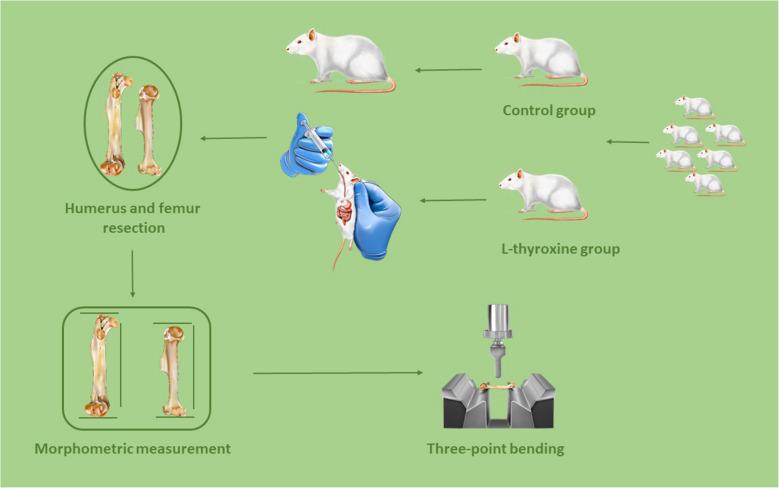
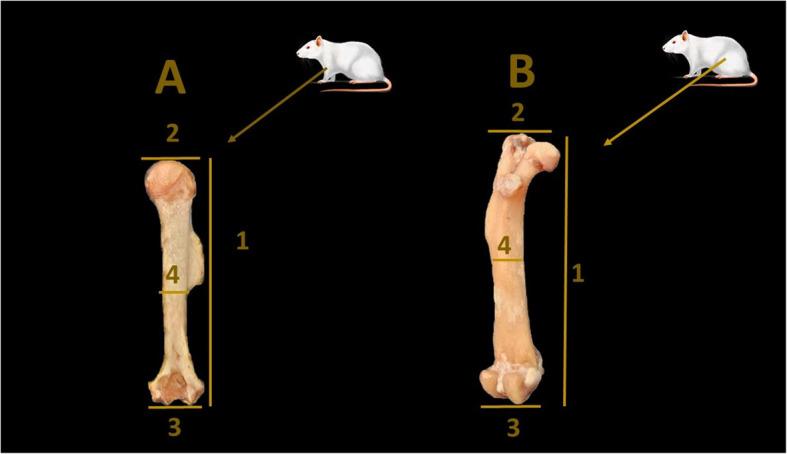
Morphometric measurements and biomech anical tests are very crucial in determining the effects of drugs and chemicals on bones. L-thyroxine is often used instead of thyroid hormone in research conducted on experimental animals. The aim of the study is to examine the effects of L-thyroxine on the morphometric and mechanical properties of rat bones. A total of 16 healthy male Wistar Albino rats were used, including control and L-thyroxine groups. After the experimental process, the left/right humerus and femur were resected from all animals. Morphometric measurements were performed on the bones. Then, three indices of the bones were calculated using the measurement results. Three-point bending was performed to determine the effect of L-thyroxine on the mechanical properties of the bones.
RESULTS
Humerus maximum length and proximal width difference was determined. The maximum length and proximal width of the right humerus were lower in rats that received L-thyroxine. Differences were observed in the weight, diaphysis diameter and weight/length index of the right femur. These parameters were higher in the control group. No statistical difference was detected between L-thyroxine and control groups in mechanical properties. Maximum loading, stiffness, strength and elastic modulus in the humerus were observed to be higher in the control group. However, stiffness, strength and elastic modulus in the femur were determined to be higher in the L-thyroxine group. According to the correlation between the mechanical properties of bones and conventional indices, a high correlation was found between elastic modulus and weight/length index in the humerus. In the femur, a high negative correlation was observed between maximum loading and the weight/length index.
CONCLUSION
This study showed that L-thyroxine had an effect on the morphometry of long bones in rats but did not affect their mechanical properties. L-thyroxine has been observed to mainly affect the bones in the right side of the body.
背景
形态测量和生物力学测试对于确定药物和化学物质对骨骼的影响非常关键。在对实验动物进行的研究中,常使用左旋甲状腺素替代甲状腺激素。本研究的目的是检验左旋甲状腺素对大鼠骨骼形态测量和力学性能的影响。共使用了16只健康雄性Wistar白化大鼠,包括对照组和左旋甲状腺素组。实验过程结束后,从所有动物身上切除左/右肱骨和股骨。对骨骼进行形态测量。然后,根据测量结果计算骨骼的三个指标。进行三点弯曲试验以确定左旋甲状腺素对骨骼力学性能的影响。
结果
测定了肱骨的最大长度和近端宽度差异。接受左旋甲状腺素的大鼠右肱骨的最大长度和近端宽度较低。在右股骨的重量、骨干直径和重量/长度指数方面观察到差异。这些参数在对照组中较高。左旋甲状腺素组和对照组在力学性能方面未检测到统计学差异。观察到对照组肱骨的最大载荷、刚度、强度和弹性模量较高。然而,左旋甲状腺素组股骨的刚度、强度和弹性模量较高。根据骨骼力学性能与常规指标之间的相关性,发现肱骨弹性模量与重量/长度指数之间存在高度相关性。在股骨中,最大载荷与重量/长度指数之间观察到高度负相关。
结论
本研究表明,左旋甲状腺素对大鼠长骨的形态测量有影响,但不影响其力学性能。已观察到左旋甲状腺素主要影响身体右侧的骨骼。
 Zotero 插件