
2型糖尿病——传统疗法与创新治疗的未来展望
Type 2 diabetes mellitus - conventional therapies and future perspectives in innovative treatment.
作者信息
Gieroba Barbara, Kryska Adrianna, Sroka-Bartnicka Anna
机构信息
Medical University of Lublin, Independent Unit of Spectroscopy and Chemical Imaging, Chodzki 4a, 20-093, Lublin, Poland.
出版信息
Biochem Biophys Rep. 2025 May 2;42:102037. doi: 10.1016/j.bbrep.2025.102037. eCollection 2025 Jun.
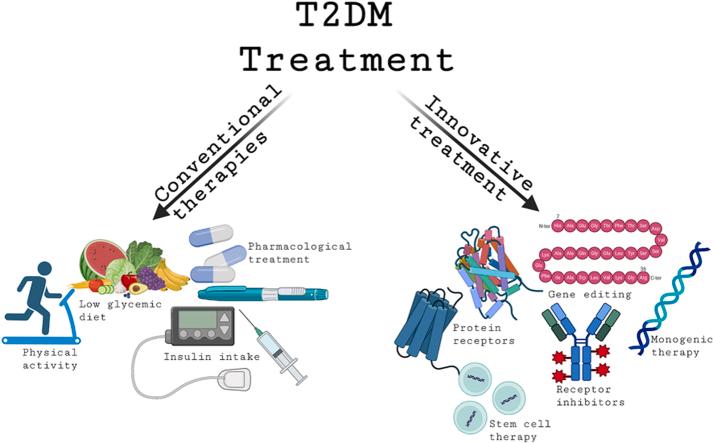
Type 2 Diabetes Mellitus (T2DM) is a chronic metabolic disorder characterized by insulin resistance and dysfunction of the pancreatic beta cells, which leads to elevated blood glucose levels. Conventional therapies, including metformin, sulfonylureas, and insulin, have long served as the cornerstone of treatment. However, they often face limitations, such as adverse effects, reduced efficacy over time, and difficulties in achieving optimal glycemic control. This has sparked considerable interest in developing novel and experimental therapeutic strategies to enhance treatment outcomes. Recent advances in diabetes management feature dual incretin receptor agonists, like tirzepatide, which combine GLP-1 and GIP receptor agonism, resulting in increased insulin secretion, decreased glucagon release, and significant weight loss. Additionally, dual SGLT1/2 inhibitors, such as sotagliflozin, show promise for more significant blood glucose reduction and improved weight loss by targeting glucose regulation in both the gut and kidneys. Other promising methods include glucagon receptor antagonists, GPR119 agonists, and FGF21 analogs, which strive to enhance insulin sensitivity and improve glucose metabolism through innovative pathways. Gene editing technologies, including CRISPR-Cas9 and AMPK activators, are also being investigated to tackle the underlying pathophysiology of T2DM more effectively. While these experimental therapies show promise, their long-term safety and efficacy remain under research. This article reviews the conventional therapies currently in use. It investigates future perspectives on innovative treatments for T2DM, emphasizing the potential of these new therapies to transform diabetes care and enhance patient outcomes.
2型糖尿病(T2DM)是一种慢性代谢紊乱疾病,其特征为胰岛素抵抗和胰腺β细胞功能障碍,进而导致血糖水平升高。传统疗法,包括二甲双胍、磺脲类药物和胰岛素,长期以来一直是治疗的基石。然而,它们常常面临局限性,如不良反应、随着时间推移疗效降低以及难以实现最佳血糖控制。这引发了人们对开发新型实验性治疗策略以提高治疗效果的浓厚兴趣。糖尿病管理的最新进展包括双靶点肠促胰岛素受体激动剂,如替尔泊肽,它结合了胰高血糖素样肽-1(GLP-1)和葡萄糖依赖性促胰岛素多肽(GIP)受体激动作用,从而增加胰岛素分泌、减少胰高血糖素释放并显著减轻体重。此外,双靶点钠-葡萄糖协同转运蛋白1/2(SGLT1/2)抑制剂,如索托格列净,通过针对肠道和肾脏的葡萄糖调节显示出更显著降低血糖和改善体重减轻的前景。其他有前景的方法包括胰高血糖素受体拮抗剂、GPR119激动剂和成纤维细胞生长因子21(FGF21)类似物,它们致力于通过创新途径增强胰岛素敏感性并改善葡萄糖代谢。基因编辑技术,包括CRISPR-Cas9和AMPK激活剂,也正在被研究以更有效地解决T2DM的潜在病理生理学问题。虽然这些实验性疗法显示出前景,但它们的长期安全性和疗效仍在研究中。本文回顾了目前正在使用的传统疗法。它探讨了T2DM创新治疗的未来前景,强调了这些新疗法改变糖尿病护理和改善患者预后的潜力。
 Zotero 插件