
不同俯卧位通气策略对急性呼吸窘迫综合征患者机械功率和呼吸力学的影响:一项前瞻性、单中心观察性研究。
The effects of different prone ventilation strategies on mechanical power and respiratory mechanics in acute respiratory distress syndrome patients: a prospective, single-center observational study.
作者信息
Hong Pei, Chen Yuequn, Xia Junli, Surani Salim, Dai Yexing, Zhu Junhong
机构信息
Nursing Studies, Zhejiang University School of Medicine, Hangzhou, China.
Department of Intensive Care Unit, The Fifth Affiliated Hospital of Wenzhou Medical University (Lishui Central Hospital), Lishui, China.
出版信息
J Thorac Dis. 2025 Apr 30;17(4):2411-2422. doi: 10.21037/jtd-2025-267. Epub 2025 Apr 28.
BACKGROUND
Acute respiratory distress syndrome (ARDS) is a common pathological condition among critically ill patients that often requires mechanical ventilation support. However, mechanical ventilation increases the risk of ventilator-induced lung injury (VILI). Different prone ventilation strategies may have varying effects on mechanical power (MP) and respiratory mechanics. This study aimed to compare the effects of prone ventilation and lateral-prone ventilation on MP and respiratory mechanics in ARDS patients to assess the relative risks of VILI associated with these strategies.
METHODS
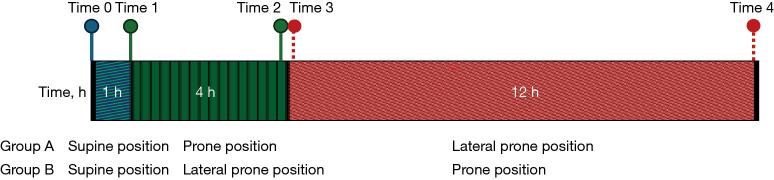
This prospective, single-center observational study employed a randomized trial. One hundred and twenty-two patients with moderate-to-severe ARDS admitted to the Department of Critical Care Medicine at Lishui Central Hospital between December 2021 and April 2024 were enrolled in this study. Patients were randomly assigned to receive either prone or lateral-prone ventilation strategies. The primary outcomes included MP, driving pressure (DP), static lung compliance (Cstat), airway resistance (Raw), the oxygenation index [i.e., the oxygen saturation to fraction of inspired oxygen (SpO/FiO) ratio], the mortality rate, and the duration of the mechanical ventilation. Statistical analyses were performed to compare the effects of the two ventilation strategies on the respiratory mechanics and clinical outcomes.
RESULTS
The baseline characteristics of the patients, such as age, gender, and body mass index, were comparable between the two groups. No significant differences were found between the groups in terms of the Acute Physiology and Chronic Health Evaluation II (APACHE-II) score. No significant differences were observed in the SpO/FiO ratio, mean arterial pressure (MAP), or Raw at different time points. However, MP differed significantly between the prone and lateral-prone groups. No significant differences were found between the two groups regarding heart rate (HR), MAP, and Cstat.
CONCLUSIONS
Compared to prone ventilation, lateral-prone ventilation significantly reduced MP in ARDS patients. The early adoption of lateral-prone ventilation may help mitigate the risk of VILI. This strategy holds clinical promise and warrants further validation and optimization.
背景
急性呼吸窘迫综合征(ARDS)是重症患者中常见的病理状况,常需机械通气支持。然而,机械通气会增加呼吸机诱导性肺损伤(VILI)的风险。不同的俯卧位通气策略对机械功率(MP)和呼吸力学可能有不同影响。本研究旨在比较俯卧位通气和侧俯卧位通气对ARDS患者MP和呼吸力学的影响,以评估与这些策略相关的VILI相对风险。
方法
本前瞻性、单中心观察性研究采用随机试验。2021年12月至2024年4月期间入住丽水市中心医院重症医学科的122例中重度ARDS患者纳入本研究。患者被随机分配接受俯卧位或侧俯卧位通气策略。主要结局包括MP、驱动压(DP)、静态肺顺应性(Cstat)、气道阻力(Raw)、氧合指数[即氧饱和度与吸入氧分数(SpO/FiO)之比]、死亡率和机械通气持续时间。进行统计分析以比较两种通气策略对呼吸力学和临床结局的影响。
结果
两组患者的年龄、性别和体重指数等基线特征具有可比性。两组在急性生理与慢性健康状况评分系统II(APACHE-II)评分方面无显著差异。在不同时间点,两组在SpO/FiO比值、平均动脉压(MAP)或Raw方面均未观察到显著差异。然而,俯卧位组和侧俯卧位组的MP存在显著差异。两组在心率(HR)、MAP和Cstat方面无显著差异。
结论
与俯卧位通气相比,侧俯卧位通气显著降低了ARDS患者的MP。早期采用侧俯卧位通气可能有助于降低VILI风险。该策略具有临床应用前景,值得进一步验证和优化。



 Zotero 插件