
青少年脊柱融合术后从急性术后疼痛转变为慢性术后疼痛的心理社会机制:一项为期6个月的纵向研究。
Psychosocial mechanisms underlying the transition from acute to chronic postsurgical pain in youth following spinal fusion: a 6-month longitudinal study.
作者信息
Li Rui, Rogers Andrew H, Sujan Ayesha C, Zhou Chuan, Thiagarajan Prishha, Palermo Tonya M, Kain Zeev N, Rabbitts Jennifer A
机构信息
Center for Child Health, Behavior and Development, Seattle Children's Research Institute, Seattle, WA, United States.
Department of Anesthesiology & Pain Medicine, University of Washington School of Medicine, Seattle, WA, United States.
出版信息
Pain. 2025 Oct 1;166(10):e447-e459. doi: 10.1097/j.pain.0000000000003631. Epub 2025 May 20.
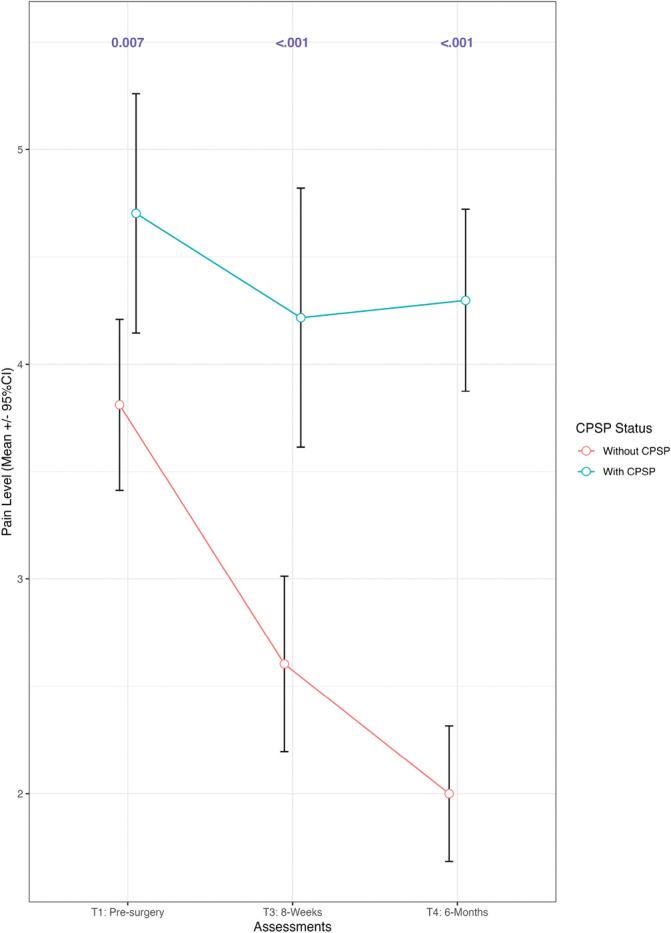
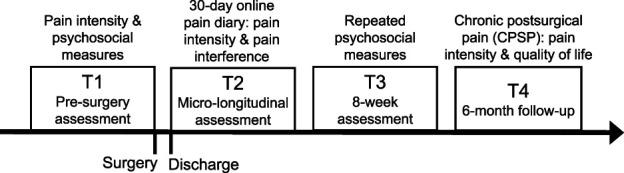
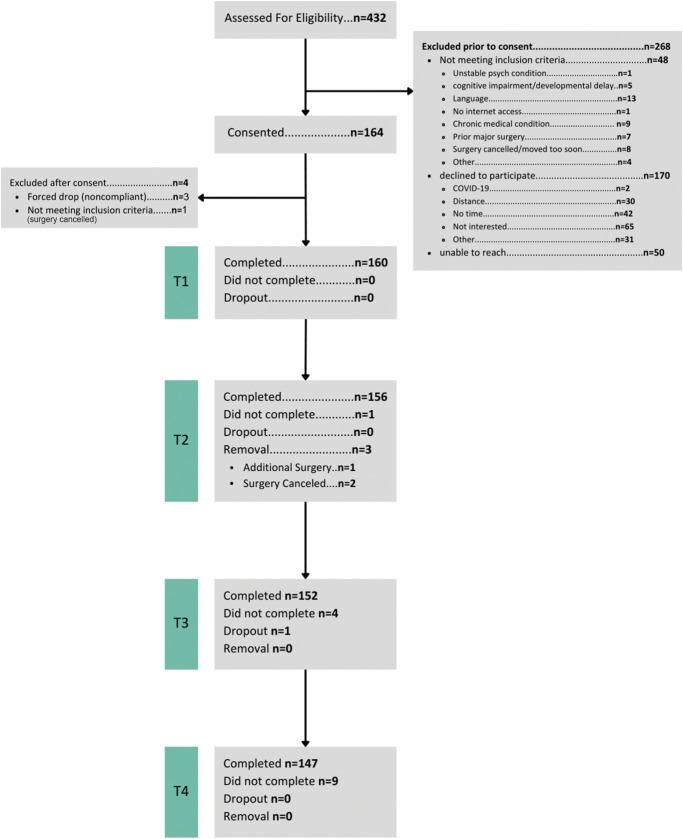
Theoretical and empirical work underscores the role of postsurgical acute pain severity and psychosocial factors in the development of chronic postsurgical pain (CPSP). However, evidence on how psychosocial changes in response to acute pain influence CPSP development in adolescents is limited. In this 6-month longitudinal study, adolescents undergoing spinal fusion were assessed presurgery, monitored for 30 days postsurgery, and re-evaluated at 8 weeks and 6 months. We examined changes in adolescent psychosocial factors (depression, anxiety, and pain catastrophizing) and parental distress from presurgery to 8 weeks postsurgery and tested their mediating effects between postsurgical acute pain intensity and interference, and CPSP development at 6 months. Among 160 adolescents included (10-18 years [M = 14.6, SD = 2.1]; 77% female; 17% Hispanic), 34% developed CPSP (pain intensity ≥3 and quality of life impairment) at 6 months. Adolescents who developed CPSP had higher pain intensity, psychological distress, and parental distress presurgery and 8 weeks postsurgery. Longitudinal causal mediation analyses controlling for sex and presurgery pain and psychosocial factors revealed that changes in adolescent anxiety and pain catastrophizing from presurgery to 8 weeks postsurgery mediated the link between postsurgical acute pain intensity and CPSP, explaining 13.8% and 11.0% of the effect, respectively. In addition, changes in adolescent pain catastrophizing mediated the association between acute pain interference and CPSP, explaining 19.6% of the effect. Significant mediation effects were not observed for changes in adolescent depression or parental distress. Anxiety symptoms and pain catastrophizing are actionable targets both before and after surgery to reduce CPSP development in adolescence.
理论和实证研究强调了术后急性疼痛严重程度和心理社会因素在慢性术后疼痛(CPSP)发展中的作用。然而,关于青少年对急性疼痛的心理社会变化如何影响CPSP发展的证据有限。在这项为期6个月的纵向研究中,对接受脊柱融合手术的青少年在术前进行评估,术后30天进行监测,并在8周和6个月时进行重新评估。我们研究了青少年心理社会因素(抑郁、焦虑和疼痛灾难化)以及父母的痛苦从术前到术后8周的变化,并测试了它们在术后急性疼痛强度和干扰与6个月时CPSP发展之间的中介作用。在纳入的160名青少年中(年龄10 - 18岁[M = 14.6,SD = 2.1];77%为女性;17%为西班牙裔),34%在6个月时发展为CPSP(疼痛强度≥3且生活质量受损)。发展为CPSP的青少年在术前和术后8周时疼痛强度更高、心理困扰更大且父母痛苦更严重。控制性别以及术前疼痛和心理社会因素的纵向因果中介分析表明,青少年焦虑和疼痛灾难化从术前到术后8周的变化介导了术后急性疼痛强度与CPSP之间的联系,分别解释了该效应的13.8%和11.0%。此外,青少年疼痛灾难化的变化介导了急性疼痛干扰与CPSP之间的关联,解释了该效应的19.6%。未观察到青少年抑郁或父母痛苦的变化有显著的中介作用。焦虑症状和疼痛灾难化是手术前后可采取行动的目标,以减少青少年CPSP的发展。
 Zotero 插件