
使用动态模型定量分析非药物干预措施与病毒进化方向之间的关系。
Quantitatively analyzing the relationship between non-pharmaceutical interventions and the direction of virus evolution using a dynamic model.
作者信息
Guo Zuiyuan, Chen Yuheng, Liu Hongbo, Xiao Guangquan, Yu Di, Zhang Zhaojia, Yang Yimin, Yin Zhongwei, Zhang Huibin
机构信息
The First Department of Infectious Disease Prevention and Control, Center for Disease Control and Prevention in Northern Theater Command, Shenyang, China.
College of Communication Engineering, Jilin University, Changchun, China.
出版信息
Front Public Health. 2025 May 9;13:1542759. doi: 10.3389/fpubh.2025.1542759. eCollection 2025.
INTRODUCTION
Since the emergence of COVID-19 in 2019, SARS-CoV-2 has persisted in mutating, giving rise to multiple variants of concern that have triggered several pandemics globally. The evolutionary trajectory of the virus is shaped by a combination of stochastic factors and non-pharmaceutical interventions (NPIs). Investigating the direction of virus evolution and its underlying determinants is crucial for forecasting epidemic trends and formulating scientific responses to emerging infectious diseases.
METHODS
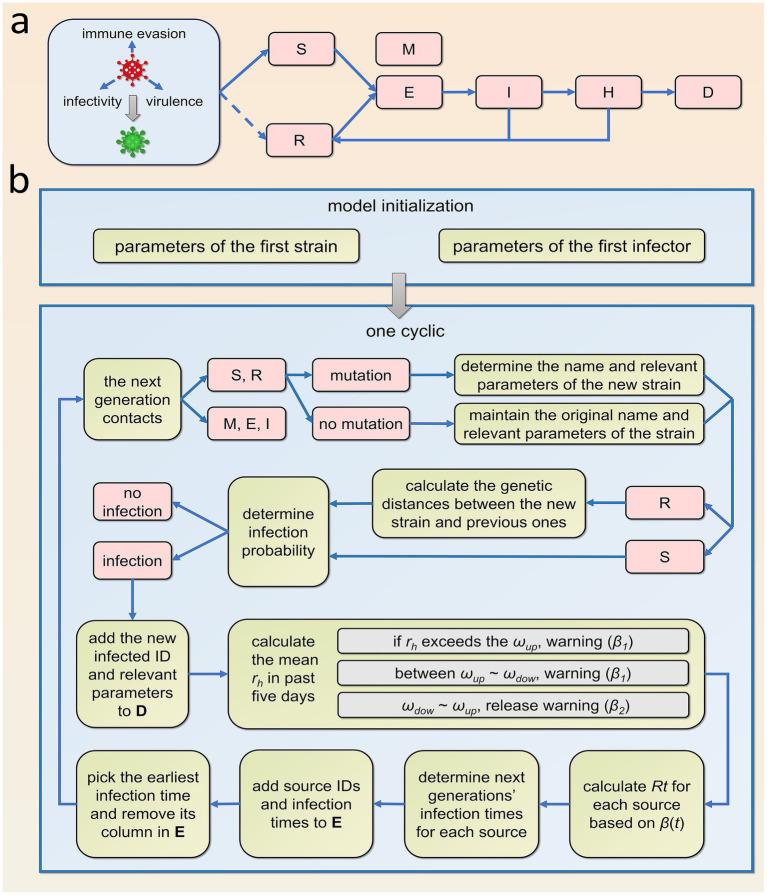
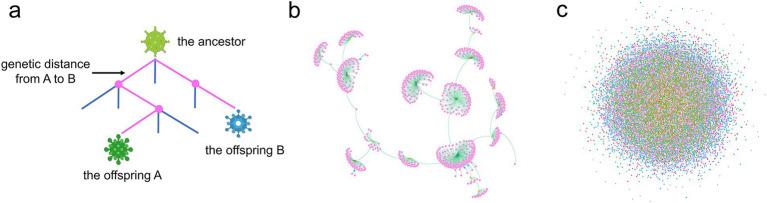
To delve into the intricate relationship between NPIs and the virus's transmissibility, virulence, and immune evasion capabilities, as well as to explore the sociological mechanisms driving virus evolution, we developed a genetic algorithm grounded in a population dynamics model. This model simulates the processes of virus mutation and epidemic dissemination, enabling us to analyze the correlation between intervention strategies and the evolutionary path of the virus.
RESULTS
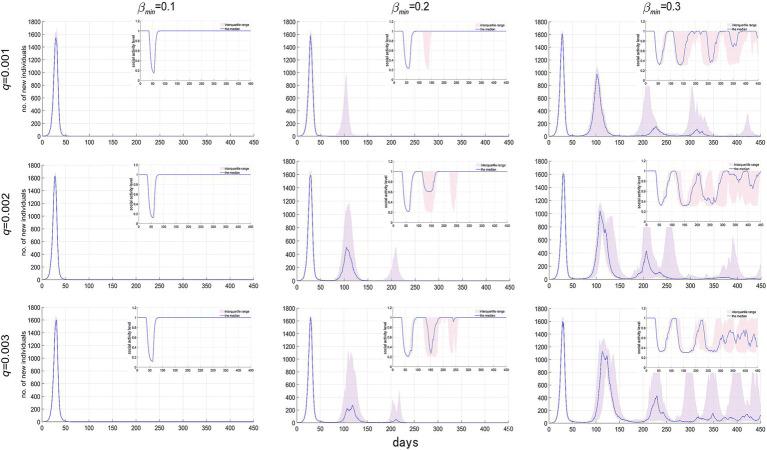
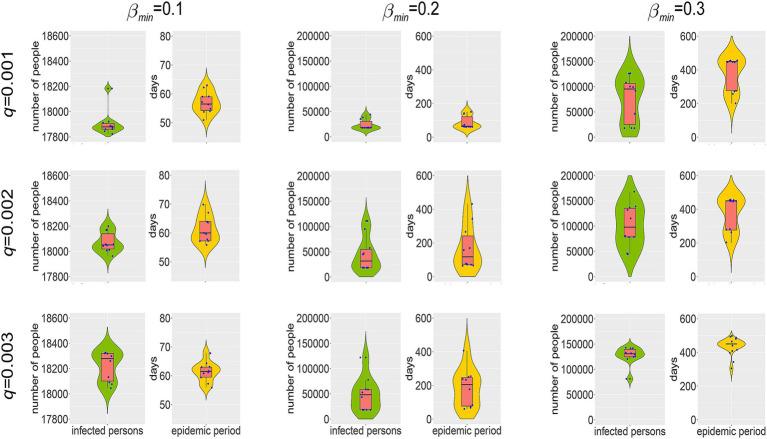
Our study reveals that, under the influence of NPIs, dominant strains capable of widespread transmission within the population exhibit substantially elevated immune evasion capabilities and heightened infectivity. Notably, the evolution of virulence did not display a discernible trend, aligning with the observed epidemic characteristics of COVID-19. It was found that the stricter the implementation of NPIs, the more favorable the conditions for rapidly and thoroughly containing virus transmission and mutation. Conversely, the relaxation of these measures may pose a risk of recurring epidemics fueled by continuous viral mutations.
DISCUSSION
Presently, the potential emergence and widespread transmission of SARS-CoV-2 variants with increased virulence cannot be discounted. Therefore, it is imperative to continuously monitor the dynamic shifts in the epidemic landscape and the antigenic variations of new variants. Simultaneously, it is necessary to devise and prepare prevention and control strategies to effectively manage outbreaks caused by highly pathogenic variants.
引言
自2019年新型冠状病毒肺炎(COVID-19)出现以来,严重急性呼吸综合征冠状病毒2(SARS-CoV-2)持续变异,产生了多个值得关注的变异株,在全球引发了多次疫情。病毒的进化轨迹是由随机因素和非药物干预(NPIs)共同塑造的。研究病毒进化方向及其潜在决定因素对于预测疫情趋势和制定应对新发传染病的科学对策至关重要。
方法
为深入探究非药物干预与病毒传播性、毒力和免疫逃逸能力之间的复杂关系,并探索驱动病毒进化的社会学机制,我们基于种群动力学模型开发了一种遗传算法。该模型模拟病毒突变和疫情传播过程,使我们能够分析干预策略与病毒进化路径之间的相关性。
结果
我们的研究表明,在非药物干预的影响下,能够在人群中广泛传播的优势毒株表现出显著提高的免疫逃逸能力和更强的传染性。值得注意的是,毒力的进化并未呈现出明显趋势,这与COVID-19观察到的疫情特征相符。研究发现,非药物干预措施实施得越严格,就越有利于迅速、彻底地遏制病毒传播和突变。相反,放松这些措施可能会因病毒持续突变而带来疫情复发的风险。
讨论
目前,不能排除具有更高毒力的SARS-CoV-2变异株出现并广泛传播的可能性。因此,必须持续监测疫情形势的动态变化以及新变异株的抗原变异情况。同时,有必要制定并准备好防控策略,以有效应对由高致病性变异株引发的疫情。




 Zotero 插件