
氨基酸代谢在骨质疏松症中的作用:对骨微环境的影响及治疗策略(综述)
Role of amino acid metabolism in osteoporosis: Effects on the bone microenvironment and treatment strategies (Review).
作者信息
Zhou Chang, Zhang Jiaheng, Liu Qizhi, Guo Yanghongxu, Li Mengyuan, Tao Jing, Peng Sujuan, Li Ronghui, Deng Xianguang, Zhang Guomin, Liu Huiping
机构信息
College of Integrative Medicine, Hunan University of Traditional Chinese Medicine, Changsha, Hunan 410208, P.R. China.
出版信息
Mol Med Rep. 2025 Aug;32(2). doi: 10.3892/mmr.2025.13577. Epub 2025 May 26.
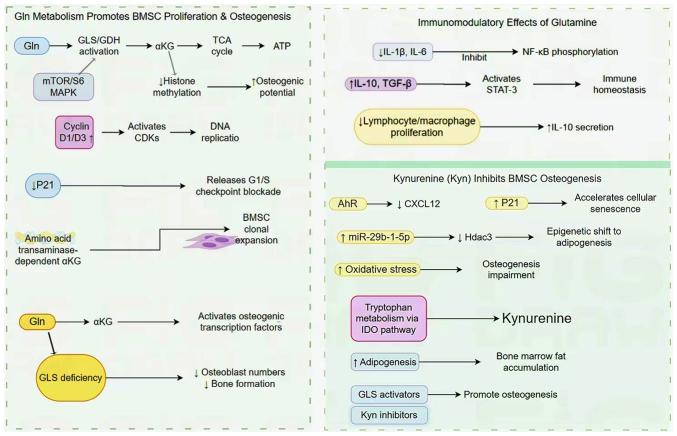
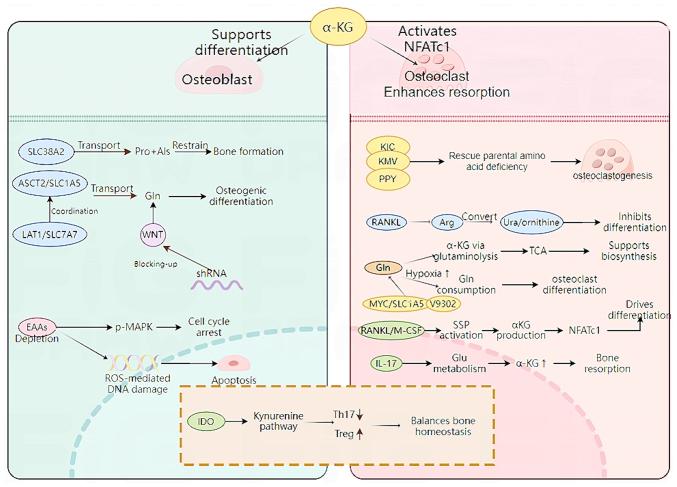
Osteoporosis is a metabolic disease characterized by an imbalance in bone remodeling. Its pathogenesis involves a functional imbalance of osteoblasts, osteoclasts and bone marrow mesenchymal stem cells. Amino acid metabolism is a key biochemical process for maintaining biological activities, including protein synthesis, energy supply and signal transduction. Amino acid metabolism affects bone homeostasis by regulating osteocyte function and the bone microenvironment. Branched‑chain amino acid and aromatic amino acid metabolism are involved in the regulation of bone mineral density. The present review demonstrates the mechanism of amino acid metabolism in osteoporosis and its potential therapeutic value. In addition, the present review aimed to summarize the application of Mendelian randomization and metabolomic methods to provide a reference for future research and clinical interventions.
骨质疏松症是一种以骨重塑失衡为特征的代谢性疾病。其发病机制涉及成骨细胞、破骨细胞和骨髓间充质干细胞的功能失衡。氨基酸代谢是维持生物活性的关键生化过程,包括蛋白质合成、能量供应和信号转导。氨基酸代谢通过调节骨细胞功能和骨微环境来影响骨稳态。支链氨基酸和芳香族氨基酸代谢参与骨矿物质密度的调节。本综述阐述了氨基酸代谢在骨质疏松症中的机制及其潜在的治疗价值。此外,本综述旨在总结孟德尔随机化和代谢组学方法的应用,为未来的研究和临床干预提供参考。
 Zotero 插件