
检验小鼠在惩罚性强制戒酒之后寻求酒精行为的预测效度。
Examining the predictive validity of alcohol-seeking following punishment-imposed abstinence in mice.
作者信息
Tran Linh, Kuznetsova Maria, Manning Elizabeth E, Campbell Erin J
机构信息
Faculty of Health and Medicine, School of Biomedical Sciences and Pharmacy, University of Newcastle, Callaghan, New South Wales, Australia.
Brain Neuromodulation Research Program, Hunter Medical Research Institute, New Lambton Heights, New South Wales, Australia.
出版信息
Alcohol Clin Exp Res (Hoboken). 2025 Jun;49(6):1337-1350. doi: 10.1111/acer.70057. Epub 2025 May 27.
BACKGROUND
A defining feature of alcohol use disorder that has captured the attention of fundamental researchers is "persistent use despite negative consequences." The last two decades have seen the preclinical field adopt the use of punishment to model the adverse consequences associated with alcohol use. However, existing research has focused on rats as the model of choice and alcohol consumption as the prevailing outcome measure. Additionally, the predictive validity of these models, that is, testing currently approved FDA treatments, is yet to be realized.
METHODS
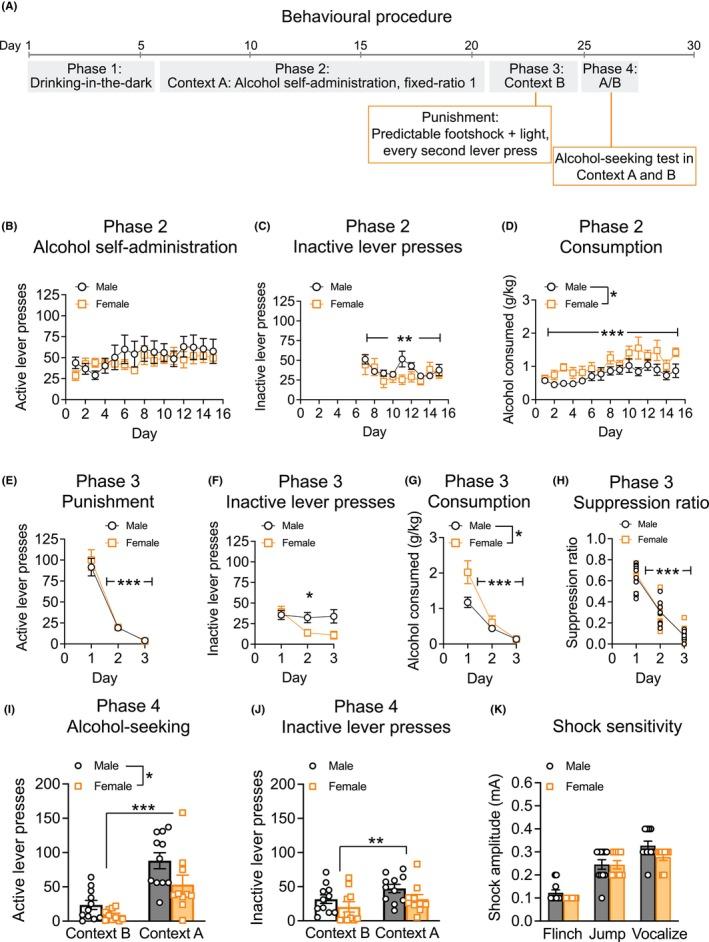
Here, we examined punishment-imposed abstinence in mice using foot shock and measured reinstatement of alcohol-seeking following exposure to alcohol-associated cues and environmental contexts.
RESULTS
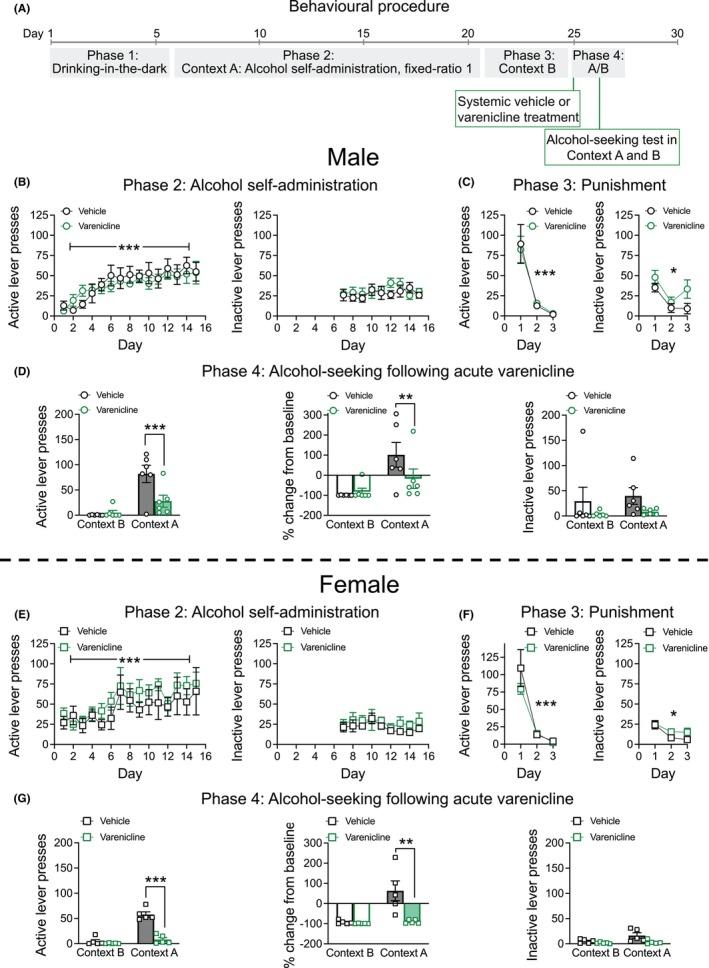
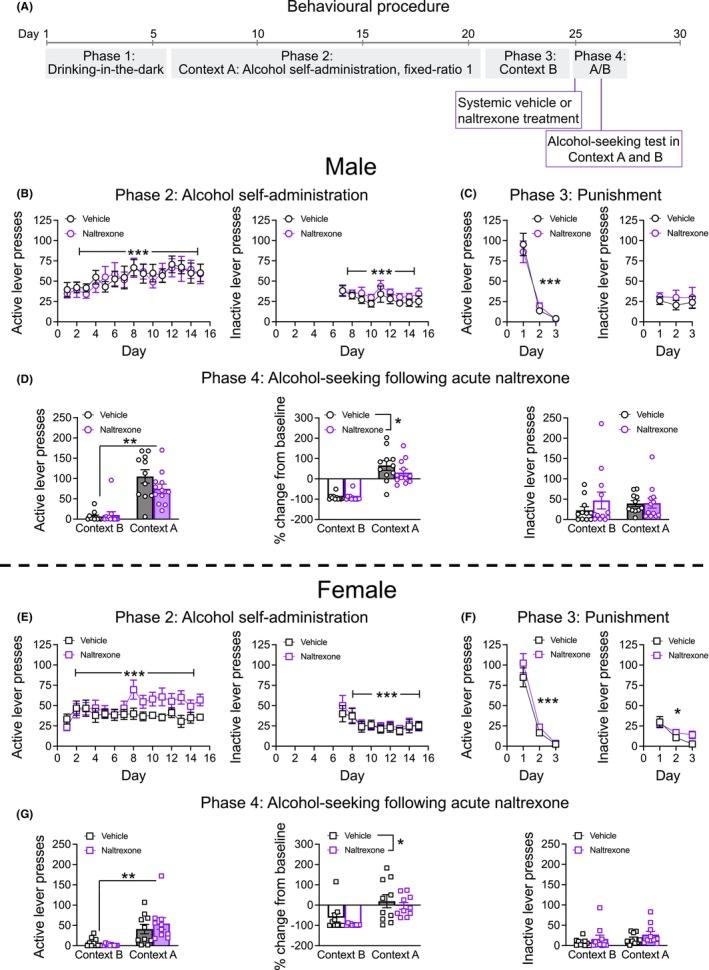
We showed that mice voluntarily abstain from alcohol use when it is paired with a foot shock. Alcohol-associated cues and environmental contexts produced reinstatement of alcohol-seeking behavior. Finally, the predictive validity of our model was tested using naltrexone and varenicline, two medications to treat alcohol use disorder. Both naltrexone and varenicline reduced reinstatement of alcohol-seeking in male and female mice.
CONCLUSIONS
Together, these data suggest that mice can display reinstatement of alcohol-seeking behavior following voluntary abstinence, and this model could be used to identify new medications for relapse prevention induced by environmental cues and contexts.
背景
酒精使用障碍的一个决定性特征引起了基础研究人员的关注,即“尽管有负面后果仍持续使用”。在过去二十年中,临床前领域采用惩罚措施来模拟与酒精使用相关的不良后果。然而,现有研究主要集中在以大鼠作为首选模型,以酒精摄入量作为主要的结果指标。此外,这些模型的预测效度,即测试目前美国食品药品监督管理局(FDA)批准的治疗方法,尚未得到验证。
方法
在此,我们使用足部电击来研究小鼠在惩罚作用下的戒酒情况,并测量在接触与酒精相关的线索和环境背景后酒精寻求行为的恢复情况。
结果
我们发现,当酒精与足部电击配对时,小鼠会自愿戒酒。与酒精相关的线索和环境背景会导致酒精寻求行为的恢复。最后,我们使用纳曲酮和伐尼克兰这两种治疗酒精使用障碍的药物来测试我们模型的预测效度。纳曲酮和伐尼克兰均减少了雄性和雌性小鼠酒精寻求行为的恢复。
结论
总之,这些数据表明,小鼠在自愿戒酒之后会出现酒精寻求行为的恢复,并且该模型可用于识别预防由环境线索和背景诱发复发的新药物。
 Zotero 插件