
优化桡侧前臂供区伤口愈合:尺侧皮瓣与中厚皮片移植的比较研究
Optimizing Wound Healing in Radial Forearm Donor Sites: A Comparative Study of Ulnar-Based Flap and Split-Thickness Skin Grafting.
作者信息
Galazka Adam, Stawarz Katarzyna, Bienkowska-Pluta Karolina, Paszkowska Monika, Misiak-Galazka Magdalena
机构信息
Head and Neck Cancer Department, Maria Sklodowska-Curie National Research Institute of Oncology, W.K.Roentgen 5, 02-781 Warsaw, Poland.
Maria Sklodowska-Curie Medical Academy, Evimed Medical Center Ltd., Plac Zelaznej Bramy 10, 00-136 Warsaw, Poland.
出版信息
Biomedicines. 2025 May 7;13(5):1131. doi: 10.3390/biomedicines13051131.
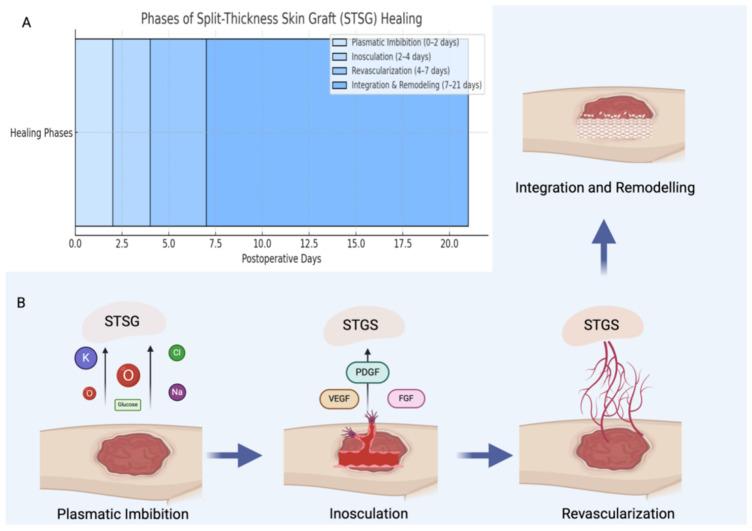
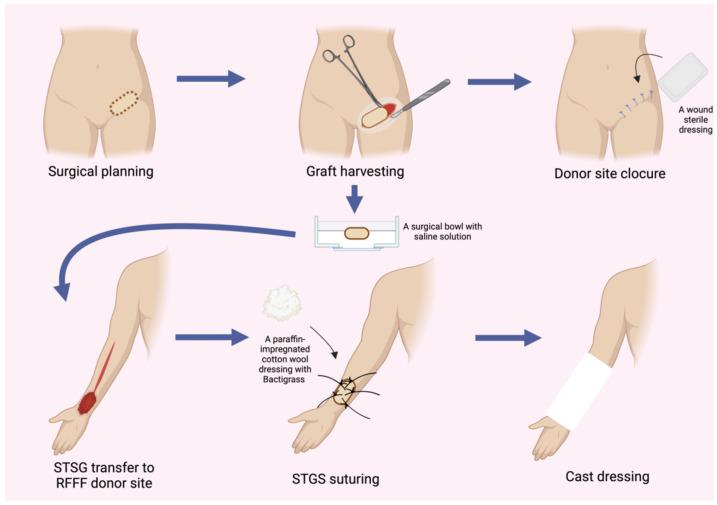
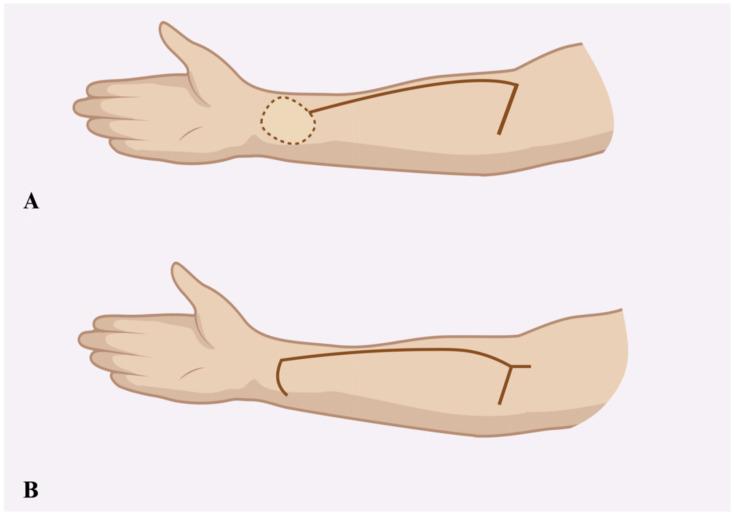
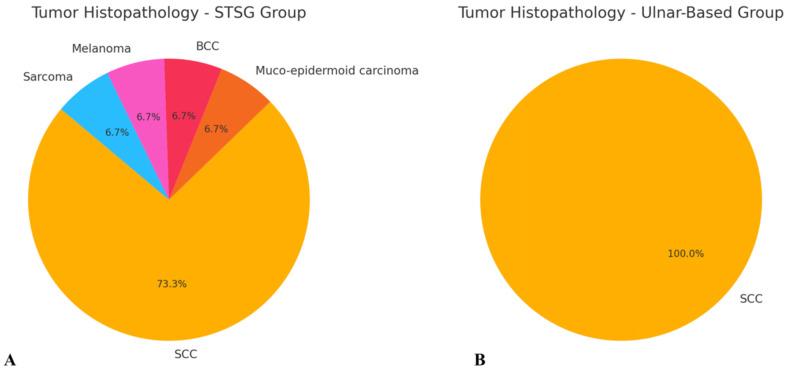
The radial forearm free flap (RFFF) is a common technique in head and neck reconstructive surgery. This study aimed to compare the clinical and biochemical outcomes of wound healing following ulnar-based transposition flap (UBTF) versus split-thickness skin grafting (STSG) for donor site closure, with a particular emphasis on tissue regeneration. A total of 24 patients (6 women, 18 men), underwent RFFF reconstruction. The donor site was closed using the UBTF technique in 10 cases, while STSG was performed in 14 cases. Postoperative complications-including necrosis, edema, hematoma, infection, and wound dehiscence-along with healing times were assessed daily during the first seven postoperative days and at monthly follow-ups over six months. Pre- and postoperative biochemical analyses included hemoglobin (HB), white blood cell count (WBC), platelets (PLT), albumin, and C-reactive protein (CRP) levels. An aesthetic evaluation of the flap was also performed. The two groups were homogeneous. Postoperative complications occurred more frequently in the STSG group, which also demonstrated significantly longer healing times ( = 0.0004). In contrast, the UBTF group showed significantly better aesthetic outcomes in terms of skin color ( = 0.000021), skin texture ( = 0.000018), and flap stability ( = 0.0398). Additionally, pre- and postoperative PLT counts were significantly higher in the UBTF group ( = 0.001 and = 0.043, respectively). : While STSG remains a well-established method for forearm donor site closure following RFFF harvest, this study demonstrates that UBTF is a viable alternative associated with better clinical and aesthetic outcomes.
桡侧前臂游离皮瓣(RFFF)是头颈重建手术中的常用技术。本研究旨在比较尺侧蒂移位皮瓣(UBTF)与断层皮片移植(STSG)用于供区闭合后伤口愈合的临床和生化结果,特别关注组织再生。共有24例患者(6例女性,18例男性)接受了RFFF重建。10例患者的供区采用UBTF技术闭合,14例患者采用STSG。术后前7天每天评估术后并发症,包括坏死、水肿、血肿、感染和伤口裂开,以及愈合时间,并在术后6个月进行每月随访。术前和术后生化分析包括血红蛋白(HB)、白细胞计数(WBC)、血小板(PLT)、白蛋白和C反应蛋白(CRP)水平。还对皮瓣进行了美学评估。两组具有同质性。STSG组术后并发症发生率更高,愈合时间也明显更长(P = 0.0004)。相比之下,UBTF组在皮肤颜色(P = 0.000021)、皮肤质地(P = 0.000018)和皮瓣稳定性(P = 0.0398)方面的美学效果明显更好。此外,UBTF组术前和术后的PLT计数明显更高(分别为P = 0.001和P = 0.043)。结论:虽然STSG仍然是RFFF切取后前臂供区闭合的成熟方法,但本研究表明,UBTF是一种可行的替代方法,具有更好的临床和美学效果。


 Zotero 插件