
透明质酸用于萎缩性上颌后牙种植修复中流体动力嵴顶窦底提升的前瞻性研究
Fluid-Dynamic Crestal Sinus Floor Elevation in Atrophic Posterior Maxilla Implant Rehabilitation with Hyaluronic Acid: A Prospective Study.
作者信息
Scarano Alessandro, Luongo Roberto, De Filippis Ilaria, Scarano Antonio, Qorri Erda, Sforza Francesco, Rampino Mario, Bugea Calogero
机构信息
Private Practice, Via Mons A. Semeraro 19, 72021 Francavilla Fontana, BR, Italy.
Private Practice, Via Melo da Bari 229, 70122 Bari, BA, Italy.
出版信息
Materials (Basel). 2025 May 12;18(10):2230. doi: 10.3390/ma18102230.
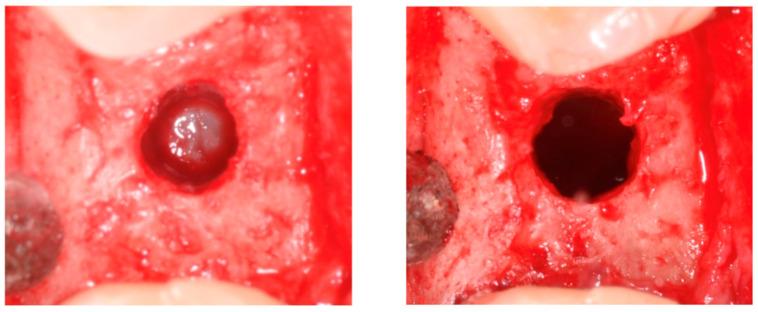
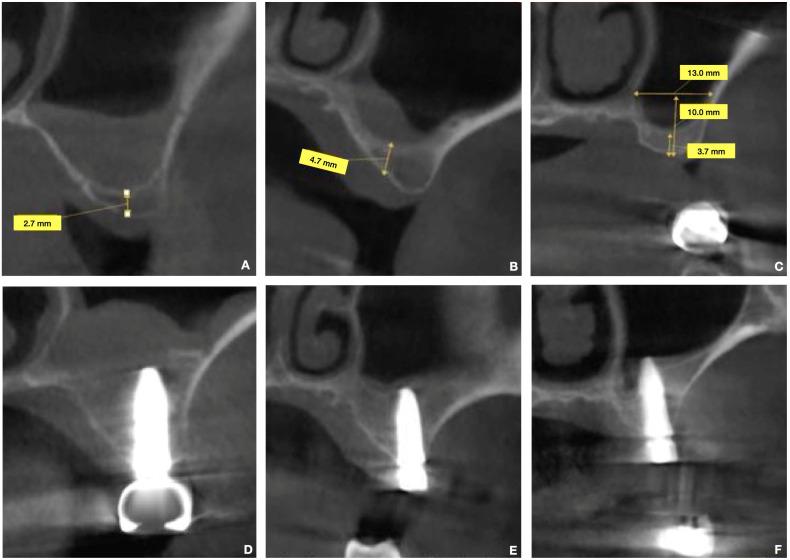
Implant-prosthetic rehabilitation of the posterior edentulous maxilla is challenging due to inadequate bone volume resulting from alveolar ridge resorption and maxillary sinus pneumatization. This study explores the use of hyaluronic acid (HA) as a biomaterial in maxillary sinus elevation, particularly in combination with a fluid dynamic approach, as an alternative to traditional lateral approaches and granular biomaterials. : A prospective study was conducted on 58 patients with posterior maxillary edentulism. Preoperative CBCT scans assessed residual bone height and sinus width. A minimally invasive surgical protocol utilizing a device for fluid-dynamic membrane elevation and injection of 2% cross-linked hyaluronic acid was employed, followed by simultaneous implant placement. Postoperative follow-up included a CBCT scan at 12 months to evaluate new bone height, measured mesially and distally. Implant stability was assessed using resonance frequency analysis at second-stage surgery. : A significant increase in bone height was observed at 12 months post-surgery, with an average bone gain of 7.5 mm. All 58 implants achieved primary stability, and no implant failures or signs of peri-implantitis were noted during the follow-up period. Higher bone gain was observed in wider sinuses. The fluid-dynamic transcrestal sinus floor elevation technique combined with hyaluronic acid appears to be a minimally invasive and effective method for achieving significant bone regeneration in the posterior maxilla, facilitating implant-prosthetic rehabilitation with potentially low risks and morbidity. Further large-scale studies are warranted to validate these findings across diverse clinical scenarios.
由于牙槽嵴吸收和上颌窦气化导致骨量不足,上颌后牙区无牙颌的种植修复具有挑战性。本研究探讨透明质酸(HA)作为生物材料在上颌窦提升中的应用,特别是与流体动力学方法相结合,作为传统外侧入路和颗粒状生物材料的替代方法。:对58例上颌后牙区无牙颌患者进行了一项前瞻性研究。术前CBCT扫描评估剩余骨高度和窦宽度。采用一种用于流体动力学膜提升和注射2%交联透明质酸的微创外科手术方案,随后同时植入种植体。术后随访包括在12个月时进行CBCT扫描,以评估近中和远中测量的新骨高度。在二期手术时使用共振频率分析评估种植体稳定性。:术后12个月观察到骨高度显著增加,平均骨增量为7.5毫米。所有58枚种植体均获得了初期稳定性,在随访期间未发现种植体失败或种植体周围炎迹象。在较宽的窦中观察到更高的骨增量。流体动力学经牙槽嵴上颌窦底提升技术联合透明质酸似乎是一种微创且有效的方法,可在上颌后牙区实现显著的骨再生,促进种植修复,潜在风险和发病率较低。需要进一步的大规模研究来在不同临床场景中验证这些发现。


 Zotero 插件