
肥胖潜在高级靶点中甜味受体的基因变异性
Sweet Taste Receptors' Genetic Variability in Advanced Potential Targets of Obesity.
作者信息
Wagner-Reguero Sonia, Fernández Lara P, Colmenarejo Gonzalo, Cruz-Gil Silvia, Espinosa Isabel, Molina Susana, Crespo María Carmen, Aguilar-Aguilar Elena, Marcos-Pasero Helena, de la Iglesia Rocío, Loria-Kohen Viviana, Ruiz Ricardo Ramos, Laparra-Llopis Moisés, de Molina Ana Ramírez, Gómez de Cedrón Marta
机构信息
Molecular Oncology Group, IMDEA Food Institute, CEI UAM+CSIC, 28049 Madrid, Spain.
Biostatistics and Bioinformatics Unit, IMDEA Food CEI UAM+CSIC, 28049 Madrid, Spain.
出版信息
Nutrients. 2025 May 18;17(10):1712. doi: 10.3390/nu17101712.
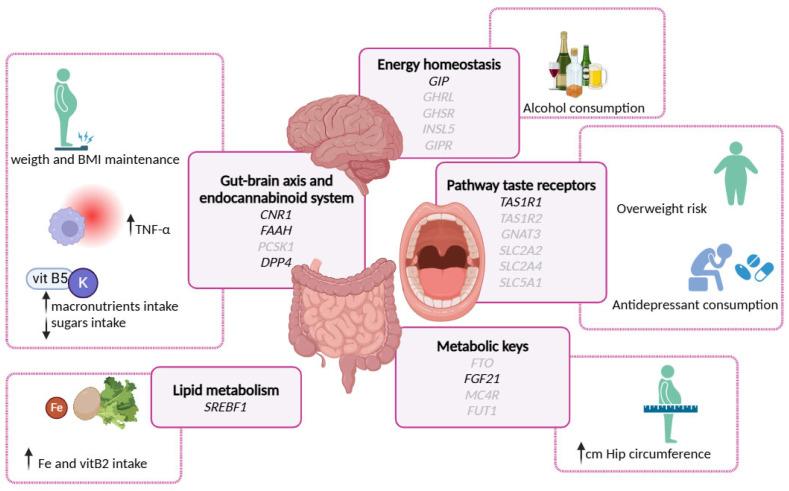
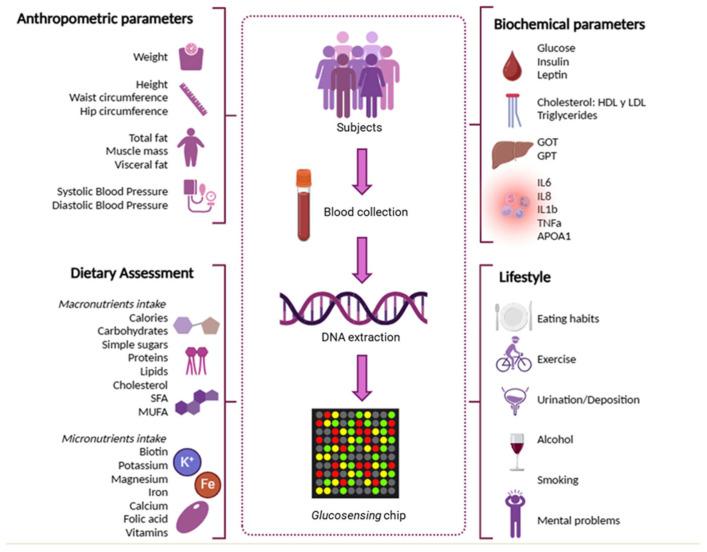
: Obesity, mainly visceral obesity, causes a low-grade of chronic inflammation (meta-inflammation), associated with comorbidities such as type 2 diabetes, cardiovascular diseases, and certain cancers. Precision Nutrition aims to understand the bidirectional crosstalk between the genome and diet to improve human health. Additionally, by leveraging individual data, Precision Nutrition seeks to predict how people will respond to specific foods or dietary patterns, with the ultimate goal of providing personalized nutritional recommendations tailored to their unique needs and lifestyle factors, including poor dietary habits (e.g., high intake of sugar or saturated fatty acids, alcohol consumption, etc.) and sedentary habits, exacerbate obesity in genetically predisposed individuals. Genetic, metabolic, and environmental factors can play a crucial role during obesity. : To investigate the effects of genetic variability in sweet taste receptors and their downstream signaling pathways in the gut-brain axis on anthropometry, biochemistry, and lifestyle variables. : A sample of 676 volunteers (mean age of 42.22 ± 12 years, ranging from 18 to 73 years) from the database of the GENYAL platform for nutritional trials at the IMDEA Food Institute were included in this study. We present a first-in-class genetic chip, Glucosensing, designed to interrogate 25 single-nucleotide polymorphisms (SNPs) located in genes encoding sweet taste receptors and components of downstream signaling pathways. These include elements of the gut-brain axis and its associated metabolic networks, enabling a comprehensive analysis of individual variability in sweet taste perception and metabolic responses. : Several significant associations were found after correction for multiple comparisons, representing potential targets for personalized interventions.
肥胖,主要是内脏肥胖,会引发低度慢性炎症(代谢性炎症),并伴有2型糖尿病、心血管疾病和某些癌症等合并症。精准营养旨在了解基因组与饮食之间的双向交互作用,以改善人类健康。此外,通过利用个体数据,精准营养试图预测人们对特定食物或饮食模式的反应,最终目标是根据他们独特的需求和生活方式因素提供个性化的营养建议,包括不良饮食习惯(如高糖或饱和脂肪酸摄入、饮酒等)和久坐习惯,这些会使有遗传易感性的个体肥胖加剧。遗传、代谢和环境因素在肥胖过程中可能起关键作用。:研究肠道-脑轴中甜味受体及其下游信号通路的基因变异对人体测量学、生物化学和生活方式变量的影响。:本研究纳入了来自IMDEA食品研究所营养试验GENYAL平台数据库的676名志愿者样本(平均年龄42.22±12岁,年龄范围为18至73岁)。我们展示了一种一流的基因芯片,即葡萄糖感应芯片,旨在检测位于编码甜味受体和下游信号通路成分的基因中的25个单核苷酸多态性(SNP)。这些包括肠道-脑轴及其相关代谢网络的元件,能够全面分析甜味感知和代谢反应中的个体变异性。:在进行多重比较校正后发现了几个显著关联,代表了个性化干预的潜在靶点。

 Zotero 插件