
白花菜在糖尿病肾病中的治疗作用:对关键信号通路的见解
Therapeutic role of Crateva religiosa in diabetic nephropathy: Insights into key signaling pathways.
作者信息
Ali Muhammad, Irfan Hafiz M, Ullah Aman, Abdellattif Magda H, Elodemi Mahmoud, Zubair Mohammad, Khan Ajmal, Al-Harrasi Ahmed
机构信息
College of Pharmacy, University of Sargodha, Sargodha, Pakistan.
Punjab University College of Pharmacy, University of the Punjab, Lahore, Pakistan.
出版信息
PLoS One. 2025 May 28;20(5):e0324028. doi: 10.1371/journal.pone.0324028. eCollection 2025.
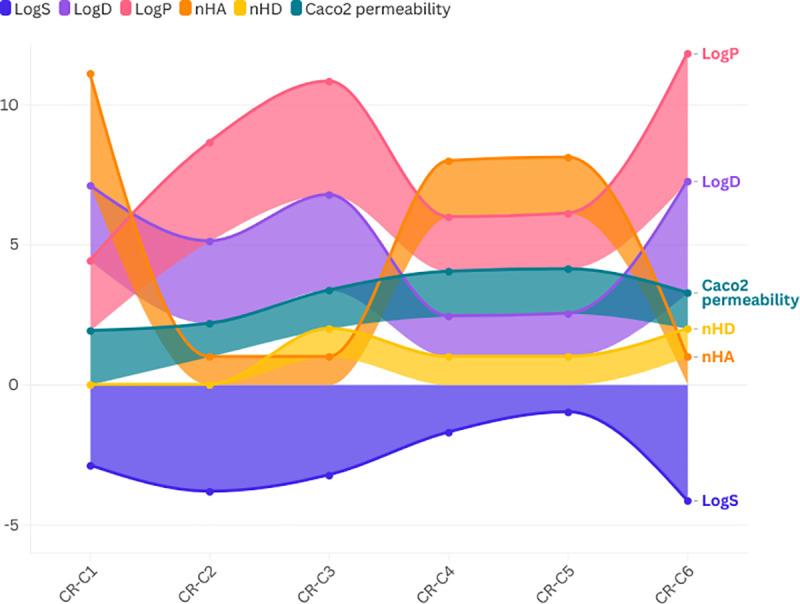
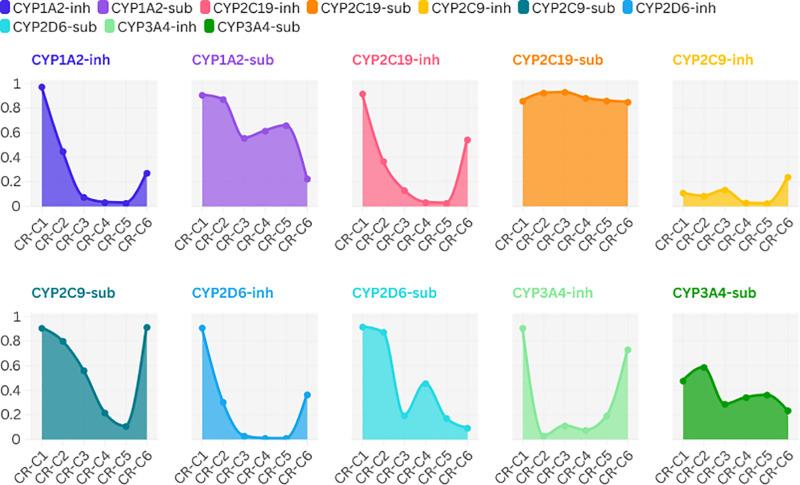
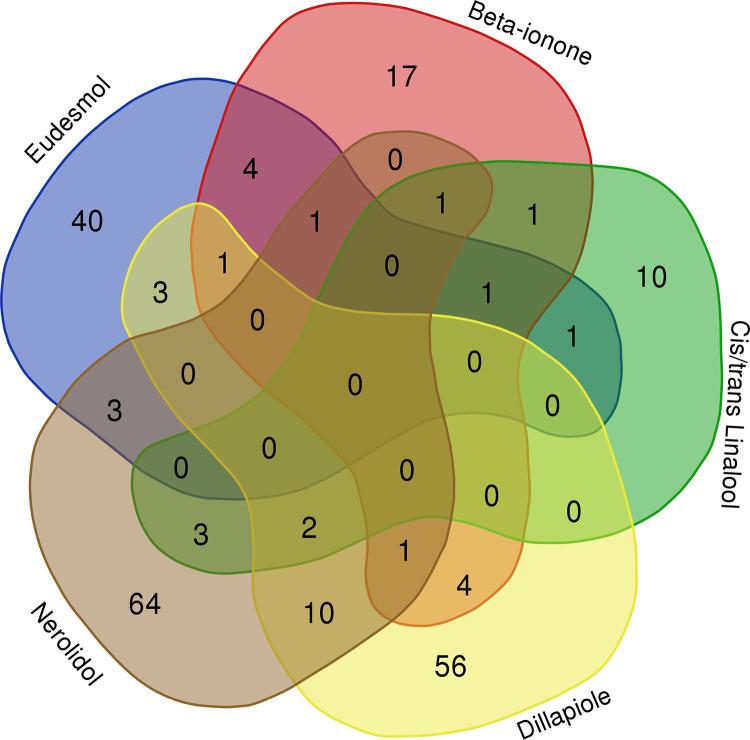
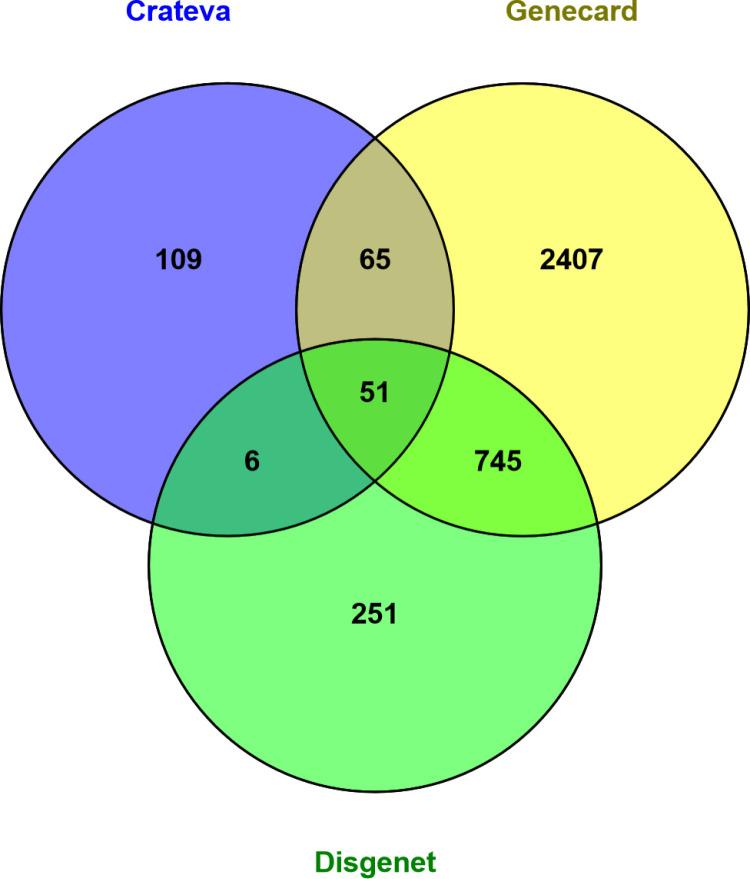
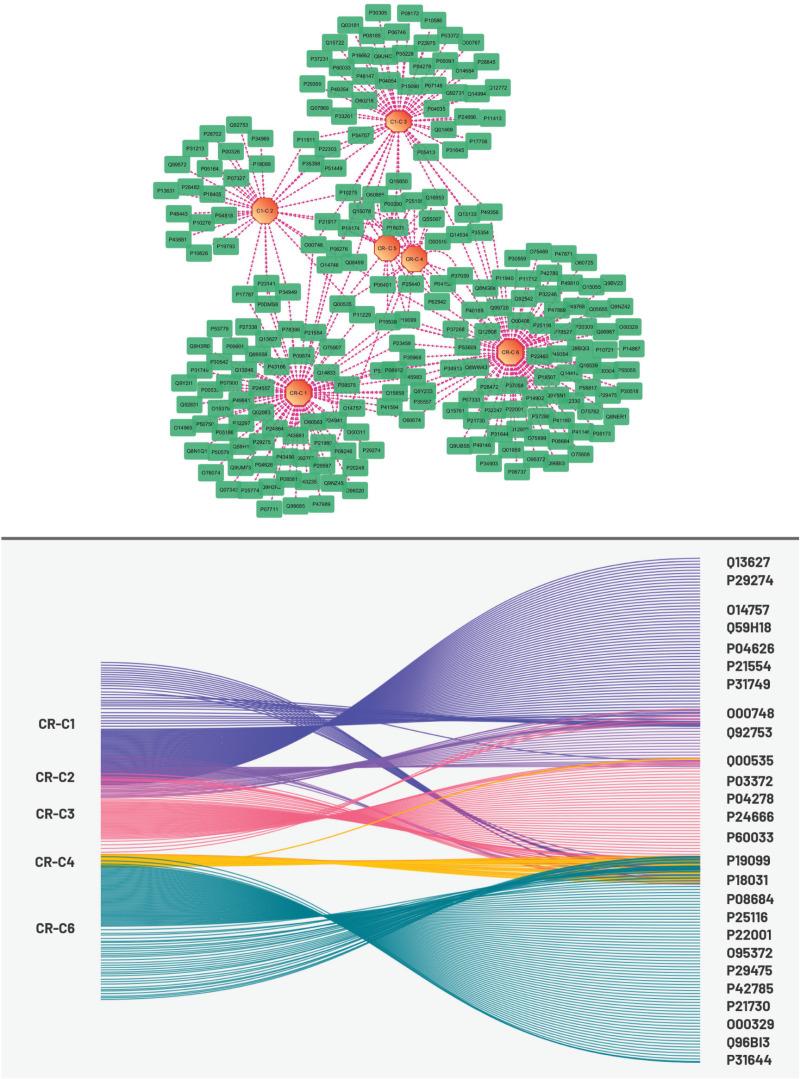
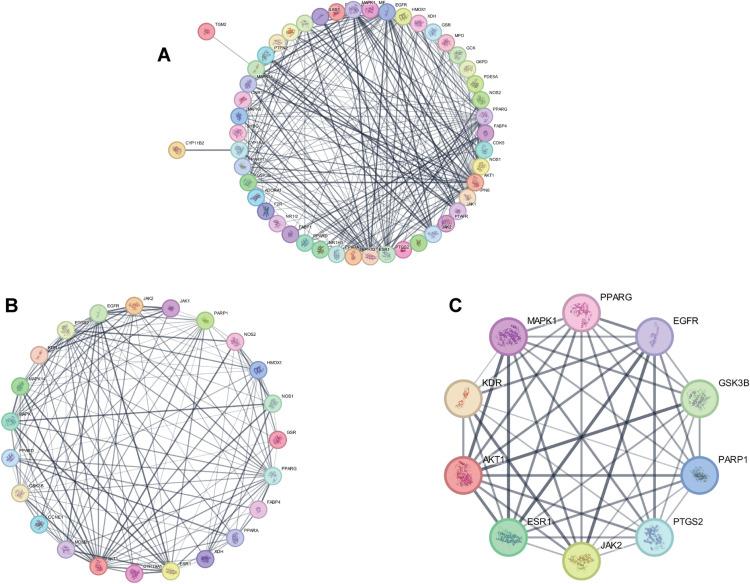
Crateva religiosa, a plant used in traditional medicine, is valued for its bioactive properties. Traditional approaches are more accepted worldwide as a cost effective alternatives being used in network pharmacology to explore the complex interactions of drug targets among molecular pathways. The study investigated the potential of Crateva religiosa's phytoconstituents using meticulous computational analysis and empirical confirmation. The IMPPAT, GeneCards and DisGeNET data bases were used to obtain the active moieties and disease targets respectively. Crateva phytoconstituent's DN-target network and protein-protein interaction (PPI) network were developed and analyzed using the STRING online platform and Cytoscape software. GO and KEGG analyses were conducted using the g: profiler databases while the process of molecular docking involved the use of MOE software. The screening process identified dillapiole (CR-C1), beta ionone (CR-C2) 10-epi-γ-eudesmol (CR-C3), cis/trans linalool oxide (CR-C4/5) and nerolidol (CR-C6), as potential active phytoconstituents of C. religiosa and AKT1, PPARG, PTGS2, EGFR, ESR1, JAK2, MAPK1, PARP1, GSK3B, and PPARA as matching targets in DN. The enrichment analysis revealed that the common targets were primarily linked to inflammatory response, oxidative stress, immunological modulation, and cell death. The main signal pathways suggested were PI3K-Akt, AGE-RAGE, and IL-17. Moreover, molecular docking analysis determined that the AKT1, PPARG and PTGS2 are the essential targets that had a good affinity for their respective active molecules.
树头菜是一种用于传统医学的植物,因其生物活性特性而受到重视。传统方法作为一种具有成本效益的替代方法,在网络药理学中被广泛用于探索分子途径之间药物靶点的复杂相互作用,在全球范围内更被接受。该研究通过细致的计算分析和实证确认,研究了树头菜植物成分的潜力。分别使用IMPPAT、GeneCards和DisGeNET数据库来获取活性成分和疾病靶点。利用STRING在线平台和Cytoscape软件构建并分析了树头菜植物成分的药物-靶点网络和蛋白质-蛋白质相互作用(PPI)网络。使用g: profiler数据库进行基因本体论(GO)和京都基因与基因组百科全书(KEGG)分析,而分子对接过程则使用分子操作环境(MOE)软件。筛选过程确定了莳萝脑(CR-C1)、β-紫罗兰酮(CR-C2)、10-表-γ-桉叶醇(CR-C3)、顺式/反式氧化芳樟醇(CR-C4/5)和橙花叔醇(CR-C6)作为树头菜潜在的活性植物成分,以及蛋白激酶B1(AKT1)、过氧化物酶体增殖物激活受体γ(PPARG)、环氧合酶-2(PTGS2)、表皮生长因子受体(EGFR)、雌激素受体1(ESR1)、Janus激酶2(JAK2)、丝裂原活化蛋白激酶1(MAPK1)、聚(ADP-核糖)聚合酶1(PARP1)、糖原合成酶激酶3β(GSK3B)和过氧化物酶体增殖物激活受体α(PPARA)作为药物-靶点(DN)中的匹配靶点。富集分析表明,常见靶点主要与炎症反应、氧化应激、免疫调节和细胞死亡有关。提示的主要信号通路为磷脂酰肌醇-3激酶-蛋白激酶B(PI3K-Akt)、晚期糖基化终末产物-晚期糖基化终末产物受体(AGE-RAGE)和白细胞介素-17(IL-17)。此外,分子对接分析确定AKT1、PPARG和PTGS2是对各自活性分子具有良好亲和力的关键靶点。



 Zotero 插件