
人工智能心电图衍生年龄的决定因素及其与心血管事件和死亡率的关联:一项系统评价和荟萃分析。
Determinants of artificial intelligence electrocardiogram-derived age and its association with cardiovascular events and mortality: a systematic review and meta-analysis.
作者信息
Mossavarali Shervin, Vaezi Ali, Gholami Zahra, Molaei Alireza, Yekaninejad Mir Saeed, Asselbergs Folkert W, Shafiee Akbar
机构信息
Tehran Heart Center, Cardiovascular Diseases Research Institute, Tehran University of Medical Sciences, Tehran, Iran.
Department of Cardiology, Imam Khomeini Hospital, School of Medicine, Tehran University of Medical Sciences, Tehran, Iran.
出版信息
NPJ Digit Med. 2025 May 29;8(1):322. doi: 10.1038/s41746-025-01727-7.
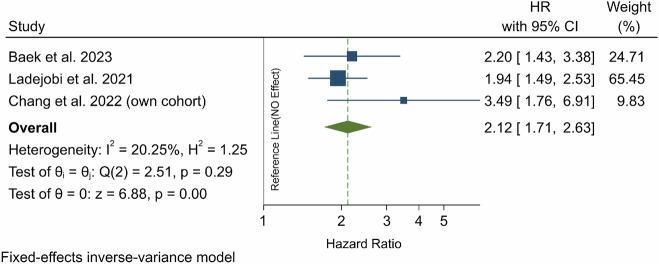
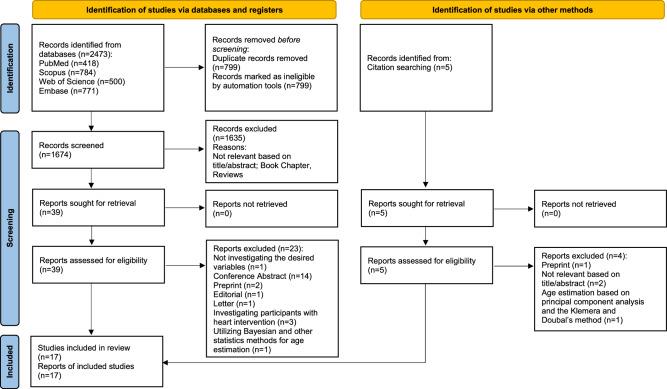
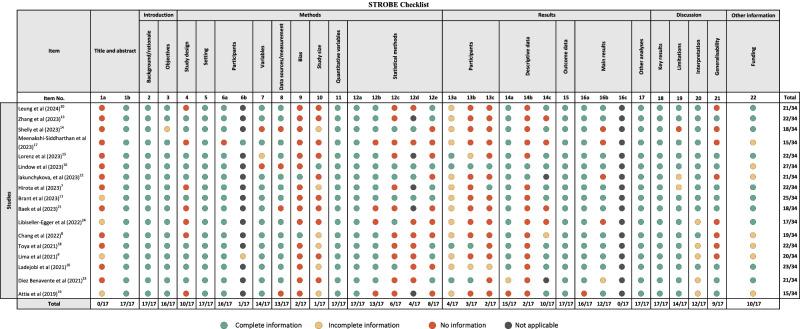
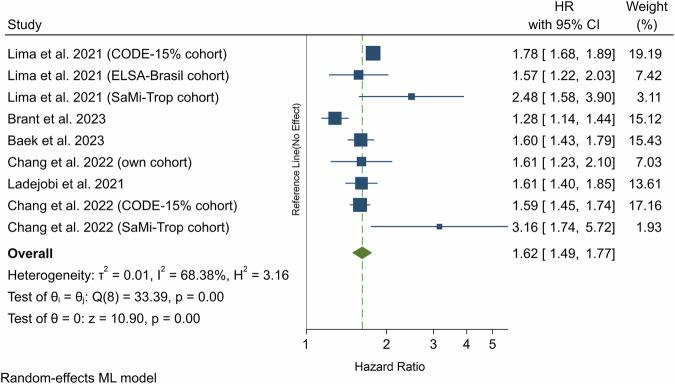
Artificial intelligence (AI)-ECG-derived age (AI-ECG age) and Heart Delta Age (HDA)-the difference between AI-ECG and chronological age-are emerging tools for assessing cardiovascular health. We systematically searched PubMed, Embase, Web of Science, and Scopus from inception through September 2024. Seventeen original studies utilizing AI algorithms to measure HDA and cardiovascular risk factors, outcomes, or mortality were included. Data were pooled using random- and fixed-effects models for meta-analysis. Hypertension and diabetes mellitus emerged as the most prevalent factors contributing to higher HDA, while cardiac diseases including myocardial infarction and heart failure demonstrated the most significant impact. Pooled analysis revealed a significant association between elevated HDA and increased risks of all-cause mortality (hazard ratio [HR] 1.62, 95% confidence interval [CI] 1.49-1.77) and cardiovascular mortality (HR 2.12, 95% CI 1.71-2.63). HDA could enhance existing risk models and play a critical role in primary healthcare prevention.
人工智能(AI)心电图衍生年龄(AI-ECG年龄)和心脏年龄差(HDA)——AI-ECG年龄与实际年龄之间的差值——是评估心血管健康的新兴工具。我们系统检索了自数据库建立至2024年9月的PubMed、Embase、Web of Science和Scopus数据库。纳入了17项利用AI算法测量HDA以及心血管危险因素、结局或死亡率的原创性研究。使用随机效应模型和固定效应模型对数据进行合并以进行荟萃分析。高血压和糖尿病是导致HDA升高的最常见因素,而包括心肌梗死和心力衰竭在内的心脏疾病显示出最显著的影响。汇总分析显示,HDA升高与全因死亡率(风险比[HR] 1.62,95%置信区间[CI] 1.49 - 1.77)和心血管死亡率(HR 2.12,95% CI 1.71 - 2.63)增加之间存在显著关联。HDA可以增强现有的风险模型,并在初级医疗保健预防中发挥关键作用。
 Zotero 插件