
鉴定该基因中由移码突变产生的共享新抗原。
Identification of shared neoantigens derived from frameshift mutations in the gene.
作者信息
Zhao Peng, Effenberger Clara, Matsumoto Saki, Tanaka Toshihiro, Nakamura Yusuke, Kiyotani Kazuma
机构信息
Laboratory of Immunogenomics, Center for Intractable Diseases and ImmunoGenomics (CiDIG), National Institutes of Biomedical Innovation, Health and Nutrition (NIBN), Ibaraki-shi, Osaka, Japan.
Project for Immunogenomics, Cancer Precision Medicine Center, Japanese Foundation for Cancer Research, Tokyo, Japan.
出版信息
Front Immunol. 2025 May 15;16:1574955. doi: 10.3389/fimmu.2025.1574955. eCollection 2025.
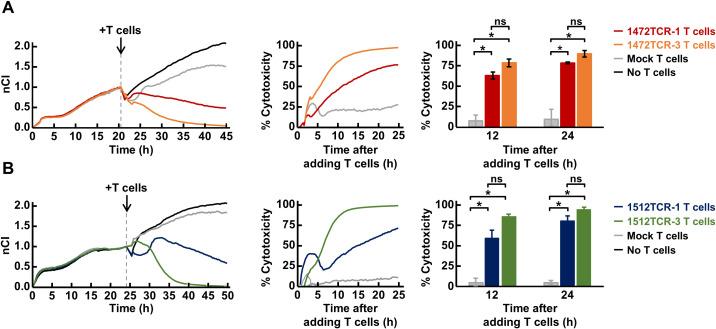
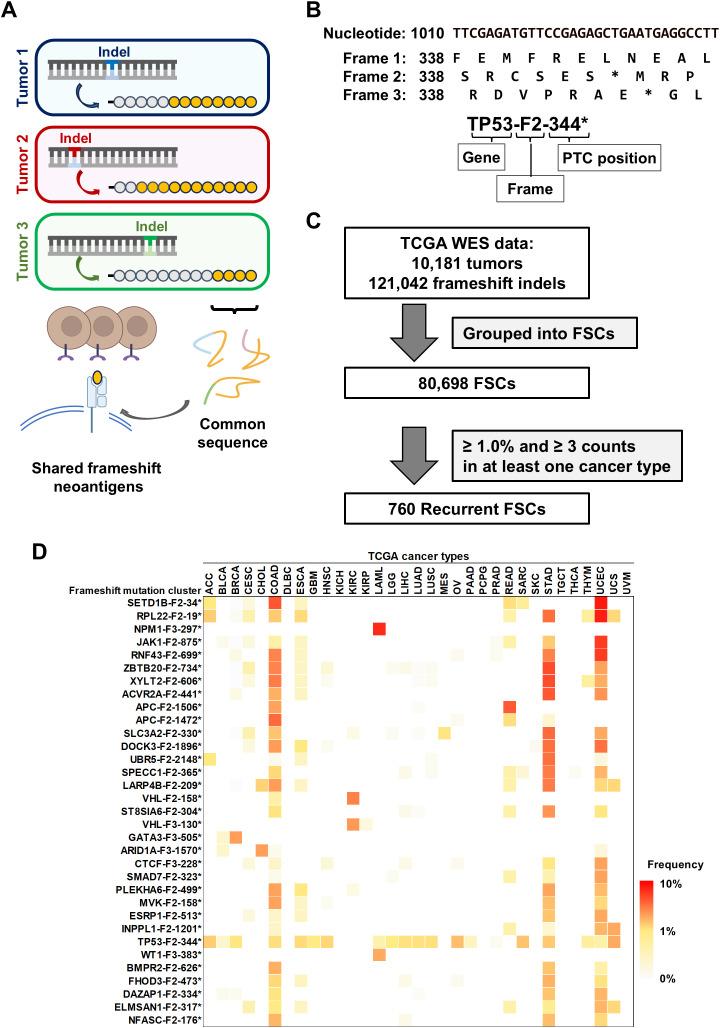
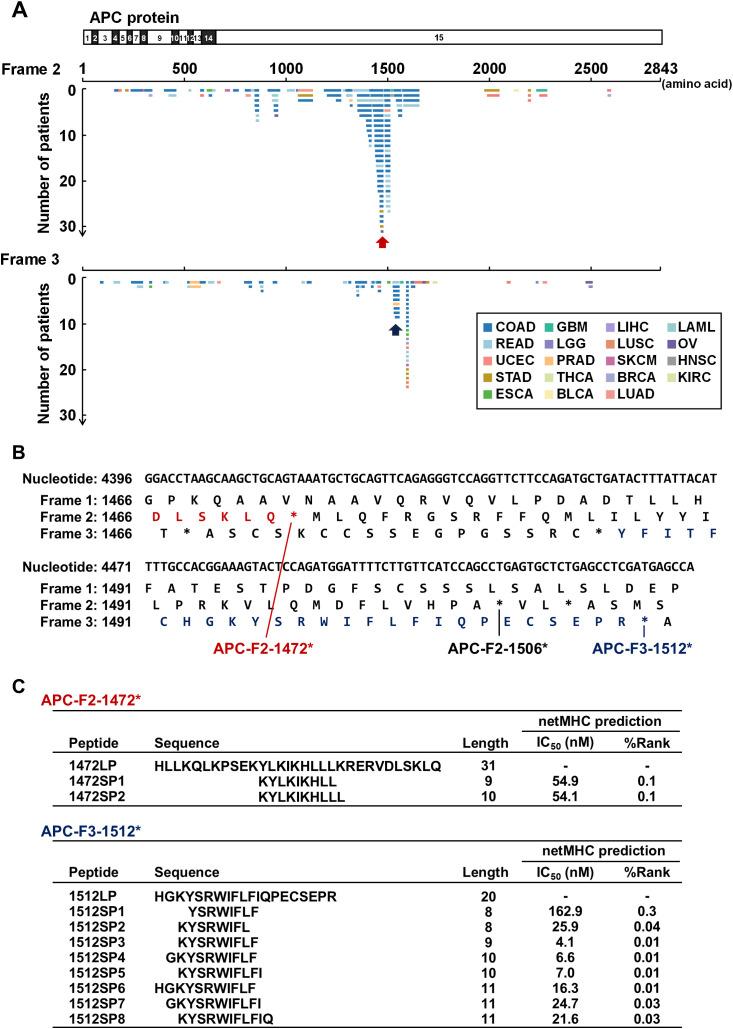
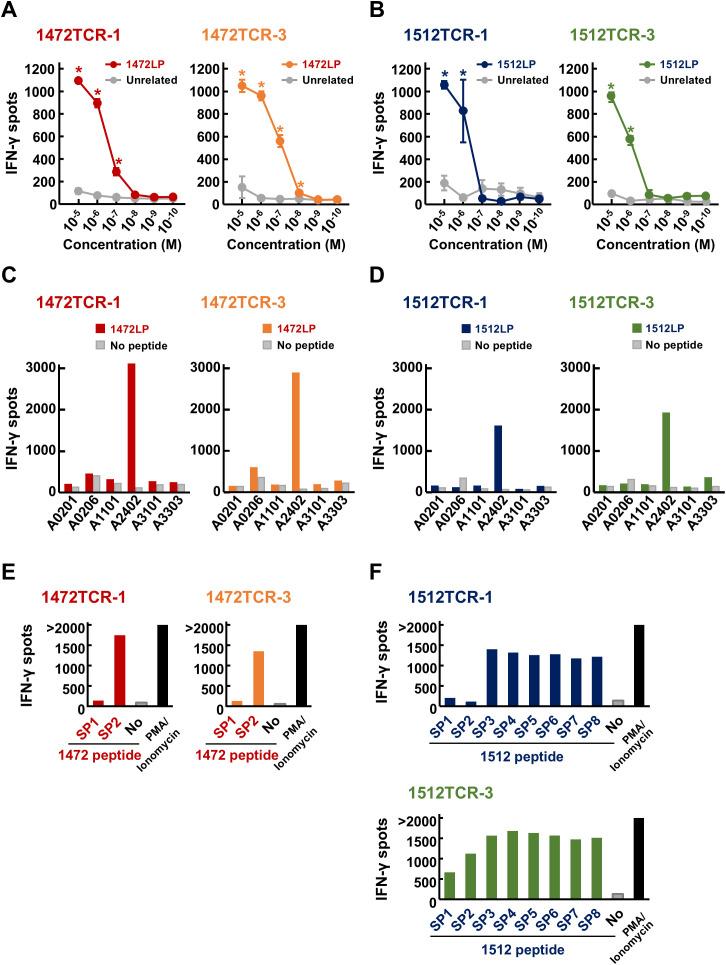
Recent advances of cancer immunotherapy have identified neoantigens as essential targets for personalized treatments. However, since neoantigens are generally unique in individual cancers, neoantigen therapies that are more broadly applicable are eagerly awaited. Shared neoantigens, derived from recurrent mutations found across multiple patients, are considered to be a challenging, but promising approach. Here we analyzed shared frameshift neoantigens derived from frameshift indels in TCGA exome sequencing data and identified 760 possible recurrent frameshift mutation clusters (FSCs) that share frameshifted open reding frames and premature stop codons. Among them, we investigated FSCs in the gene (APC-F2-1472* and APC-F3-1512*) and identified HLA-A*24:02-restricted frameshift neoantigen peptides that elicited specific CD8 T cell responses. Subsequently we identified their corresponding T cell receptor (TCR) sequences and generated genetically-engineered T cells expressing these APC frameshift neoantigen-specific TCRs. These engineered T cells specifically recognized target cells presenting these neoantigens and cytotoxic activity against them, supporting the therapeutic potential of targeting APC frameshift neoantigens in cancer immunotherapy. This study provides compelling evidence for the development of neoantigen-based therapies targeting common frameshift peptides, offering a promising approach for more effective, relatively broadly applicable immunotherapeutic strategies that could benefit a subset population of cancer patients.
癌症免疫疗法的最新进展已将新抗原确定为个性化治疗的关键靶点。然而,由于新抗原在个体癌症中通常是独特的,因此人们急切期待更具广泛适用性的新抗原疗法。源自多个患者中发现的复发性突变的共享新抗原,被认为是一种具有挑战性但很有前景的方法。在此,我们分析了源自TCGA外显子组测序数据中移码插入缺失的共享移码新抗原,并鉴定出760个可能的复发性移码突变簇(FSCs),这些簇共享移码开放阅读框和过早终止密码子。其中,我们研究了基因中的FSCs(APC-F2-1472和APC-F3-1512),并鉴定出能引发特异性CD8 T细胞反应的HLA-A*24:02限制性移码新抗原肽。随后,我们确定了它们相应的T细胞受体(TCR)序列,并生成了表达这些APC移码新抗原特异性TCR的基因工程T细胞。这些工程T细胞能特异性识别呈递这些新抗原的靶细胞并对其产生细胞毒性活性,支持了在癌症免疫疗法中靶向APC移码新抗原的治疗潜力。这项研究为开发针对常见移码肽段的基于新抗原的疗法提供了有力证据,为更有效、相对广泛适用的免疫治疗策略提供了一种有前景的方法,有望使一部分癌症患者受益。


 Zotero 插件