
染色质重塑复合物在骨生物学及骨相关疾病发病机制中的表观遗传作用(综述)
Epigenetic roles of chromatin remodeling complexes in bone biology and the pathogenesis of bone‑related disease (Review).
作者信息
Wu Wenxiao, Cui Yinxing, Wu Yuqi, Ni Yan, Zhao Chunling, Sun Weichao, Yi Qian
机构信息
Department of Physiology, School of Basic Medical Sciences, Southwest Medical University, Luzhou, Sichuan 646000, P.R. China.
Department of Physiology, School of Basic Medical Sciences, Southwest Medical University, Luzhou, Sichuan 646000, P.R. China.
出版信息
Int J Mol Med. 2025 Aug;56(2). doi: 10.3892/ijmm.2025.5556. Epub 2025 May 30.
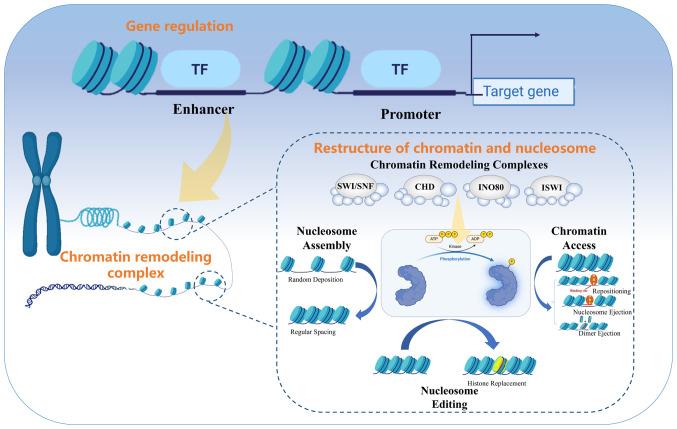
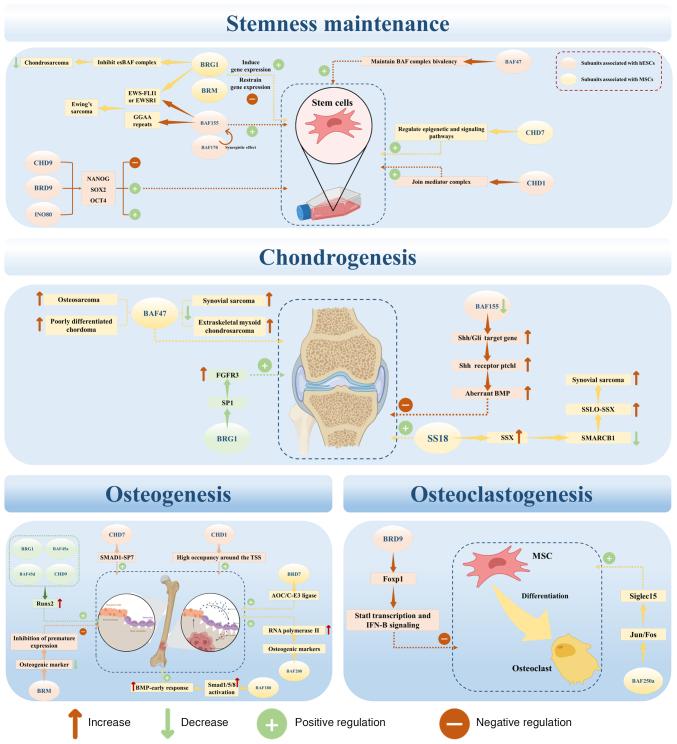
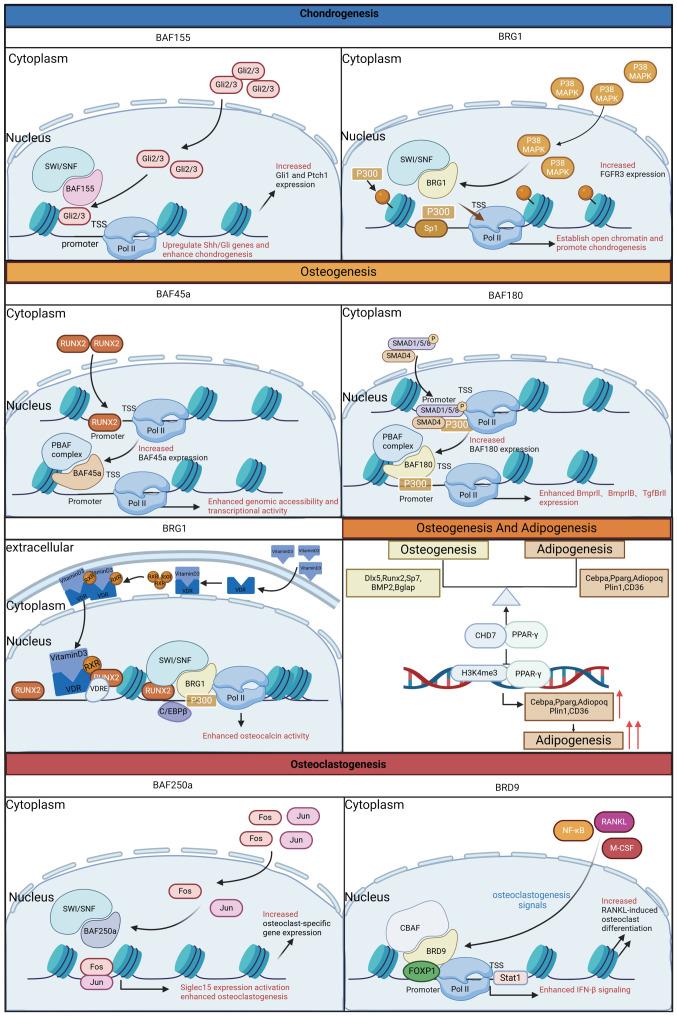
Chromatin remodeling complexes are essential regulators of chromatin architecture, facilitating critical processes such as nucleosome sliding, eviction, histone exchange and post‑translational modifications. By providing an additional layer of epigenetic regulation beyond the canonical genetic code, these complexes significantly influence bone biology and health. Epigenetic regulation through chromatin remodeling complexes is crucial in modulating gene expression and cellular behavior in bone cells. However, alterations in the activity of chromatin remodeling complexes can also contribute to the progression of various bone diseases. Emerging evidence suggests that specific chromatin remodeling factors may serve as potential biomarkers for diagnosing bone‑related conditions and as therapeutic targets for intervention. The present review aims to elucidate the intricate relationship between chromatin remodeling complexes and bone‑related diseases, including osteoporosis, osteoarthritis and osteosarcoma. The present review discusses the diverse subunits of these complexes and their multifaceted roles in regulating key cellular processes such as stemness, differentiation, proliferation, senescence and apoptosis in bone cells. Notably, the present review provides a comprehensive overview of the roles of various chromatin remodeling subunits, such as BRG1, BAF47 and chromodomain‑helicase‑DNA binding 7 (CHD7), in bone metabolism, highlighting their disease‑specific mechanisms, including bromodomain‑containing protein (BRD)9‑mediated pyroptosis in intervertebral disc degeneration and CHD7‑driven bone‑fat imbalance. Furthermore, the present review highlights the therapeutic potential of targeting dysfunctional subunits (such as BRD7 in osteosarcoma and SS18 in synovial sarcoma) and propose AI‑driven structural biology approaches to design chemical modulators. The understudied impact of aging on chromatin remodeling activity in bone homeostasis is also underscored, advocating for longitudinal studies to address this gap. Finally, the distinct functions of each chromatin remodeling complex and its specific subunits in the context of bone‑related diseases were also explored, providing a comprehensive understanding of their contributions to both normal bone physiology and pathological conditions.
染色质重塑复合物是染色质结构的重要调节因子,促进核小体滑动、驱逐、组蛋白交换和翻译后修饰等关键过程。通过提供超越经典遗传密码的另一层表观遗传调控,这些复合物显著影响骨骼生物学和健康。通过染色质重塑复合物进行的表观遗传调控对于调节骨细胞中的基因表达和细胞行为至关重要。然而,染色质重塑复合物活性的改变也可能促成各种骨疾病的进展。新出现的证据表明,特定的染色质重塑因子可能作为诊断骨相关疾病的潜在生物标志物以及干预的治疗靶点。本综述旨在阐明染色质重塑复合物与骨相关疾病(包括骨质疏松症、骨关节炎和骨肉瘤)之间的复杂关系。本综述讨论了这些复合物的不同亚基及其在调节骨细胞干性、分化、增殖、衰老和凋亡等关键细胞过程中的多方面作用。值得注意的是,本综述全面概述了各种染色质重塑亚基,如BRG1、BAF47和染色质结构域解旋酶DNA结合蛋白7(CHD7)在骨代谢中的作用,强调了它们的疾病特异性机制,包括含溴结构域蛋白(BRD)9介导的椎间盘退变中的细胞焦亡和CHD7驱动的骨脂失衡。此外,本综述强调了靶向功能失调亚基(如骨肉瘤中的BRD7和滑膜肉瘤中的SS18)的治疗潜力,并提出了人工智能驱动的结构生物学方法来设计化学调节剂。还强调了衰老对骨稳态中染色质重塑活性的研究不足的影响,主张进行纵向研究以填补这一空白。最后,还探讨了每种染色质重塑复合物及其特定亚基在骨相关疾病背景下的独特功能,从而全面了解它们对正常骨生理和病理状况的贡献。



 Zotero 插件